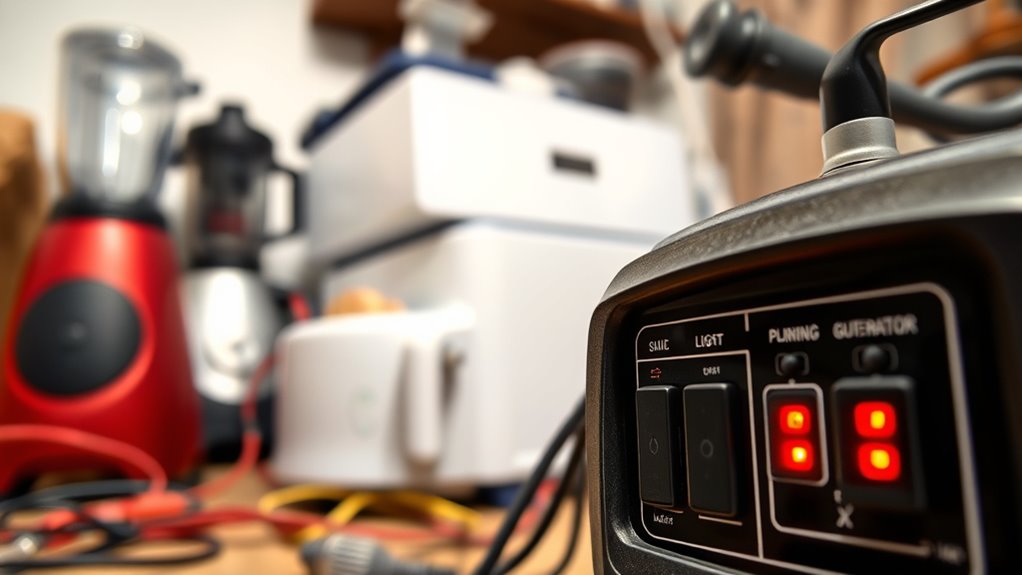
When your generator stalls after connecting appliances, overload is likely causing the issue. To fix it, first check what devices you’re running and guarantee their total wattage doesn’t exceed your generator’s capacity. Stagger starting high-demand appliances and prioritize essential ones. Use a wattmeter to monitor load in real-time and distribute power evenly. Making certain proper circuit protection and avoiding overloading can prevent future stalls—keep going to discover more helpful solutions.
Key Takeaways
- Ensure total appliance wattage does not exceed the generator’s capacity before connecting devices.
- Prioritize essential appliances and stagger their operation to prevent sudden overloads.
- Use a wattmeter to monitor real-time load and adjust appliance usage accordingly.
- Distribute high-power appliances across different outlets or circuits to reduce load concentration.
- Regularly check and maintain circuit breakers and safety devices to ensure proper overload protection.

Are you worried about your generator shutting down unexpectedly due to overload? This common issue can be frustrating, especially during power outages or when you rely heavily on your generator for essential appliances. The key to preventing these shutdowns lies in effective load management and guaranteeing proper circuit protection. When too many appliances draw power simultaneously, your generator becomes overwhelmed, causing it to stall or shut off to protect itself from damage. By understanding how to manage the load you place on your generator, you can keep it running smoothly and avoid sudden interruptions.
Load management involves prioritizing which appliances need to run at the same time and staggering their use whenever possible. For example, start with essential devices first and then add other appliances gradually, giving your generator time to adjust. This approach prevents sudden surges that can trip the system. Additionally, knowing the power requirements of each appliance helps you plan better. Always refer to the wattage ratings and avoid exceeding your generator’s maximum capacity. If you’re unsure, consult the generator’s manual or use a wattmeter to measure the total load in real time. Regularly monitoring your load ensures optimal performance and helps prevent overloads before they occur.
Circuit protection plays an equally crucial role in preventing overloads. Modern generators are equipped with circuit breakers that automatically shut off power when they detect an overload. Make sure these circuit protection features are functional and properly rated for your setup. If your generator doesn’t have built-in circuit breakers, consider installing external ones to safeguard your equipment. Proper circuit protection not only prevents your generator from stalling but also shields your appliances from power surges that can cause damage. Regularly inspecting and maintaining these safety devices ensures they operate correctly when needed.
Another helpful tip is to avoid daisy-chaining multiple extension cords or connecting too many high-power appliances simultaneously. Instead, use dedicated circuits for heavy loads and distribute appliances across different outlets if possible. This strategy reduces the risk of overloads and keeps your generator running efficiently. Remember, managing your load effectively and guaranteeing circuit protection are ongoing processes. Keep track of your power consumption, stay within the generator’s limits, and regularly maintain safety features. Doing so will help you avoid unexpected stalls and extend the lifespan of your generator.
Frequently Asked Questions
How Can I Prevent Generator Stalls During Power Surges?
To prevent generator stalls during power surges, guarantee proper generator maintenance and check appliance compatibility beforehand. Regularly service your generator to keep it running smoothly, and avoid connecting appliances that draw more power than your generator can handle. Use surge protectors if necessary, and always follow manufacturer guidelines. This proactive approach helps your generator manage load changes efficiently, reducing the risk of stalls during unexpected power surges.
What Are the Signs My Generator Is Overloaded?
Your generator’s overload symptoms are like a warning siren. If it struggles to handle your appliances, you’ll notice it stalls or runs roughly. Check if your generator capacity matches your power needs. Signs include excessive noise, overheating, or circuit breaker trips. If you see these symptoms, you might be exceeding its capacity. Always confirm your generator can handle your load to avoid overloads and keep it running smoothly.
Can I Connect Multiple Appliances Safely to a Small Generator?
You can connect multiple appliances to a small generator if you check its capacity and appliance compatibility first. Always add up the wattage of your appliances and compare it to your generator’s maximum capacity. Avoid overloading by not exceeding this limit. Use power strips with surge protectors, and prioritize essential devices. This way, you guarantee safe operation without risking generator stalls or damage.
How Often Should I Service My Generator to Avoid Overload Issues?
Think of your generator as a trusted vehicle; regular maintenance keeps it running smoothly. You should service it every 50-100 hours of use or at least once a year, whichever comes first. Proper generator maintenance guarantees overload prevention and prolongs its lifespan. By staying proactive, you prevent stalls and overloads, keeping your power supply steady when appliances connect, just like a well-tuned engine that never stalls on a long ride.
What Portable Devices Help Monitor Generator Load Capacity?
You can use portable load monitoring devices to keep an eye on your generator’s load capacity. These devices often feature compatibility with various generator models and connect easily via plug-in or Bluetooth. By monitoring load in real-time, you’ll prevent overloads, ensuring your generator runs smoothly. Look for units with clear displays and compatibility with your generator’s power output to get accurate readings and maintain safe, efficient operation.
Conclusion
When your generator stalls as appliances connect, think of it as a delicate balance teetering on the edge. By understanding your power needs and avoiding sudden surges, you can maintain that steady hum of energy flowing smoothly. Visualize your generator as a vigilant guardian, quietly managing the load like a skilled conductor guiding an orchestra. With careful planning and mindful connections, you’ll ensure your power remains reliable, lighting up your home like a steady beacon in the night.