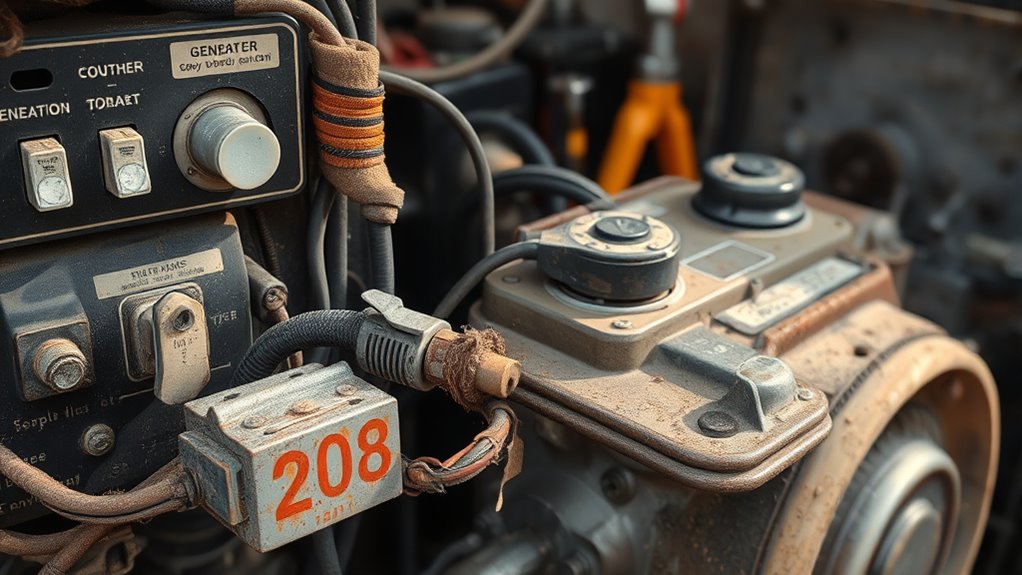

If your generator won’t start, the issue usually stems from fuel supply problems, a dead battery, or ignition issues. Check if the fuel tank is full and clear any clogs in the fuel line or filters. Make certain the battery is charged, terminals are clean, and connections are tight. Also, inspect the spark plug and air filter for dirt or damage. Addressing these common causes often restores operation, and exploring further can help you troubleshoot effectively.
Key Takeaways
- Check if the fuel tank is empty or contains stale fuel, then refill or replace it.
- Inspect and clear fuel lines, filters, and carburetor for blockages or debris.
- Ensure the battery is charged, terminals are clean, and connections are tight.
- Examine the spark plug for dirt or damage and replace if necessary.
- Confirm the air filter is clean and the fuel valve is fully open.
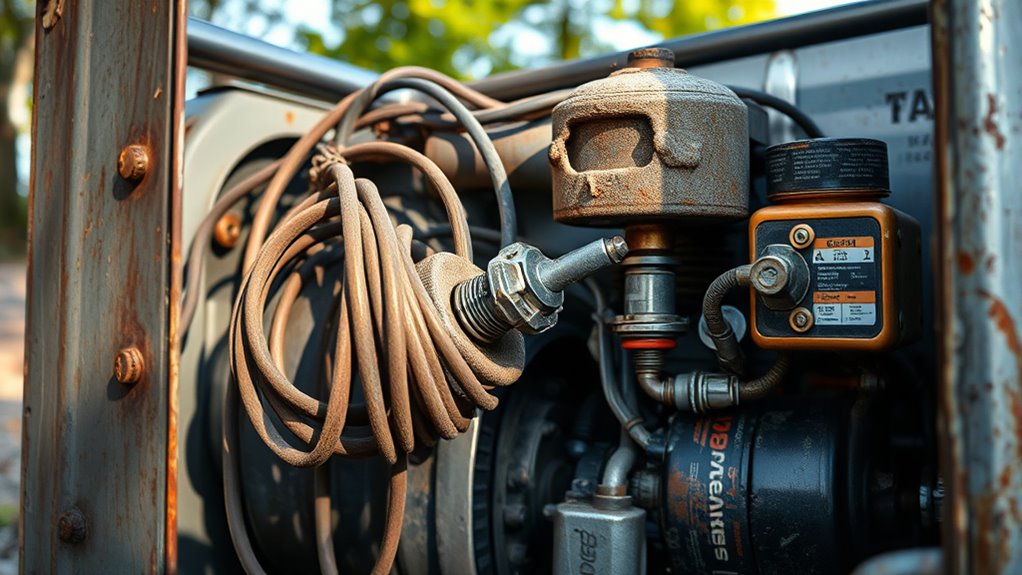
When your generator won’t start, it can be frustrating and inconvenient, especially during power outages. One common reason is problems with the fuel system. If your generator isn’t getting the proper fuel supply, it simply won’t run. This could be caused by a clogged fuel line, stale or contaminated fuel, or an empty fuel tank. Check the fuel level first—sometimes it’s the simplest fix. If the tank is full, inspect the fuel line for blockages or leaks. Sediment or debris can clog filters or carburetors, preventing fuel from reaching the engine. In such cases, draining old fuel and cleaning or replacing filters often resolves the issue. Also, ensure the fuel valve is open and functioning correctly. If you notice fuel smells or leaks, address those immediately to prevent further damage. Additionally, ensuring the correct fuel type is used can prevent starting issues and engine damage.
Battery issues are another frequent culprit that can prevent your generator from starting. Many portable generators rely on a battery to power the electric start system. If the battery is dead, discharged, or faulty, the starter won’t engage. You might hear a clicking sound or no sound at all when you try to start the generator. To fix this, first check the battery’s charge level. If it’s low, try charging it with a portable charger or replacing it altogether. Corrosion on the terminals can also impede electrical flow; clean the terminals with a wire brush and ensure connections are tight. If the battery is old or damaged, replacing it can often restore proper starting function. Keep in mind that batteries can deteriorate over time, especially if the generator isn’t used regularly—so periodic maintenance is key. Regular testing of the battery and understanding home theatre projectors can help in maintaining overall equipment readiness.
In addition to fuel system and battery issues, other factors can contribute to starting problems. For instance, a dirty or faulty spark plug can prevent ignition, while a clogged air filter can restrict airflow, making it hard for the engine to run. But focusing on the fuel system and battery is a good starting point because they directly impact the engine’s ability to start. Always refer to your generator’s manual for specific maintenance instructions and troubleshooting steps. Regular inspections, proper storage of fuel, and battery maintenance can go a long way in preventing starting issues. When these components are in good condition, your generator is more likely to start reliably when you need it most, ensuring you’re prepared for any power outage.
Frequently Asked Questions
How Often Should I Perform Maintenance on My Generator?
You should perform maintenance on your generator every 6 to 12 months, depending on usage. Regular checks improve fuel efficiency and keep noise levels low. Change the oil, replace filters, and inspect the spark plug to guarantee peak performance. By staying consistent, you prevent breakdowns, maximize efficiency, and keep your generator running smoothly, especially when you need it most. Regular maintenance is key to reliable power!
Can a Generator Restart After Overheating?
You might be surprised, but a generator can restart after overheating if you take the right steps. First, make certain overheating prevention by letting the unit cool down completely. Once cooled, follow proper restart procedures, such as checking oil levels and inspecting for damage. After addressing the cause, restart your generator carefully. With patience and proper maintenance, your generator can run smoothly again, even after overheating.
What Type of Fuel Is Best for Generator Longevity?
You should use high-quality fuel, like fresh gasoline or diesel, for maximum generator longevity. Poor fuel quality can cause engine issues and reduce lifespan. Also, make sure you regularly change the engine oil, as clean oil helps the engine run smoothly and prevents damage. Avoid using old or contaminated fuel, and always follow the manufacturer’s recommendations for fuel type and maintenance to keep your generator running reliably for years.
How Do I Troubleshoot Electrical Wiring Issues?
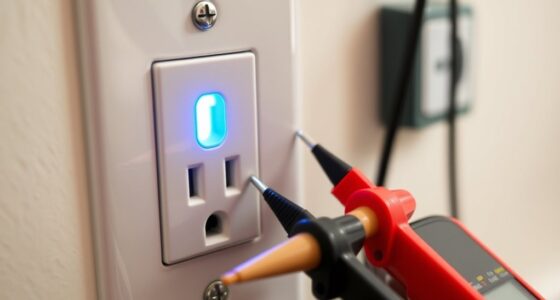
Think of electrical wiring issues as tangled cords in a jumble. To troubleshoot, you’ll want to perform circuit testing to check for breaks or shorts. Start with a wiring inspection, looking for frayed or loose connections, corrosion, or damaged insulation. Use a multimeter to verify voltage and continuity. By methodically testing circuits and inspecting wiring, you’ll pinpoint the problem—like untangling that stubborn knot—restoring your generator’s power flow.
Is It Safe to Repair a Generator Myself?
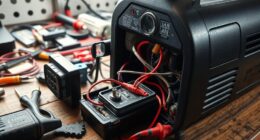
Yes, you can perform DIY repairs on your generator, but always prioritize generator safety. Make sure to read the manufacturer’s instructions thoroughly and disconnect the power before working on it. If you’re unsure or uncomfortable with electrical or mechanical tasks, it’s best to consult a professional. Proper understanding of generator safety measures helps prevent injuries and damage, ensuring your repairs are both effective and safe.
Conclusion
Just like a car that refuses to start on a chilly morning, your generator might just need a little attention. Remember, regular maintenance can prevent many common issues, saving you from unexpected power outages. Think of your generator as a loyal companion—when it’s cared for, it’s ready to serve you in a pinch. So, check those basics first; with a little troubleshooting, you’ll have your backup power running smoothly again in no time.