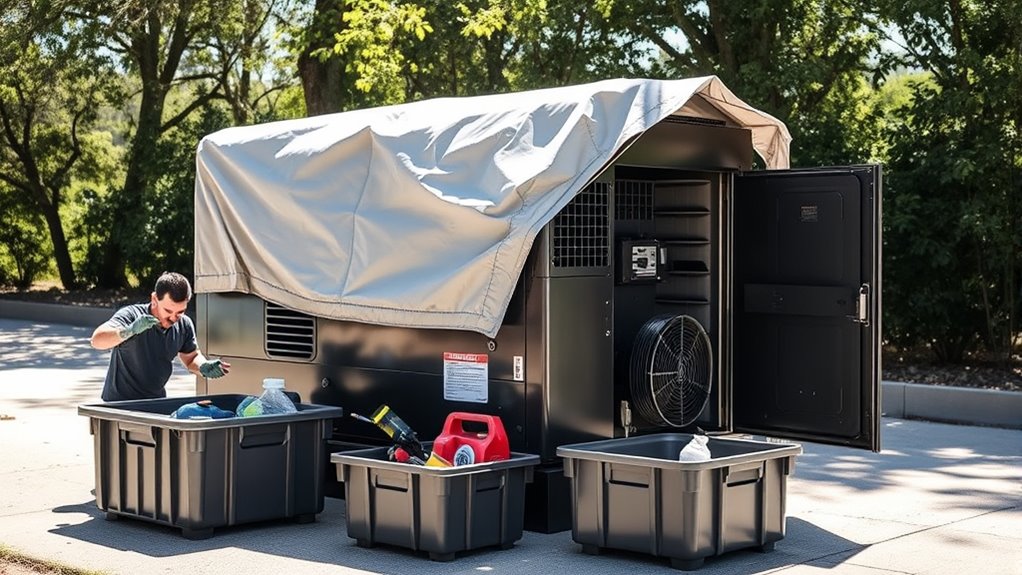

To prevent dust and corrosion, regularly clean your generator by wiping down surfaces and checking filters. Store it in a dry, covered area and use a protective cover to block dust and weather elements. Apply a light layer of oil or corrosion inhibitor on metal parts and make certain electrical connections stay clean and dry. For extended storage, drain fuel or add stabilizer, and keep the battery in a cool, dry spot. Discover more tips to keep your generator in top shape.

Get backup power and energy gear delivered free with Prime
- Fast, free delivery on millions of items
- Prime Video, Amazon Music and more included
- Member-only deals all year
Key Takeaways
- Regularly clean the generator’s surfaces and components to remove dust, dirt, and debris buildup.
- Store the generator in a dry, covered area and use protective covers to prevent dust and weather damage.
- Apply a light coat of oil or corrosion inhibitor on metal parts to reduce rust formation.
- Disconnect and store the battery in a cool, dry place, and check electrical connections for cleanliness and dryness.
- Perform routine maintenance such as replacing air filters and inspecting spark plugs to ensure optimal performance.

Keeping your generator clean and properly stored is essential to guarantee it runs reliably when you need it most. Regular cleaning prevents dust, dirt, and debris from accumulating, which can hinder performance and cause unnecessary wear. One of the most important steps in maintenance is fuel maintenance. Over time, fuel can break down or become contaminated, leading to clogged carburetors or fuel lines. To prevent this, you should regularly check your fuel tank and drain any old fuel if the generator won’t be used for an extended period. Adding fuel stabilizer can also extend the life of stored fuel, ensuring smooth operation when needed. Always run the generator after adding stabilizer to circulate it through the system, and consider draining the fuel if you plan to store the unit for several months.
Corrosion prevention is equally critical. Moisture and humidity can cause metal parts to rust, compromising the generator’s integrity and performance. To minimize corrosion, keep your generator in a dry, covered location. Before storing, wipe down all surfaces with a clean cloth to remove dirt, oil, and moisture. Applying a light coating of oil or a corrosion inhibitor on metal parts adds an extra layer of protection. Pay special attention to electrical components and connections—dust and moisture can cause shorts or corrosion, so gently clean these parts and ensure they’re dry before storage. When storing your generator, consider using a cover to shield it from dust and weather elements, but avoid sealing it completely in an airtight environment, which can trap moisture and accelerate corrosion.
Additionally, inspecting and maintaining the air filters keeps dust from entering the engine, further protecting internal parts from buildup that can diminish efficiency. Regularly check the spark plug for signs of wear or corrosion, replacing it if necessary. These small steps help prevent issues that could otherwise lead to costly repairs down the line. When storing the generator long-term, disconnect the battery if applicable, and keep it in a cool, dry place. This prevents battery drain and corrosion on terminals. Implementing proper cleaning techniques and following recommended maintenance routines can greatly extend the lifespan of your generator. Overall, dedicating a few minutes to cleaning, fuel maintenance, and corrosion prevention ensures your generator stays in top shape, ready to deliver power whenever you need it. Proper storage and upkeep extend its lifespan, saving you money and stress during critical moments when reliable power is non-negotiable.
As an affiliate, we earn on qualifying purchases.
Frequently Asked Questions
How Often Should I Check My Generator’s Internal Components?
You should check your generator’s internal components every 50 to 100 hours of use or at least once a season. During inspections, verify oil levels and make certain the filter is clean and functioning properly. Regular checks help prevent dust buildup and corrosion, keeping your generator running smoothly. If you notice any dirt or oil leaks, address them promptly to avoid costly repairs and extend your generator’s lifespan.
Can I Use Household Cleaning Products on My Generator?
You shouldn’t use household cleaning products on your generator because they may contain chemicals that damage its parts. For proper generator maintenance, stick to cleaning methods recommended by the manufacturer, like using a damp cloth or specialized cleaners. Avoid harsh chemicals to prevent corrosion or damage. Regularly inspecting and cleaning your generator with suitable products helps guarantee it runs smoothly and lasts longer.
What’s the Best Way to Prevent Rust During Long Storage?
To prevent rust during long-term storage, you should thoroughly clean and dry your generator to remove moisture. Apply a corrosion inhibitor or a light coating of oil to all metal surfaces, especially those prone to rust. Store it in a dry, sheltered area with good ventilation. Regularly check and reapply protective coatings if needed. This rust prevention method keeps your generator in top condition for future use.
Is It Necessary to Run the Generator Periodically When Stored?
Think of your stored generator as a sleeping giant—you need to wake it up occasionally. Yes, it’s necessary to run it periodically to keep the fuel stabilized and prevent varnish buildup. During this process, check the battery maintenance and confirm fuel stabilization additives are working. Running the generator helps circulate oil, keeps components lubricated, and prevents internal corrosion, so it’s ready to roar back to life when you need it most.
How Do I Dispose of Old or Contaminated Fuel Safely?
You should dispose of contaminated fuel safely by taking it to a designated hazardous waste facility or authorized disposal site. Never pour contaminated fuel down drains, onto the ground, or into water sources. Use a proper container for fuel disposal, and follow local regulations. Proper fuel disposal helps prevent environmental harm and safety hazards, ensuring that contaminated fuel doesn’t cause damage or accidents during storage or use.
As an affiliate, we earn on qualifying purchases.
Conclusion
Now that you’ve learned how to clean and store your generator properly, imagine the peace of mind knowing it’s ready for anything. But what if a tiny speck of dust or a small hint of corrosion sneaks in when you least expect it? Stay vigilant, and your generator will serve you well when it truly matters. Keep it protected, and you’ll discover surprises aren’t always unwelcome—sometimes, they’re just the beginning of your next power adventure.
generator corrosion inhibitor spray
As an affiliate, we earn on qualifying purchases.
As an affiliate, we earn on qualifying purchases.
As an affiliate, we earn on qualifying purchases.
Columbus Day / Indigenous Peoples' Day Picks
long weekend sales
As an affiliate, we earn on qualifying purchases.