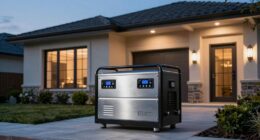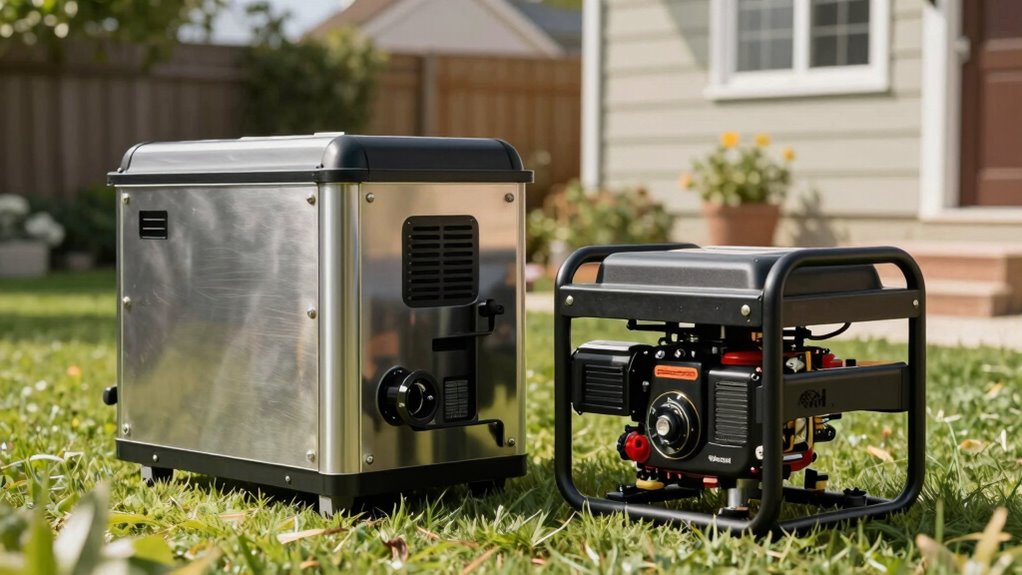
If you want automatic, reliable backup power for your whole home or essential appliances, a standby generator is best, as it’s permanently installed and runs quietly on natural gas or propane. If you need portable power for camping, outdoor events, or occasional emergencies, a portable generator suits your needs with flexibility but louder operation. To learn more about which type suits your lifestyle and budget, keep exploring the key differences.
Key Takeaways
- Choose a standby generator for whole-house backup, automatic operation, and long-term, high-capacity power needs.
- Opt for a portable generator for occasional, limited power, outdoor activities, or when mobility is essential.
- Consider fuel type: natural gas/propane for standby units; gasoline for portable models.
- Prioritize noise levels: standby generators operate quietly; portable units may be louder.
- Assess installation and maintenance: standby units are permanent and low-maintenance; portable units require manual setup and upkeep.
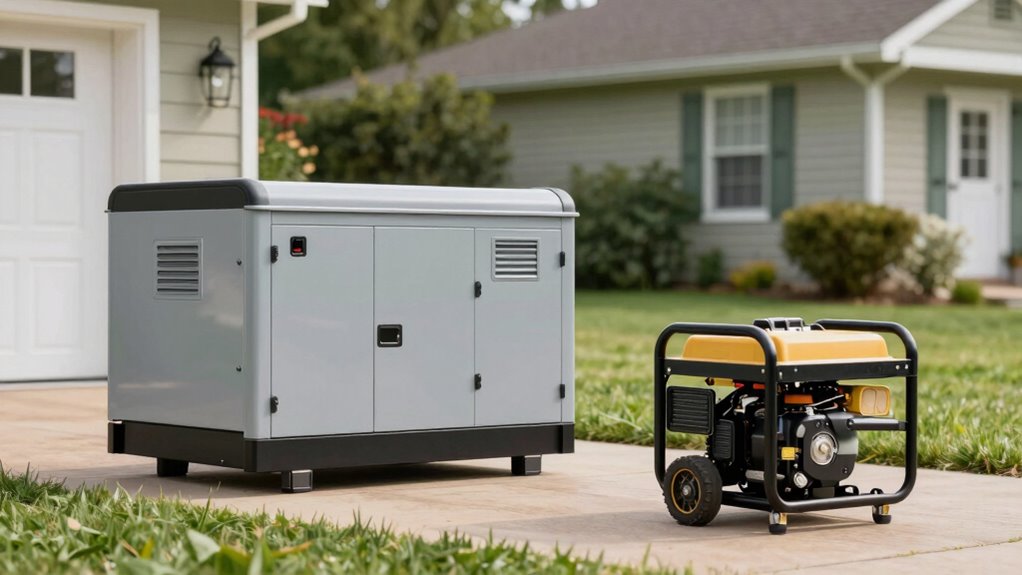
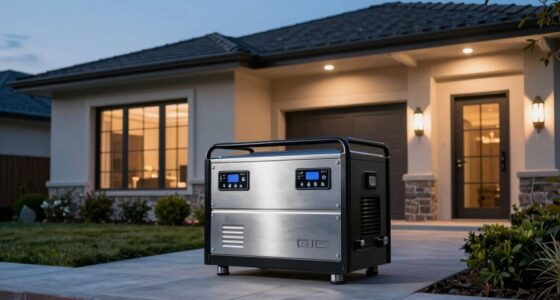
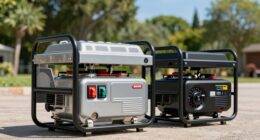
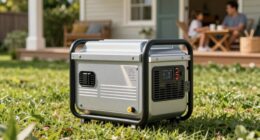
When power outages strike, choosing the right backup generator can make all the difference in maintaining your daily routine. If you’re trying to decide between a standby and a portable generator, it helps to understand how each fits your needs. Standby generators are permanently installed outside your home and automatically turn on when the power goes out. They tend to be larger and more powerful, making them ideal for running entire households or critical appliances. Portable generators, on the other hand, are smaller, movable units that you can bring wherever needed. They’re perfect for camping trips, outdoor events, or emergencies where portability is key.
Choosing between standby and portable generators depends on your power needs and lifestyle.
Fuel efficiency is a significant factor to consider. Standby generators usually run on natural gas or propane, which are often more consistent and cleaner-burning than gasoline. This means they tend to be more fuel-efficient for long-term use and require less frequent refueling. Portable units typically run on gasoline, which can be less efficient over extended periods. If you experience frequent outages or want a generator that runs longer without needing frequent refills, a standby model might be the better choice. However, if you only need backup power occasionally, a portable generator’s fuel consumption might not be a major concern. Additionally, standby generators often include transfer-switch systems that enhance safety and convenience during outages. It’s also worth noting that automated start systems are common in standby models, providing added convenience and reliability.
Noise levels also vary greatly between the two types. Standby generators are designed to operate quietly because they’re installed outside and often have sound-absorbing enclosures. They produce noise levels that are generally acceptable for residential areas, making them less disruptive during outages. Portable generators tend to be louder because they’re smaller and less insulated. Their noise can become a concern if you plan to run them during the night or in close proximity to your living space. If noise is a priority, a standby generator provides a quieter experience, while portable options might require you to place them farther away from your home or use noise barriers. Soundproofing techniques can further reduce noise impact for portable units if needed. Properly maintaining and insulating portable units can also help minimize sound levels. When choosing a portable generator, considering noise levels can help ensure it fits your environment and living arrangements.
Ultimately, your decision depends on your specific needs. If you want a reliable, low-maintenance solution that automatically kicks in during outages and operates quietly, a standby generator is likely the best fit. If you prefer flexibility and portability, and your power needs are minimal or sporadic, a portable generator could serve you well. Both options have their advantages, but understanding their differences in fuel efficiency and noise levels helps you choose the right backup power source that aligns with your lifestyle and preferences.

Generac Guardian 10kW Home Standby Generator with 100 Amp Transfer Switch – Automatic Whole House Backup Power for Storms, Emergencies, and Outages, WiFi Enabled, Runs on Natural Gas or Liquid Propane
Remote Monitoring Anywhere: With Generac 7172 10kW Mobile Link Wi-Fi connectivity, effortlessly track generator performance from anywhere. Stay…
As an affiliate, we earn on qualifying purchases.
As an affiliate, we earn on qualifying purchases.
Frequently Asked Questions
How Long Can Each Generator Run Continuously?
Standby generators can run continuously for up to 24 hours, depending on fuel capacity and load, while portable generators typically last 8 to 12 hours. You should consider fuel efficiency, as standby units often consume fuel more efficiently during extended use. Noise levels vary; standby models tend to be quieter, making them suitable for long-term backup, whereas portables are noisier but more flexible for shorter, emergency needs.
Are Portable Generators Safe for Indoor Use?
Portable generators aren’t safe for indoor use because they produce dangerous carbon monoxide fumes that can build up quickly in enclosed spaces. While they’re fuel-efficient outdoors, their installation complexity and exhaust requirements make indoor use risky. Always operate portable generators outside, away from windows and vents, and guarantee proper ventilation. For indoor use, a standby generator with proper exhaust systems is safer and more reliable.
What Maintenance Is Required for Standby Generators?
You need to regularly check and replace the oil, filters, and spark plugs to keep your standby generator running smoothly. Schedule annual professional maintenance to make sure fuel efficiency stays high and noise levels remain within safe limits. Keep the generator clean and inspect for leaks or corrosion. Proper maintenance not only prolongs its lifespan but also guarantees reliable power during outages, making your investment worthwhile.
Can Portable Generators Power an Entire House?
You can power your entire house with a portable generator, but it depends on its power capacity and fuel efficiency. Most portable models provide around 3,000 to 8,000 running watts, enough for essential appliances, but only about 20% can handle a full home’s load. To run everything, you’d need a high-capacity, fuel-efficient unit, which can be challenging and less practical than a standby generator designed for whole-house backup.
How Loud Are Each Type of Generator During Operation?
Portable generators are generally noisier, often producing sound levels between 60 to 70 decibels, comparable to a loud conversation. Standby generators run quieter, typically between 50 to 65 decibels, similar to background music. The sound comparison shows that standby units are better if noise levels matter, especially if you want minimal disruption during power outages. Keep in mind, noise levels can vary depending on the model and load.
portable outdoor generator
As an affiliate, we earn on qualifying purchases.
As an affiliate, we earn on qualifying purchases.
Conclusion
Choosing between a standby and portable generator depends on your home’s needs. Did you know that 80% of homeowners who experience power outages invest in backup generators? If you want automatic, reliable power during outages, a standby generator’s your best bet. But if flexibility and lower upfront costs matter more, a portable generator might suit your lifestyle. Assess your power needs and budget to make the right choice—your home’s comfort depends on it.
automatic transfer switch for generator
As an affiliate, we earn on qualifying purchases.
As an affiliate, we earn on qualifying purchases.
quiet residential standby generator
As an affiliate, we earn on qualifying purchases.
As an affiliate, we earn on qualifying purchases.