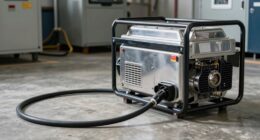

To change the oil in your portable generator, first turn it off and let it cool. Place a drain pan beneath the oil drain plug, then loosen and remove the plug to drain the old oil completely. Replace the oil filter if needed, then screw the drain plug back in tightly. Fill with fresh oil through the fill cap, check the level, and start the generator to circulate the new oil. If you want more details, keep going.
Key Takeaways
- Turn off and cool down the generator before starting the oil change process.
- Drain old oil by removing the drain plug and allow it to fully flow into a container.
- Replace the oil filter if applicable, applying oil to the gasket before installation.
- Refill with the manufacturer-recommended oil quantity and type through the oil fill cap.
- Start the generator, check for leaks, and verify the oil level is within the correct range.

Changing the oil in your portable generator is an essential maintenance task that keeps it running smoothly and extends its lifespan. Proper oil change helps prevent engine wear, reduces the risk of overheating, and guarantees your generator performs reliably when you need it most. Before starting, make sure your generator is turned off and has cooled down to avoid burns or spills. Gather the necessary supplies: new oil, an oil filter if applicable, a drain pan, a wrench, and a rag or paper towels for cleanup.
Regular oil changes prevent engine wear and ensure your generator runs reliably.
Begin by locating the drain plug at the bottom of the engine. Place your drain pan underneath it, then carefully loosen and remove the drain plug using a wrench. Allow the old oil to drain completely into the pan. Be patient; this might take a few minutes. While the oil is draining, inspect the oil filter if your generator has one. Many portable generators come with an oil filter that traps debris and prevents impurities from circulating through the engine. Remove the old filter by unscrewing it carefully, and before installing the new filter, apply a small amount of fresh oil to the rubber gasket. This guarantees a proper seal and easier removal during your next oil change. Screw in the new filter by hand, tightening it snugly but not too tight to avoid damage.
Once the old oil has fully drained, replace the drain plug securely. Wipe any spilled oil from around the drain area to prevent dirt accumulation. Next, open the oil fill cap, which is usually located on the top or side of the engine. Using a funnel, pour in the fresh oil recommended by your generator’s manual. Be precise with the amount; overfilling can cause engine problems, while too little oil can lead to inadequate lubrication. Check the oil level with the dipstick or sight glass, ensuring it’s within the recommended range. Wipe the dipstick clean before reinserting it, then remove it again to verify the level. Regularly refer to the color accuracy and contrast ratio features of your generator’s display to ensure optimal operation conditions.
Finally, start your generator and let it run for a few minutes. Turn it off and inspect around the oil fill and drain plug for any leaks. Double-check the oil level once more, topping up if necessary. Properly disposing of the used oil and filter is vital—take it to a recycling center or an authorized disposal site. Regularly changing your generator’s oil and replacing the oil filter when needed keeps your machine in prime condition, guaranteeing it’s always ready to perform whenever you require power.
Top picks for "change portable generator"
Open Amazon search results for this keyword.
As an affiliate, we earn on qualifying purchases.
Frequently Asked Questions
Can I Use Synthetic Oil in My Portable Generator?
Yes, you can use synthetic oil in your portable generator. Synthetic oil offers advantages like better lubrication, improved engine performance, and easier cold starts. It also provides a wider range of oil viscosity options, helping you choose the best for your generator’s operating conditions. Just make certain the synthetic oil meets your generator manufacturer’s specifications, and you’ll enjoy smoother, more reliable performance with the benefits of synthetic oils.
How Often Should I Check the Oil Level During Use?
You should check the oil level before each use and every few hours during extended operation. Regularly checking the oil level guarantees it stays within the recommended range, preventing engine damage. Make it a habit to inspect the oil level frequently, especially if you’re running your generator for long periods. Keeping an eye on the oil level and check frequency helps maintain peak performance and prolongs your generator’s lifespan.
What Signs Indicate the Oil Needs Changing Sooner?
Did you know that 80% of engine failures are linked to poor oil quality? If you notice dark, gritty oil, or a burnt smell, it’s a sign your oil needs changing sooner. Oil contamination can hinder engine performance, causing overheating or strange noises. Regularly check for these signs, and don’t wait too long—changing your oil promptly keeps your generator running smoothly and extends its lifespan.
Is It Necessary to Run the Generator After Oil Change?
Yes, you should run the generator after an oil change. Generator maintenance includes running it briefly to circulate the new oil and guarantee proper lubrication. During oil inspection, check for any leaks or unusual sounds. Running the generator helps confirm everything works correctly and prevents issues from dry running. Always follow your manufacturer’s instructions for specific procedures, and make sure the oil level is correct before starting.
How Do I Dispose of Used Motor Oil Properly?
You can’t just toss used motor oil in the trash—suspicions of environmental impact might haunt you. Instead, take it to a certified oil recycling center or collection event. These facilities safely process the oil, preventing pollution and protecting wildlife. Proper disposal keeps your community clean and preserves natural resources. Don’t risk illegal dumping; act responsibly. Your small step makes a big difference in safeguarding the environment from harmful waste.
Conclusion
Changing your generator’s oil isn’t just maintenance; it’s about keeping your power reliable when you need it most. When you follow the proper steps, you prevent engine damage and extend your generator’s life. Think of it like giving your machine a quick revival of fresh life—much like tuning a guitar for perfect sound. So, stay consistent with oil changes, and your portable generator will be ready to perform whenever you need it.