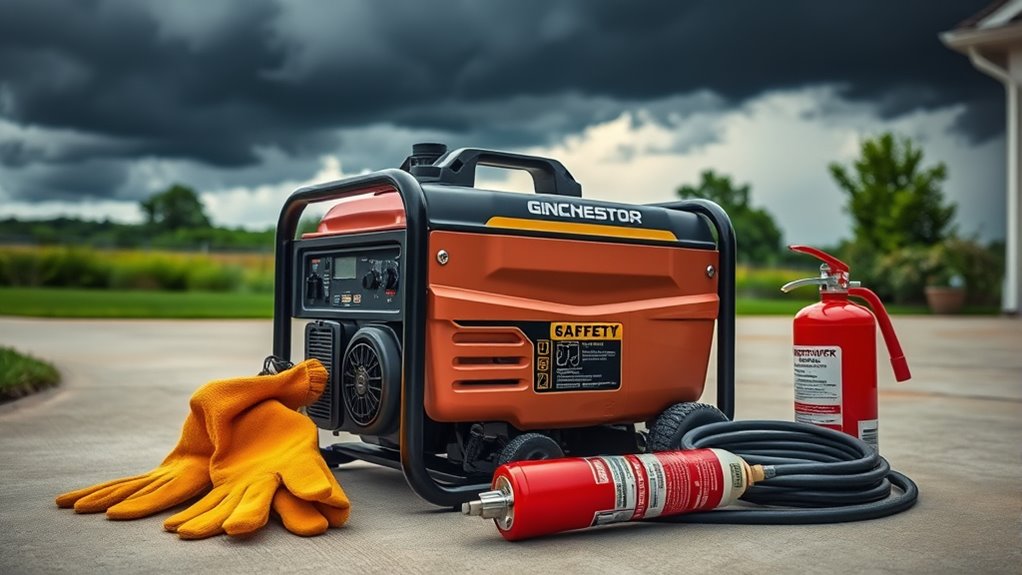

To prepare your generator for storms, make certain you store fuel safely in approved containers away from heat sources, and check for leaks or corrosion regularly. Perform maintenance like oil changes and inspections, and run test cycles to verify functionality. Keep it in a dry, protected area and refuel only after turning it off and cooling down. Understanding safety features and ventilation is essential. Continuing will help you master a complete safety checklist to keep your power source reliable during emergencies.
Key Takeaways
- Store fuel safely in approved containers away from heat sources and inspect regularly for leaks or deterioration.
- Perform routine generator maintenance, including testing and checking for damage, and keep a detailed service log.
- Place the generator in a secure, dry location protected from weather, with easy access before storms.
- Turn off and cool down the generator before refueling outside in well-ventilated areas to prevent carbon monoxide poisoning.
- Ensure safety features are functional, understand display alerts, and keep emergency tools and spare parts accessible.
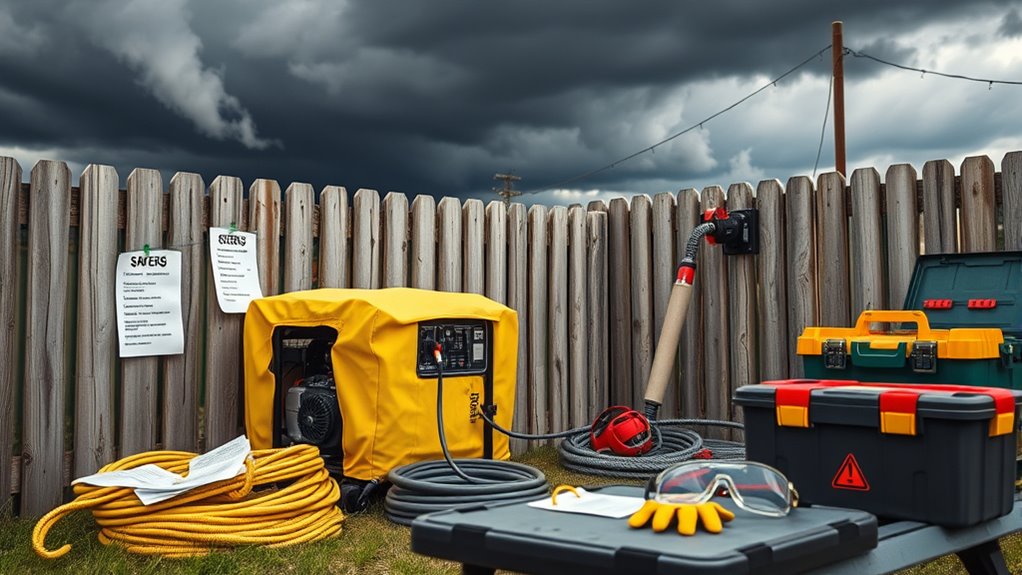
Are you confident your generator is safe to operate? Before an emergency strikes, it’s essential to ensure everything is in place for reliable and safe operation. One of the crucial factors is proper fuel storage. You want to avoid storing gasoline or other fuels in unsecured or unsuitable containers, as spills or leaks can lead to fires or health hazards. Use approved containers that are clearly labeled, kept in well-ventilated areas away from direct sunlight or heat sources, and never store large quantities in your garage or basement. Regularly check your fuel containers for leaks, rust, or deterioration, and replenish or replace fuel as needed, especially if it’s been stored for months. Remember, stale fuel can cause starting issues or damage your generator, so fresh fuel is always best.
Along with proper fuel storage, paying attention to maintenance tips is essential to keep your generator ready for emergencies. Regularly inspect your unit for signs of wear or damage, such as frayed cords, loose connections, or corrosion. Follow the manufacturer’s recommended maintenance schedule, which often includes changing oil, replacing filters, and cleaning vents. Performing these checks periodically, even when you’re not expecting a storm, ensures your generator operates smoothly when you need it most. Also, test-run your generator every few months for about 15 minutes to verify it’s functioning correctly. During this test, listen for unusual noises, check for leaks, and ensure all safety features are in place. Keeping a maintenance log helps you track service dates and upcoming needs, reducing the risk of unexpected breakdowns. Furthermore, understanding the importance of color accuracy in your generator’s display can help you better interpret operational indicators and troubleshoot issues effectively.
Another key aspect of safety is ensuring your generator is stored and maintained in a secure, dry location. When not in use, keep it covered and protected from weather elements to prevent rust and corrosion. Prior to storm season, double-check that your storage area is accessible and that you have all necessary tools and spare parts on hand. Always follow safety guidelines when refueling—turn off the generator and let it cool down to prevent accidental fires. Never refuel indoors or in enclosed spaces, as exhaust fumes contain carbon monoxide, which can be deadly. Instead, do this outside in a well-ventilated area. Incorporate these fuel storage and maintenance tips into your routine, and you’ll greatly enhance your generator’s safety, reliability, and lifespan. Being prepared now means fewer worries when storms hit, giving you peace of mind knowing your emergency power source is ready to operate safely and efficiently.
Top picks for "prepar storm generator"
Open Amazon search results for this keyword.
As an affiliate, we earn on qualifying purchases.
Frequently Asked Questions
How Often Should I Test My Generator Before Storm Season?
You should test your generator at least once a month during the maintenance schedule, especially before storm season. Regular testing guarantees it runs properly and helps identify any issues early. Check your fuel storage to make sure you have enough fresh fuel, and consider running the generator under load for a short period. This proactive approach keeps your generator reliable when you need it most during emergencies.
Can I Run My Generator Indoors Safely?
Running your generator indoors is an absolute catastrophe waiting to happen. It can quickly fill your home with deadly carbon monoxide, turning your safe space into a silent killer’s trap. Always guarantee proper indoor ventilation and install carbon monoxide detection alarms. Never run a generator indoors; it’s a dangerous mistake that can cause poisoning or death. Keep your family safe by operating your generator outside and away from windows and vents.
What Should I Do if My Generator Emits Fumes?
If your generator emits fumes, turn it off immediately to prevent carbon monoxide poisoning. Move it outdoors to guarantee proper ventilation safety, keeping it away from windows, vents, and enclosed spaces. Check for leaks or malfunctions that could cause fumes. Never operate a generator indoors or in enclosed areas, and always use it in a well-ventilated space to protect yourself and others from dangerous fumes.
How Long Can I Operate My Generator Continuously?
You can operate your generator continuously for about 8 to 10 hours, but it’s essential to follow your manufacturer’s recommendations. Regularly check your fuel storage to prevent shortages and guarantee safe operation. Stick to a maintenance schedule, including oil changes and inspections, to keep it running smoothly. Always monitor for overheating or unusual noises, and never operate it beyond the recommended time to avoid damage or safety hazards.
Is It Necessary to Have a Professional Inspect My Generator Annually?
Did you know that poorly maintained generators fail nearly 60% more often? Yes, it’s necessary to have a professional inspect your generator annually. Regular inspections are part of essential maintenance tips and help identify potential issues early. Following proper inspection schedules guarantees your generator runs smoothly during emergencies. Don’t skip this step—professionals can catch problems before they become costly, keeping you safe and prepared when storms hit.
Conclusion
By following this generator safety checklist, you’re well-equipped to face any storm like a true modern-day Cassandra. Remember, safety isn’t just a flash in the pan; it’s your best defense against emergencies. Keep your generator well-maintained, operate it properly, and never forget the basics—no need to summon Thor himself to guarantee your safety. Stay prepared, stay safe, and let your prudent actions be your guiding star through the tempest.