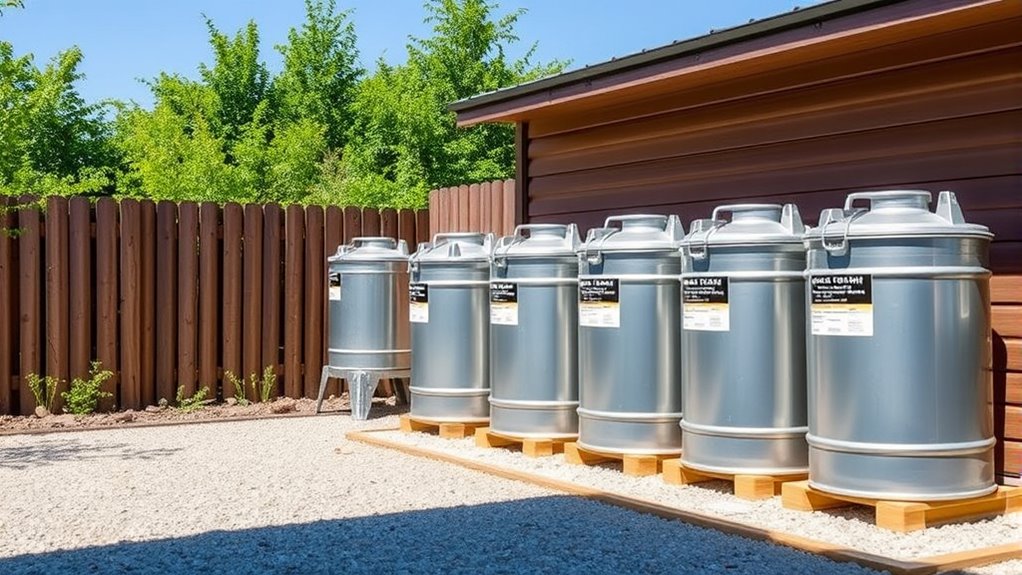

To properly store generator fuel, use approved, vented containers specifically designed for fuel. Fill them outdoors or in well-ventilated areas, and always keep them away from heat sources, sparks, or flames. Label containers clearly and check regularly for leaks or damage. Store fuel in a cool, dry location, out of reach of children and pets. Keeping safety in mind, you’ll discover even more essential tips on secure storage and handling as you continue.
Key Takeaways
- Use approved, vented containers specifically designed for fuel storage to prevent spills and vapor leaks.
- Store fuel in a cool, dry, well-ventilated area away from heat sources and direct sunlight.
- Regularly inspect containers for cracks, leaks, or corrosion; replace if necessary.
- Label containers clearly to avoid misuse and ensure proper handling.
- Follow local regulations regarding maximum storage quantities and safe storage locations.
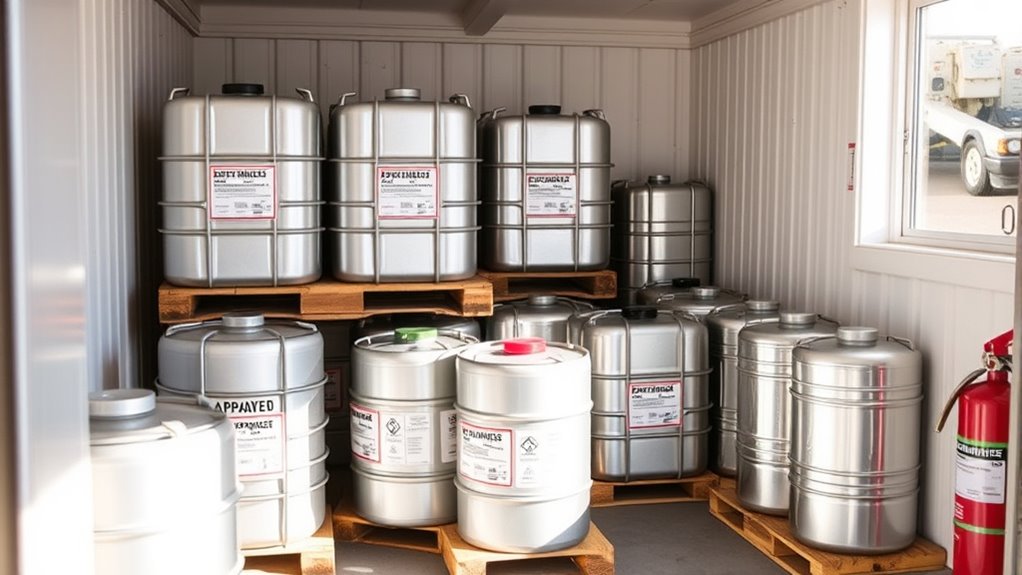
Storing generator fuel properly is crucial to guarantee your generator runs reliably when you need it most. When it comes to fuel storage, one of the most important steps is ensuring your fuel remains stable over time. Fuel stabilization is essential because gasoline can deteriorate, forming varnish and gum deposits that clog your generator’s carburetor. Using fuel stabilizers can prolong the shelf life of your fuel, preventing these issues and keeping your generator ready to power your home or equipment when needed. Always add fuel stabilizer to fresh fuel before storage, and follow the manufacturer’s instructions for the correct mixture. This simple step can save you headaches later and extend the usability of your stored fuel.
Equally important are the safety precautions you should follow during storage. Fuel is highly flammable, so handling and storing it with care isn’t just recommended — it’s necessary. Always use approved containers designed specifically for fuel storage. These containers are made from durable, non-reactive materials and feature proper vents and spouts that minimize spills and vapor leaks. Never use makeshift containers like old bottles or jars, as they pose significant safety risks. When filling your storage container, do so outdoors or in well-ventilated areas to avoid inhaling fumes or creating a fire hazard. Keep the container away from ignition sources, such as open flames, electrical sparks, or hot surfaces, and never smoke near stored fuel. It’s also wise to store fuel in a cool, dry location, away from direct sunlight, which can accelerate fuel degradation and increase pressure inside the container.
Position your fuel storage in a secure location, out of reach of children and pets. Label the containers clearly to prevent accidental misuse or confusion with other liquids. Regularly inspect your storage containers for cracks, leaks, or corrosion, and replace them if needed. When you’re ready to use the fuel, always transfer it carefully to your generator’s tank, avoiding spills and static buildup. Remember, never store fuel in your garage or basement if it can be avoided, as fumes can accumulate and pose health and safety risks. Proper storage also involves keeping your fuel in accordance with local regulations and guidelines, which may specify maximum storage quantities and safe locations. Additionally, choosing approved containers designed for fuel storage can significantly reduce risks associated with improper containers. By taking these precautions and using stabilized fuel in approved containers, you ensure your generator remains reliable, safe, and ready for any emergency.

Porch Shield Generator Cover for 5000-10000W, 32 x 24 x 24 inch, Black
- Compatibility: Fits 5000-10000W generators
- Durable Material: 600D water-resistant polyester fabric
- All-Weather Protection: Protects against sun, rain, snow, dust
As an affiliate, we earn on qualifying purchases.
Frequently Asked Questions
Can I Store Generator Fuel Outdoors Year-Round?
Yes, you can store generator fuel outdoors year-round if you use proper precautions. Make certain you stabilize the fuel with a stabilizer and use approved, leak-proof containers. Always label containers clearly and store them in a cool, dry, well-ventilated area away from direct sunlight and ignition sources. Regularly check for leaks or deterioration, and rotate your fuel supply to keep it fresh and safe for use.
How Long Does Generator Fuel Remain Usable?
Generator fuel typically remains usable for 6 to 12 months if you add fuel stabilizers before storage. Stabilizers help extend storage duration by preventing fuel degradation and oxidation. To make sure your fuel stays good, store it in approved containers in a cool, dry place, and always check for signs of contamination or stale smell before use. Properly stabilized fuel guarantees reliable generator performance when you need it most.
Are There Specific Brands of Approved Fuel Containers?
Yes, you should choose fuel containers with certifications like UL or DOT, ensuring they meet safety standards. Look for containers made from high-quality, flame-resistant materials like durable plastic or metal, which prevent leaks and spills. Always verify the container’s safety ratings before purchase. Using approved, certified containers helps protect your fuel and reduces fire risks, making storage safer and more compliant with safety regulations.
What Are the Signs of Fuel Deterioration?
You’ll notice fuel deterioration when it smells sour or has a gunky appearance. Using fuel stabilizers can slow this process, but if your fuel develops varnish or phase separation, it’s time to replace it. Always store fuel in approved containers made from proper materials like high-density polyethylene. Regularly inspecting your fuel and using stabilizers helps keep it fresh, ensuring your generator runs smoothly when you need it most.
Is It Safe to Mix Different Types of Fuel?
It’s generally unsafe to mix different types of fuel because it can cause engine damage or poor performance. If you must blend fuels, add a fuel stabilizer to prevent deterioration. Use approved container materials like high-density polyethylene or metal to store mixed fuel securely. Always label containers clearly and avoid mixing incompatible fuels. When in doubt, stick to one fuel type to guarantee your generator runs smoothly and safely.
Porch Shield Generator Cover for 5500-15000W, 38 x 28 x 30 inch, Black
- Compatibility: Fits 5500W to 15000W generators
- Premium Material: 600D water-resistant polyester fabric
- All-Weather Protection: Resists sun, rain, snow, wind, dust
As an affiliate, we earn on qualifying purchases.
Conclusion
Storing your generator fuel properly is essential for safety and efficiency. Use approved containers and follow storage tips to prevent accidents and fuel degradation. Did you know that improperly stored fuel can lose up to 20% of its effectiveness within a month? By taking these simple precautions, you guarantee your generator runs smoothly when you need it most. Keep safety top of mind, and your backup power will be ready whenever an outage occurs.

Jackery Explorer 1000 v2 Portable Power Station,1070Wh,1500W
- Powerful AC Output: 1500W continuous, 3000W surge
- Compact and Lightweight: 23.8 lbs with foldable handle
- Fast Charging: 0-100% in 1 hour with app
As an affiliate, we earn on qualifying purchases.

Westinghouse 5000 Peak Watt Super Quiet Portable Inverter Generator, Remote Electric Start with Auto Choke, Wheel & Handle Kit, RV Ready, Gas Powered, Parallel Capable
- Power Output: 5000 Peak Watts, 3900 Rated Watts
- Starting Options: Remote, Electric, Recoil Start
- Power Outlets: 120V Duplex, RV-Ready, USB Ports
As an affiliate, we earn on qualifying purchases.