
Wattage labels on appliances can be misleading because they show maximum power draw, not typical or actual energy use. You might assume higher wattage means higher costs, but real-world consumption varies based on tasks and efficiency features. These labels don’t reflect safety standards or long-term performance. To make smarter choices, you need to understand what the labels don’t tell you. If you want to see the full picture, there’s more to take into account.
Key Takeaways
- Wattage labels show maximum power, not typical or average energy consumption during regular use.
- Fluctuations in appliance tasks cause actual power use to vary, making labels unreliable for real-world costs.
- High wattage doesn’t always mean higher efficiency or lower operating expenses.
- Labels focus on maximum input power, which may not reflect safety features or standards.
- Additional data like real-world energy use and efficiency ratings provide more accurate insights.
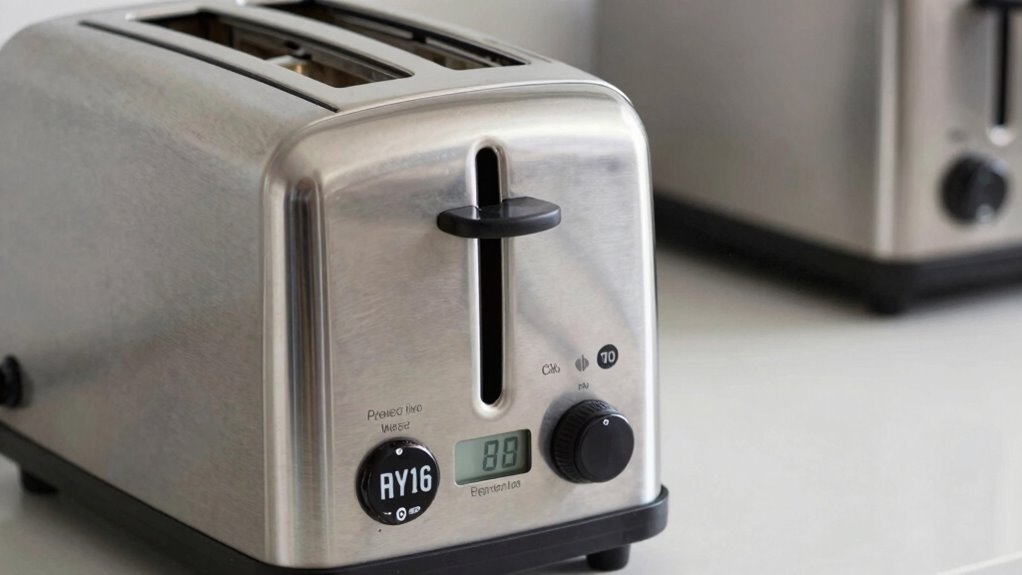
Understanding wattage labels on appliances is crucial because they tell you how much energy an appliance consumes, which can impact your electricity bills and overall energy efficiency. However, these labels can sometimes be misleading, making it tricky to accurately gauge an appliance’s true energy use or performance. Manufacturers often list the maximum wattage an appliance might draw during peak operation, but this doesn’t always reflect typical usage. For example, a washing machine’s label might show a high wattage, but under normal conditions, it consumes much less. Similarly, a microwave’s wattage listed could be its power input, not its actual cooking power, creating confusion about its efficiency.
One reason wattage labels can be misleading is that they don’t account for how appliances operate over time. Many appliances don’t run at their maximum wattage continuously; instead, they fluctuate based on the task. This means that the number on the label might overstate or understate what you’ll actually pay or see in terms of energy consumption. As a result, relying solely on wattage labels can lead you to make incorrect assumptions about an appliance’s energy efficiency. You might think an appliance is more costly to run than it truly is or underestimate its safety standards if the label doesn’t reflect real-world usage. Safety standards are essential because they ensure appliances operate within safe parameters, but labels often focus more on maximum power rather than safety features or compliance. Additionally, some appliances are designed to be energy-efficient, which may not be immediately apparent from wattage alone, emphasizing the importance of considering energy efficiency ratings** for a more comprehensive understanding. For instance, modern appliances often incorporate energy-saving technology that reduces actual power consumption even if their maximum wattage appears high. An appliance with a higher wattage isn’t necessarily less efficient if it completes its task faster or more effectively. Conversely, a lower-wattage device might take longer to do the same job, negating potential energy savings. It’s also helpful to look at real-world energy consumption data, which can provide a more accurate picture of an appliance’s typical use and efficiency. Being aware of how appliances operate over time and understanding appliance usage patterns can help you make better decisions about energy consumption and safety. This makes it necessary to look beyond the wattage label alone and consider factors like energy efficiency ratings or user reviews** to get a clearer picture.

TABU 2.0 Cu.Ft. Front Load Washer with 9 Washing Cycles
- Capacity: 2.0 Cu. Ft. compact size
- Washing Cycles: 9 specialized cycles
- Design: Stackable with LED display
As an affiliate, we earn on qualifying purchases.
As an affiliate, we earn on qualifying purchases.
Frequently Asked Questions
Do Wattage Labels Indicate Actual Energy Consumption During Operation?
Wattage labels don’t necessarily show your appliance’s actual energy consumption during operation. They give an estimate based on energy measurement standards, but real usage varies. Factors like appliance efficiency, usage patterns, and settings influence actual power use. So, while labels offer a helpful guideline, they aren’t always perfectly accurate. For a clearer picture, check your energy bills or use a power meter to measure actual consumption directly.
Are Wattage Labels Standardized Across All Appliance Brands?
Wattage labels aren’t fully standardized across all appliance brands. You’ll notice brand inconsistencies in how labels display information, which can impact label accuracy. Some brands may include only running wattage, while others list maximum or surge wattage, leading to confusion. As a result, it’s essential to compare labels carefully and not rely solely on wattage figures for energy efficiency or performance, since inconsistencies can skew your understanding.
How Often Do Wattage Labels Get Updated or Revised?
Wattage labels on appliances are updated periodically, but the frequency varies by manufacturer and regulations. You should check for appliance rating updates or updates on energy label accuracy, especially when buying new models or during major revisions. Manufacturers typically revise labels when they release new versions or when standards change, ensuring consumers get the latest info. However, some labels might not be current, so it’s wise to verify with the latest product details.
Can Wattage Labels Reflect Efficiency or Only Power Usage?
Wattage labels mainly show power measurement, not efficiency metrics. They indicate how much energy an appliance consumes during operation, but don’t reveal how efficiently it uses that power. If you want to assess efficiency, look for energy ratings or labels that compare energy use to performance. These give a clearer picture of an appliance’s overall efficiency, helping you make smarter choices beyond just wattage.
Do Different Countries Have Different Wattage Labeling Standards?
You’ll find that different countries have their own approach to wattage labeling, which can sometimes feel like a subtle dance of international standards. While some nations prioritize labeling consistency, others adapt standards to suit local needs. This variation can make it tricky to compare appliances globally, but understanding these differences helps you navigate the market more confidently. Staying aware of international standards guarantees you make informed decisions, no matter where you shop.
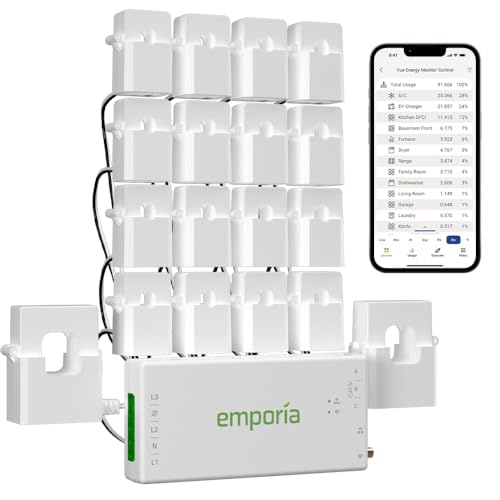
Emporia Vue 3 Home Energy Monitor – Smart Home Automation Module and Real Time Electricity Usage Monitor, Power Consumption Meter, Solar and Net Metering for UL Certified Safe Energy Monitoring
- UL Certified Safe Energy Monitoring: Certified for safety and reliability
- Easy Installation in Circuit Panel: Supports various home electrical systems
- Real-Time Energy Monitoring: 24/7 management and control of energy
As an affiliate, we earn on qualifying purchases.
As an affiliate, we earn on qualifying purchases.
Conclusion
So, don’t let wattage labels dance around the truth. They’re like a flickering lighthouse—guiding, but not always revealing the storm beneath. Remember, numbers alone can’t tell the full story of an appliance’s true power or efficiency. Look deeper, ask questions, and trust your instincts. By peering beyond the label’s glow, you’ll navigate your choices with clarity, steering clear of misleading shadows and shining a light on what truly matters in your home.
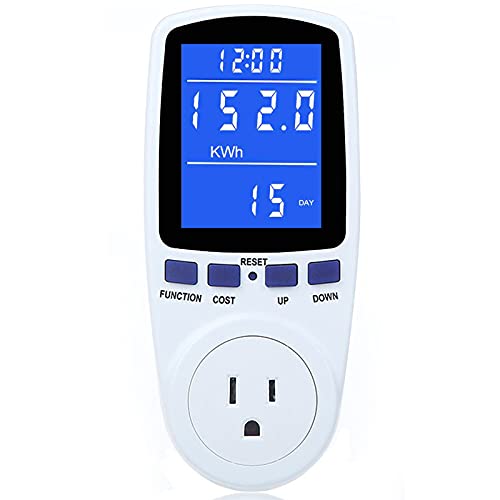
Upgraded Watt Power Meter Plug Home Electrical Usage Monitor Consumption, Energy Voltage Amps Kill Tester with Backlight, Overload Protection, 7 Modes Display
- Multiple Monitoring Parameters: Displays power, energy, volts, amps, and more
- Clear Large LCD Screen: 2.36 inch backlit display with wide viewing angles
- Adjustable Backlight Duration: Five backlight time options for convenience
As an affiliate, we earn on qualifying purchases.
As an affiliate, we earn on qualifying purchases.
Electrical Maintenance (Standards and Compliance S)
- Condition: Brand new and mint condition
- Dispatch Time: Same day dispatch for orders before noon
As an affiliate, we earn on qualifying purchases.
As an affiliate, we earn on qualifying purchases.