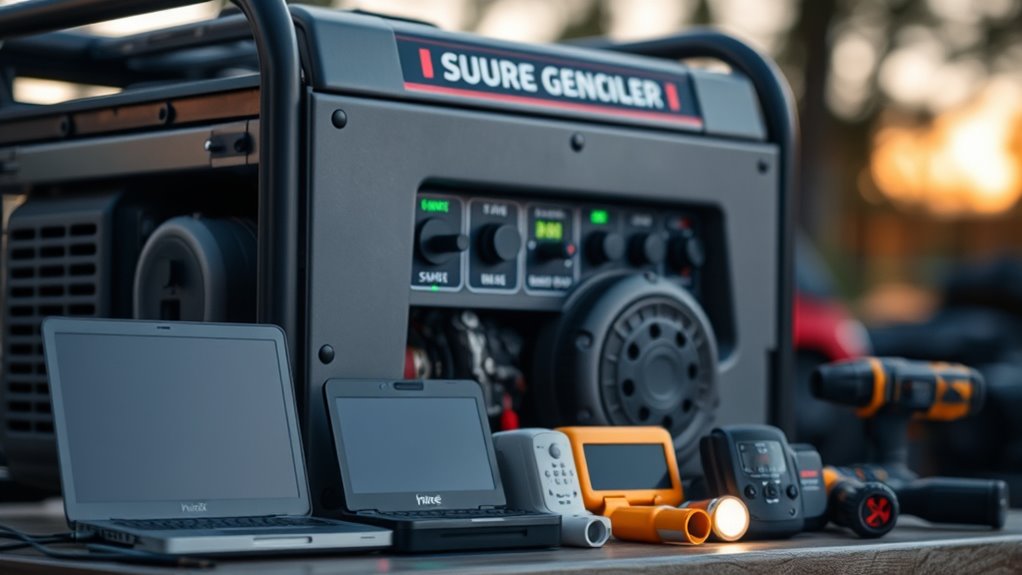
When calculating generator size, you must account for both start-up (surge) watts and running watts. Start-up watts are higher because appliances like refrigerators or air conditioners need extra power to start, sometimes several times their running wattage. Add up the running watts of all devices you plan to operate and include the highest start-up wattage among them. Doing so guarantees your generator can handle your power demands reliably; keep exploring to learn more.

Get backup power and energy gear delivered free — and shop member deals
- Fast, free delivery on millions of items
- Access to Prime Big Deal Days deals on October 6–7
- Prime Video, Amazon Music and more included
Key Takeaways
- Determine the total start-up (surge) watts for appliances with high initial power demands.
- Calculate the continuous running watts for all devices to ensure steady load capacity.
- Sum the highest start-up wattage among appliances with simultaneous use for accurate sizing.
- Select a generator with a capacity that exceeds total start-up watts but aligns with running watts for efficiency.
- Consider both start-up and running wattages to prevent overloads, optimize fuel use, and ensure reliable operation.
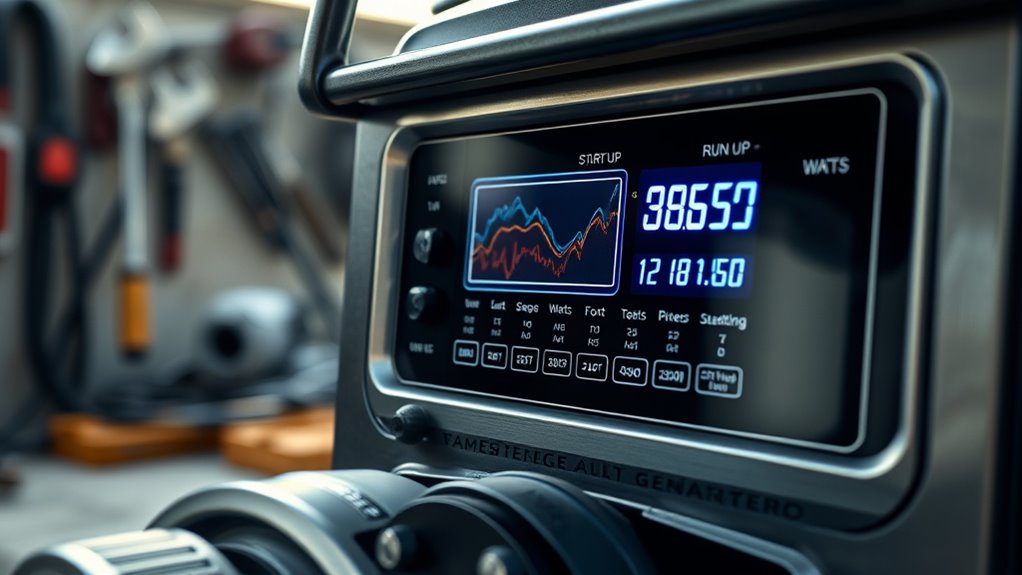
Choosing the right generator size is essential to guarantee your power needs are met reliably without overloading the system. When selecting a generator, you need to consider both the start-up watts and running watts. Start-up watts, also known as surge watts, refer to the extra power your generator must supply momentarily when appliances or equipment turn on. Running watts, on the other hand, are the steady amount of power needed to keep your devices running once they’re already operating. Understanding the difference helps you avoid under-sizing or over-sizing your generator, which can lead to inefficiencies or equipment damage.
One of the key factors in choosing the right generator size is how well it manages fuel efficiency. A generator that’s too powerful for your needs will consume more fuel than necessary, leading to higher operating costs and more frequent refueling. Conversely, a generator that’s too small will struggle to handle your load, risking overloads and potential damage. By accurately calculating your total start-up and running wattages, you guarantee that your generator operates at an ideal size, maximizing fuel efficiency and reducing waste. This means you’ll get more runtime from each tank of fuel, saving money and reducing environmental impact.
Noise levels also play a significant role in choosing a generator. Larger machines tend to produce more noise, which can be disruptive, especially if you’re using the generator in a residential area or during quiet hours. Smaller, appropriately sized generators typically operate more quietly, making them more suitable for settings where noise is a concern. When calculating your needed generator size, consider the noise levels of various models and how they match your environment. A generator that’s slightly larger than your requirements might run more efficiently and quietly than one that’s underpowered and struggling to meet your needs.
Additionally, understanding the start-up wattage is critical for managing appliances with high initial power demands, such as refrigerators, air conditioners, or power tools. These devices can draw several times their running wattage upon startup, so you need to account for that spike in your calculations. Properly estimating surge requirements ensures your generator can handle these initial loads without shutting down or stalling. By carefully balancing your start-up and running wattages, choosing a generator that’s appropriately sized, you’ll guarantee it operates smoothly, efficiently, and quietly — providing reliable power without unnecessary fuel consumption or excessive noise.
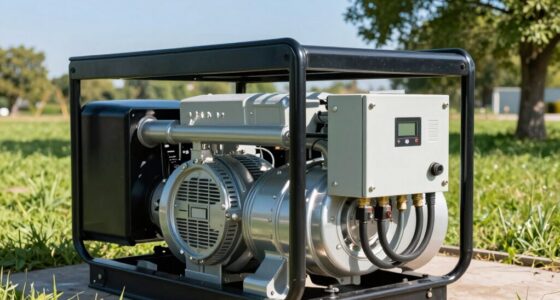
portable generator with high surge wattage
As an affiliate, we earn on qualifying purchases.
As an affiliate, we earn on qualifying purchases.
Frequently Asked Questions
How Do Temperature Variations Affect Generator Start-Up and Running Wattages?
Temperature effects can considerably impact your generator’s start-up and running wattages. In colder conditions, your generator may experience efficiency variations, causing it to require more start-up watts to overcome engine resistance and cold oil viscosity. Conversely, higher temperatures can improve efficiency, reducing wattage needs. Understanding these temperature effects helps you choose a generator that performs reliably across different climates, ensuring consistent power supply regardless of weather changes.
Can Appliances With Motors Cause Overloads During Startup?
Yes, appliances with motors can cause overloads during startup. Motor startup demands a surge of power, often exceeding the generator’s rated capacity for a brief moment. That sudden spike can trigger overloads if your generator isn’t sized properly. To prevent this, focus on overload prevention by choosing a generator with enough start-up wattage. This way, you guarantee smooth operation and avoid unexpected shutdowns during motor startup.
What Is the Impact of Altitude on Generator Performance?
Altitude effects can diminish your generator’s performance because higher elevations mean thinner air, which lowers engine efficiency. As a result, your generator may produce less power, affecting its ability to handle your load effectively. To counteract this, you might need a generator rated for high-altitude operation or adjust your expectations for power output. Understanding altitude effects helps ensure your generator runs smoothly and reliably in elevated locations.
How Do Surge Currents Influence Generator Sizing Decisions?
Surge currents are like sudden thunderstorms that cause power fluctuations, impacting your generator size choices. You need to consider surge capacity to ensure your generator can handle these brief but intense power spikes without overload. If you don’t account for surge currents, your generator might struggle during startup, risking damage or failure. So, always select a generator with enough surge capacity to manage these brief, high-demand moments safely.
Are There Differences in Wattage Requirements for Different Types of Generators?
Yes, different types of generators have varying wattage requirements based on their design and purpose. Portable generators often prioritize fuel efficiency and lower noise levels, which can influence their wattage capacity. In contrast, standby generators may offer higher wattage output but can be less fuel-efficient and noisier. When choosing a generator, consider your power needs, fuel efficiency, and noise levels to guarantee ideal performance and comfort.
As an affiliate, we earn on qualifying purchases.
Conclusion
When choosing a generator, remember that start-up watts are higher than running watts because appliances need extra power to start. Think of it like a sprinter versus a marathon runner: the sprinter needs a burst of energy at the start, while the runner maintains a steady pace. By understanding this difference, you can select the right generator size, ensuring your devices run smoothly without overloads or shortages. Proper calculation keeps your power reliable and your appliances protected.
As an affiliate, we earn on qualifying purchases.
As an affiliate, we earn on qualifying purchases.
Fall Picks
fall essentials
As an affiliate, we earn on qualifying purchases.