When sizing a generator for your RV, a 30-amp system typically needs around 3,600 watts, making a 2,000–3,000-watt generator usually sufficient, especially with solar panels and batteries helping reduce runtime. For a 50-amp setup, you’ll require a larger generator, around 5,000–7,500 watts, to support high-demand appliances like air conditioning and microwave. Understanding your power needs guarantees reliable operation; keep exploring to find the perfect setup for your RV lifestyle.
Play games included with Prime
Start a Prime free trial and play with Amazon Luna on your devices.
As an affiliate, we earn on qualifying purchases.
Key Takeaways
- 30-amp RV systems typically require a 2,000–3,000-watt generator, while 50-amp setups may need 5,000–7,500 watts.
- 30-amp systems provide about 3,600 watts, suitable for smaller appliances; 50-amp systems support higher power loads.
- Solar panels and battery banks can reduce generator runtime and influence the size needed for both system types.
- 50-amp setups often support multiple high-demand appliances simultaneously, requiring larger generators for reliability.
- Proper sizing balances power needs, solar capacity, battery storage, and efficiency to ensure safe, reliable operation.
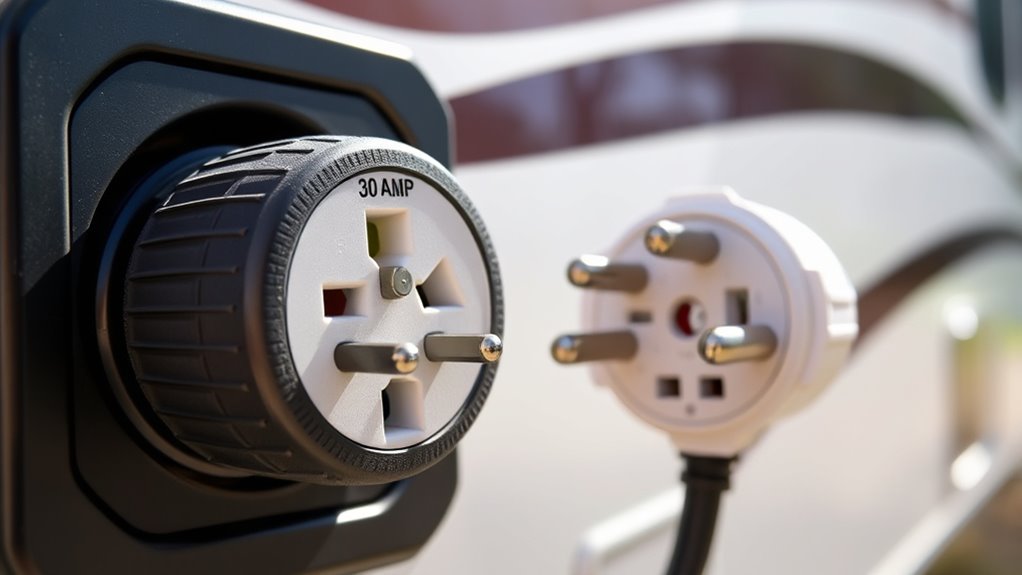
Choosing the right generator size for your RV is essential to guarantee you have enough power for your appliances and devices without overloading the system. When contemplating your power needs, it’s important to look beyond just the generator itself. Your RV’s electrical setup, including solar panels and battery banks, plays a significant role in determining the ideal size. Solar panels can supplement your power, especially during sunny days, reducing the strain on your generator. Meanwhile, your battery banks store energy that can be used for essentials when solar input is low or during nighttime, helping balance your power consumption.
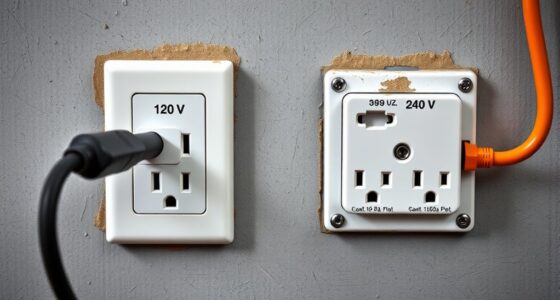
If you mostly rely on standard shore power connections and have a 30-amp system, your power needs are generally lower. A 30-amp system supplies around 3,600 watts, which is suitable for basic appliances like small refrigerators, lights, and a few electronic devices. In this case, a smaller generator—around 2,000 to 3,000 watts—might suffice, especially if you optimize your energy use and utilize solar panels and battery banks efficiently. Solar panels can keep your batteries charged and reduce generator runtime, while battery banks provide backup power for essential devices. This setup allows you to extend your off-grid experience without needing a larger, more expensive generator. Additionally, understanding survivalism principles can help you better prepare for off-grid scenarios by managing resources effectively.
However, if you have a 50-amp system, your power capacity jumps to around 12,000 watts, enabling you to run multiple appliances simultaneously, including air conditioning units, microwave ovens, and other high-demand electronics. To support this level of usage, you’ll need a more substantial generator—typically between 5,000 and 7,500 watts. This larger size ensures you won’t overload your system when running multiple devices at once. Here, solar panels can help offset some power draw, especially if you have a sizable panel array, and your battery banks become even more critical in storing excess energy for times when solar isn’t available.
Ultimately, selecting the right generator size means evaluating your typical power consumption, considering the capacity of your solar panels, and ensuring your battery banks are adequately sized. By doing so, you’ll create a balanced, reliable power system that meets your needs, minimizes generator run time, and keeps your RV electrified and comfortable wherever you go.
As an affiliate, we earn on qualifying purchases.
Frequently Asked Questions
Can I Use a 30-Amp Generator for a 50-Amp RV?
You can’t use a 30-amp generator for a 50-amp RV because of generator capacity and power conversion limits. A 30-amp generator supplies about 3,600 watts, which isn’t enough for a 50-amp RV that needs around 12,000 watts. Trying to do so could overload the generator or damage your RV’s appliances. To safely power your RV, get a generator that matches or exceeds your RV’s power requirements.
How Do I Convert 50-Amp Power to 30-Amp?
Ever wondered how to convert 50-amp power to 30-amp? You do this through power conversion, typically using a converter or adapter that reduces the amperage. Make certain wiring compatibility to prevent electrical issues. You connect the 50-amp service to the converter, which then supplies the appropriate 30-amp output for your RV. This method makes it easy and safe to use your RV with different power sources.
Is a Larger Generator Always Better for RV Use?
A larger generator isn’t always better for RV use because it may reduce efficiency and cause power compatibility issues. You want a generator that matches your RV’s power needs to guarantee peak performance. If your RV requires 30 amps, choosing a generator that provides that level avoids waste and maintains efficiency. Oversized generators can be less fuel-efficient and might not work well with your RV’s electrical system.
What Safety Precautions Are Needed When Sizing a Generator?
You should prioritize grounding safety and overload protection when sizing your generator. Make certain it’s properly grounded to prevent electrical shocks, and install overload protection to avoid damaging your RV’s appliances. Regularly inspect cords and connections, keep a fire extinguisher nearby, and follow manufacturer guidelines. By grounding safely, protecting against overloads, and maintaining equipment, you keep yourself and your RV secure during power use.
How Does Altitude Affect Generator Sizing for RVS?
Altitude effects can substantially impact your RV generator’s performance. As you go higher, thinner air causes the engine to produce less power, so you need to take into account power adjustments. To guarantee your generator works efficiently at high altitudes, select a unit rated for the altitude or plan for a derating. This way, you prevent underperformance and ensure your RV’s appliances run smoothly, no matter the elevation.
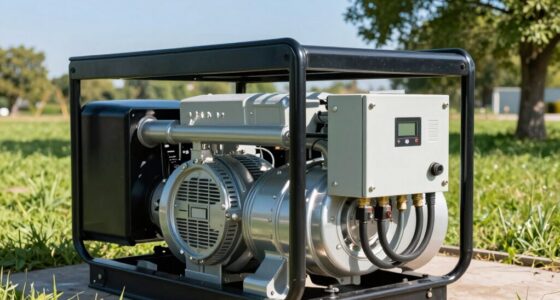
50 amp RV portable generator 7500 watt
As an affiliate, we earn on qualifying purchases.
As an affiliate, we earn on qualifying purchases.
Conclusion
Choosing the right generator for your RV guarantees you’ll never be left in the dark. Remember, a 30-amp setup handles about 3,600 watts, while a 50-amp system can power up to 12,000 watts—enough to run a small home. Imagine camping with all your appliances humming smoothly, no interruptions. By sizing your generator correctly, you’ll enjoy stress-free adventures and peace of mind, knowing you’re prepared for any power needs that come your way.
As an affiliate, we earn on qualifying purchases.
As an affiliate, we earn on qualifying purchases.
NFL season / tailgating Picks
team gear
As an affiliate, we earn on qualifying purchases.