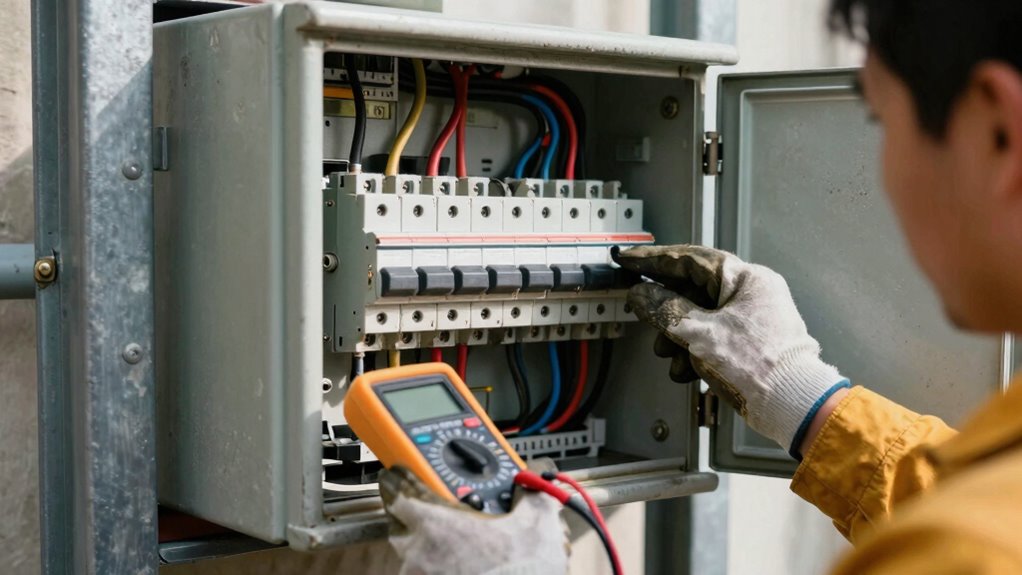
Before plugging into a jobsite panel, you should verify safety protocols are followed, and guarantee the surroundings are hazard-free. Check that all cords and plugs are in good condition, with no fraying or damage, and confirm the equipment’s voltage and amperage ratings match the panel’s capacity. Inspect circuit breakers and the panel for signs of wear or damage, and confirm all switches are off before making connections. If you want to know more about proper procedures, keep exploring.

Get backup power and energy gear delivered free with Prime
- Fast, free delivery on millions of items
- Prime Video, Amazon Music and more included
- Member-only deals all year
Key Takeaways
- Verify all circuit breakers are in the off position before connecting.
- Inspect cords and plugs for damage or wear, replacing if necessary.
- Confirm equipment voltage and amperage ratings match the panel specifications.
- Ensure the panel and connections are free of debris, corrosion, or visible damage.
- Confirm the power source is turned off and the environment is hazard-free before plugging in.
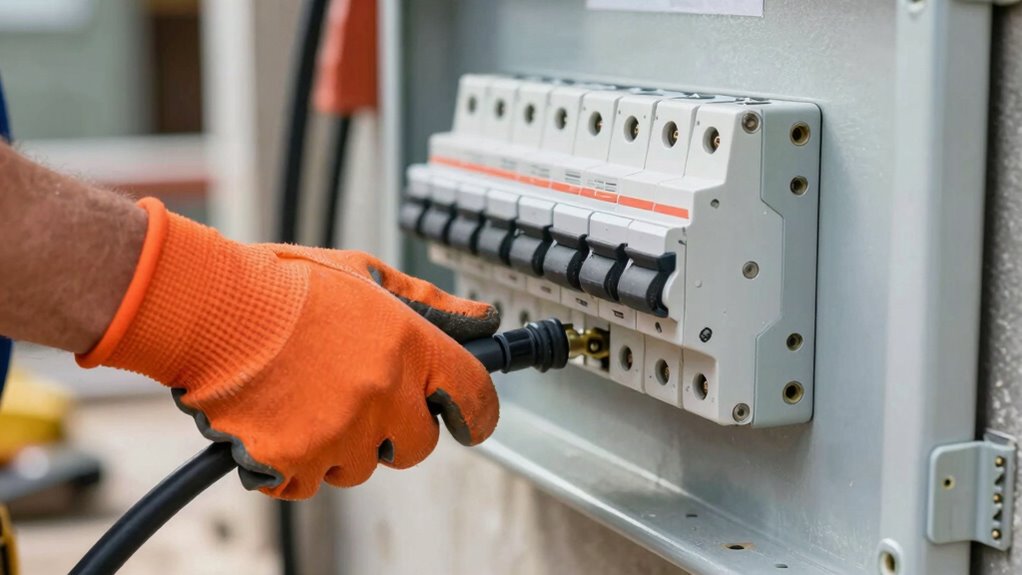
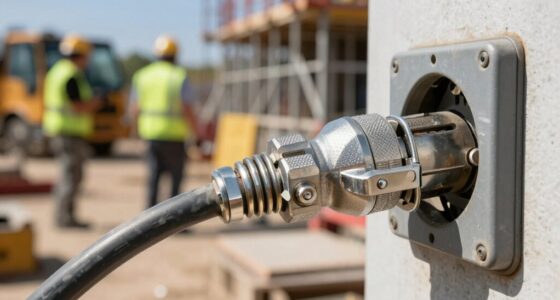
Before plugging into a jobsite panel, it’s vital to verify everything is set up correctly to prevent accidents or damage. The first step is to review the safety protocols specific to your worksite. Ensure you’re wearing the proper personal protective equipment—gloves, safety glasses, and any other required gear. Safety should always come first, so double-check that your surroundings are clear of hazards, and that the panel area is free of debris or obstructions. Confirm that the power source is turned off before you make any connections; rushing in with live equipment greatly increases the risk of shock or short circuits. Additionally, understanding electrical safety procedures is crucial to prevent mishaps when working with panels. Next, you need to assess equipment compatibility. Not all tools and devices are designed to work with every panel, so verify that the voltage and amperage ratings match. Check the labels on your equipment and the panel to ensure they’re compatible. Using mismatched equipment can cause overloads, damage your tools, or trip the system, leading to unnecessary downtime. Make sure your extension cords and power strips are rated for the load you plan to draw. If you’re unsure about compatibility, consult the manufacturer’s guidelines or a qualified electrician before proceeding. Inspect the condition of your cords and plugs. Frayed wires, cracked insulation, or damaged plugs are a red flag—never force a connection or attempt to repair on-site. Damaged cords pose a serious safety risk and can cause electrical fires or shocks. If you discover any faults, replace or repair them before connecting to the panel. Once you’re certain the equipment is in good condition, examine the panel itself. Look for signs of wear, corrosion, or loose connections. Ensure all circuit breakers are in the off position before inserting your plug. When connecting your equipment, do so carefully and securely. Insert plugs fully to avoid arcing or loose contacts. After plugging in, double-check that the connection is stable and that no wires are strained or pinched. Turn on the power at the main panel gradually, monitoring for any unusual noises or sparks. If anything doesn’t seem right, turn off the power immediately and reevaluate your setup.
As an affiliate, we earn on qualifying purchases.
Frequently Asked Questions
Can I Use a Portable Generator With the Jobsite Panel?
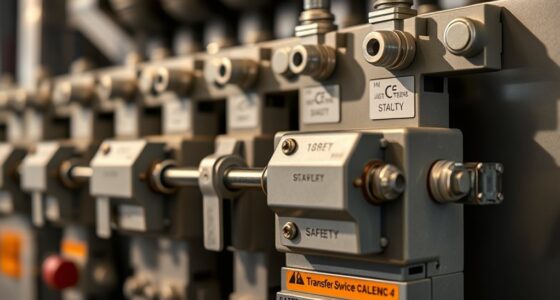
You can use a portable generator with the jobsite panel if you prioritize generator safety and guarantee panel compatibility. Check that the generator’s power output matches the panel’s capacity and that it has the correct outlets. Avoid overloading the system, and use proper transfer switches or interlocks. Always follow safety guidelines to prevent electrical hazards, and consult the manufacturer’s instructions for specific compatibility details before connecting.
What Safety Gear Should I Wear Before Plugging In?
Before you plug in, you should wear personal protective equipment like insulated gloves, safety glasses, and a hard hat—statistics show PPE reduces electrical injury risks considerably. Follow strict electrical safety protocols by inspecting your gear and equipment first. This guarantees you’re protected from potential shocks or arc flashes, keeping you safe on the jobsite. Always prioritize safety gear to prevent injuries and comply with safety standards.
How Do I Identify the Correct Circuit Breaker?
To identify the correct circuit breaker, start by checking the breaker labeling; it usually indicates which area or equipment it controls. If labels are unclear, use a circuit tester or breaker finder device to conduct circuit identification. Turn off breakers one at a time, then verify with your tester or the connected device to confirm which breaker controls the outlet or equipment you’re working on. This guarantees you’re working safely and correctly.
Is It Necessary to Turn off the Main Panel First?
Yes, it’s necessary to turn off the main panel first for safety, especially to prevent electrical shock or damage. Before doing so, check the panel labeling to identify the main breaker and confirm you’re working on the correct circuit. Also, verify proper grounding practices to avoid electrical hazards. Turning off the main panel helps isolate power, making it safer to connect your equipment without risking accidental contact with live wires.
What Are Common Signs of a Faulty Panel Connection?
You’ll notice signs of faulty connections during a panel inspection if you see frequent circuit tripping, flickering lights, or burning smells. Loose or scorched wires indicate faulty connections, which can cause overheating or electrical failures. If you observe corrosion or discoloration around connections, it’s a clear sign to address issues immediately. Regularly inspecting your panel helps catch these problems early, ensuring safety and reliable operation before plugging in or working on the panel.
As an affiliate, we earn on qualifying purchases.
Conclusion
Before you plug in, always double-check the panel’s capacity, make sure your tools are properly grounded, and confirm the connections are secure. Taking these precautions isn’t just about following rules — it’s about keeping yourself safe and avoiding costly mistakes. So, next time you’re about to connect, ask yourself: am I doing everything I can to stay safe and work smart? Remember, a little extra caution can save you from big problems down the line.
heavy-duty extension cords for construction
As an affiliate, we earn on qualifying purchases.
As an affiliate, we earn on qualifying purchases.
As an affiliate, we earn on qualifying purchases.
Halloween Picks
halloween
As an affiliate, we earn on qualifying purchases.