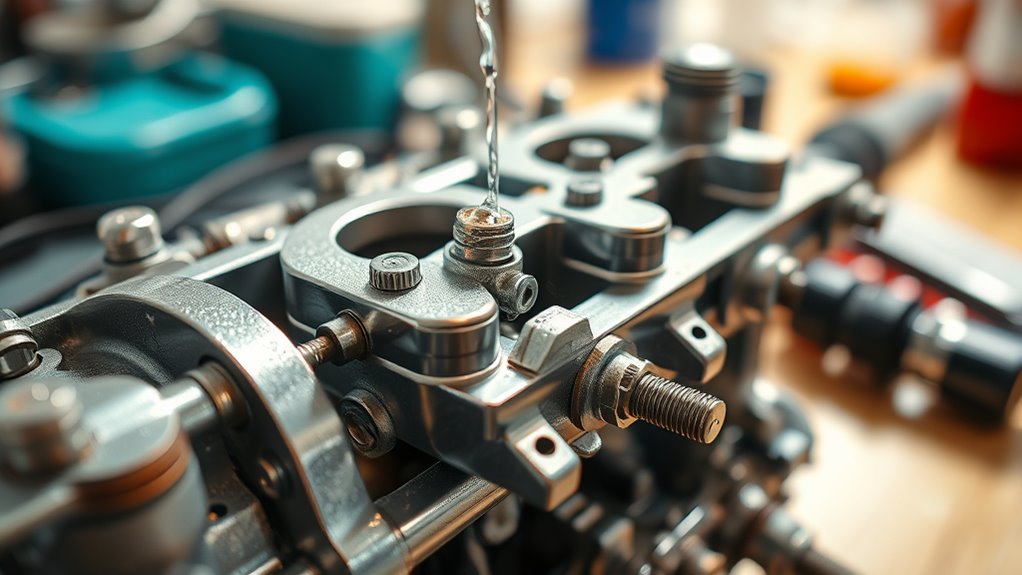

Using fuel additives is a smart way to keep your carburetor clean and prevent deposit buildup that causes rough idling and poor performance. These additives contain detergents and stabilizers that dissolve varnish, inhibit corrosion, and improve fuel efficiency. Regular use helps combat ethanol-related issues and keeps your engine running smoothly. To get the best results, follow the manufacturer’s instructions, and you’ll discover how simple maintenance can extend your engine’s lifespan.
Key Takeaways
- Fuel additives contain detergents that dissolve varnish and carbon deposits in carburetors.
- Regularly add the recommended amount of additive to fuel to prevent deposit buildup.
- Use cleaning additives when engine runs rough or shows signs of carburetor clogging.
- Choose additives formulated to counteract ethanol-related issues and moisture in fuel.
- Proper application and periodic use help maintain engine performance and extend carburetor life.

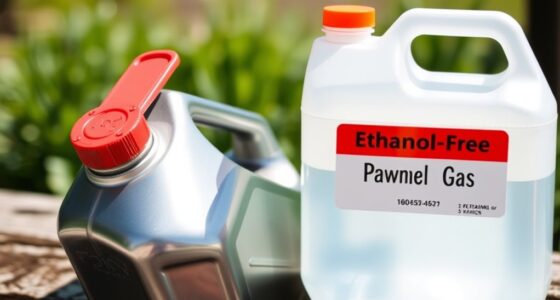
Fuel additives play an essential role in maintaining your engine’s performance by cleaning carburetors and preventing deposits. Over time, deposits can build up inside your fuel system, causing rough idling, poor acceleration, and reduced fuel efficiency. Using the right fuel additive helps keep your engine running smoothly, guaranteeing ideal performance. One key factor to consider is the ethanol effects in your fuel. Ethanol, commonly blended into gasoline, can attract moisture and lead to phase separation, which causes corrosion and deposit formation. If your vehicle isn’t used regularly or stored for long periods, ethanol can exacerbate these issues. That’s why choosing additive types specifically formulated to counteract ethanol effects is essential. These additives often contain detergents and stabilizers designed to neutralize ethanol’s negative impact, preventing the formation of harmful deposits in your carburetor and fuel lines.
When selecting a fuel additive, you’ll notice various types available on the market, each tailored for different needs. Some are designed to clean existing deposits, while others focus on preventing future buildup. Fuel system cleaners typically contain detergents that dissolve varnish and carbon deposits, restoring your engine’s efficiency. Stabilizers, on the other hand, help preserve fuel quality during storage, especially important if you use ethanol-blended fuel. Fuel additives with anti-corrosion properties are also beneficial; they form a protective barrier against moisture and acids that ethanol can promote. Whether you’re dealing with an older carbureted engine or a modern fuel-injected system, understanding these additive types helps you make an educated choice that aligns with your vehicle’s needs. Additionally, regular use of high-quality resources and tools can further enhance your engine’s longevity and performance.
Applying the right additive is straightforward. You usually mix it directly with your fuel, following the manufacturer’s instructions. For routine maintenance, using a fuel additive periodically can keep your carburetor clean and prevent deposit formation before it becomes a problem. If you notice your engine running rough or idling irregularly, a targeted cleaning additive can help dissolve stubborn deposits. Keep in mind that ethanol effects are more pronounced in vehicles that sit unused for extended periods, so regular use of appropriate additives can mitigate these issues. By choosing the right additive types and understanding how ethanol impacts your fuel system, you can safeguard your engine from deposits, improve fuel efficiency, and extend its lifespan.
In essence, fuel additives are a simple yet powerful tool in your maintenance arsenal. They combat ethanol-related problems, clean your fuel system, and prevent deposits that impair engine performance. Knowing which additive types suit your vehicle and applying them correctly ensures your engine stays reliable and efficient, no matter where or how often you drive.

Red Line 60103 SI-1 Complete Fuel System Cleaner, Cleans and Prevents Corrosion in Fuel Systems, Cleans Injectors, Carburetors, Valve and Combustion Chamber Deposits – 15 Ounce (2 Pack)
DESIGNED TO EXCEED EXPECTATIONS: Red Line complete SI-1 fuel system cleaner treatment for cleaning and preventing corrosion in…
As an affiliate, we earn on qualifying purchases.
As an affiliate, we earn on qualifying purchases.
Frequently Asked Questions
Can Fuel Additives Damage My Engine Over Time?
Fuel additives generally won’t damage your engine if you choose the right one and guarantee additive compatibility. However, using incompatible or excessive additives can accelerate engine wear or cause build-up issues over time. Always follow the manufacturer’s instructions and select additives designed for your vehicle. Regular maintenance and proper additive use help prevent potential damage, keeping your engine running smoothly without risking long-term harm.
How Often Should I Use Fuel Additives for Maintenance?
Imagine your engine running smoothly, like a well-oiled machine gliding effortlessly. For maintenance, use fuel additives seasonally—say, every 3,000 to 5,000 miles or before winter to prevent gunk buildup. Consider cost too; infrequent use saves money while keeping your engine clean. Regular seasonal treatments help maintain peak performance, prevent deposits, and extend engine life without overdoing it, ensuring a reliable, smooth ride year-round.
Are Fuel Additives Suitable for All Types of Engines?
Fuel additives aren’t suitable for all engine types, as engine compatibility varies. You should check your vehicle’s manual to see if specific additive types are recommended. Some additives work better with gasoline engines, while others suit diesel engines. Using incompatible additives can cause damage, so always verify that the product is designed for your engine’s type before adding it to your fuel.
Do Fuel Additives Improve Fuel Economy Significantly?
Fuel additives can improve your fuel economy, but the extent varies based on additive effectiveness and your vehicle’s condition. Some additives clean fuel systems, reduce deposits, and enhance engine efficiency, leading to better mileage. However, not all additives deliver significant improvements. For best results, choose high-quality products suited to your engine type and regularly maintain your vehicle, ensuring the additive’s benefits are maximized and your fuel economy is optimized.
Can Additives Fix a Carburetor That’s Already Malfunctioning?
Additives alone usually can’t fix a malfunctioning carburetor. If you’re experiencing issues, carburetor repair is often necessary to restore proper function. While some additives can improve additive effectiveness by cleaning deposits and preventing buildup, they aren’t a substitute for mechanical repairs. Using the right additives can help maintain your carburetor, but if it’s already faulty, professional cleaning or rebuild is your best bet for a lasting fix.

Ethanol Shield Fuel Stabilizer, 24 oz (2 Pack) Keeps Fuel Fresh, Gasoline Treatment Fuel Additive That Protects Fuel System, Gas Stabilizer for Fuel Storage, Antioxidant and Anticorrosive
New Standard of Antioxidants and Anticorrosives
As an affiliate, we earn on qualifying purchases.
As an affiliate, we earn on qualifying purchases.
Conclusion
Using fuel additives is a smart way to keep your carburetor clean and prevent harmful deposits. They help improve engine performance, fuel efficiency, and extend your vehicle’s lifespan. Isn’t it worth taking a simple step to avoid costly repairs down the road? By incorporating these additives into your routine, you’re not just maintaining your engine—you’re ensuring it runs smoothly and reliably for miles to come. Why wait until problems arise when prevention is so easy?

Chevron Techron Concentrate Plus Fuel System Cleaner, 20 oz., Pack of 1
QUALITY ASSURED
As an affiliate, we earn on qualifying purchases.
As an affiliate, we earn on qualifying purchases.

Hot Shot’s Secret EDT+ Winter Defense 16 oz Squeeze – Treats 200 Gallons – 7-in-1 Anti-Gel Diesel Fuel Additive, Prevents Gelling, Protects Fuel System, Improves Cold Starts, Boosts Cetane
PREVENTS GELLING: This 7-in-1 diesel anti-gel additive minimizes the size of wax crystals that form in diesel fuel…
As an affiliate, we earn on qualifying purchases.
As an affiliate, we earn on qualifying purchases.