

Before storing your generator long-term, it is crucial to drain both the fuel and oil to prevent internal damage. Start by running the engine until the fuel is almost gone, then carefully drain any remaining fuel into approved containers to avoid varnish buildup and clogs. Next, change the oil, run the engine briefly to circulate it, and then drain it completely. Properly managing these fluids helps protect your investment and keeps your generator ready for future use; discover more tips for successful storage.
Key Takeaways
- Completely drain fuel using approved containers to prevent varnish and gum buildup during long-term storage.
- Run the engine briefly to consume residual fuel before draining for optimal cleaning.
- Change the engine oil prior to storage to prevent corrosion and sludge formation.
- Use manufacturer-recommended oil and run the engine to circulate fresh oil throughout the system.
- Disconnect the spark plug, cover or seal openings, and store the generator in a dry, protected environment.
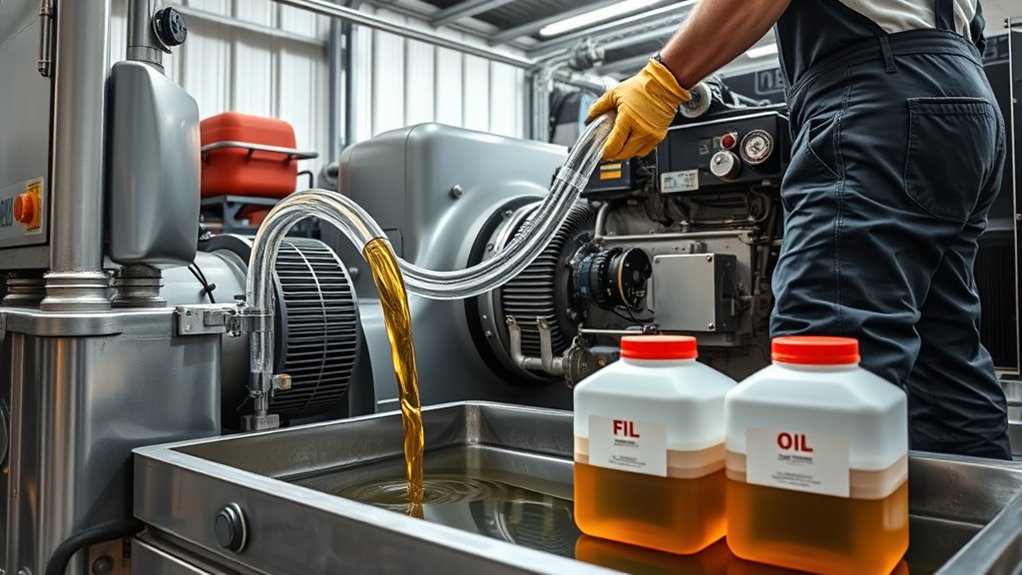
Have you ever considered how to properly store your generator when it’s not in use? Proper storage is essential to keep your equipment in top shape and ready for use when you need it most. One of the most critical steps is draining the fuel and oil before long-term storage. This process helps prevent damage caused by fuel degradation and oil breakdown, which can compromise your generator’s performance in the future.
Start by stabilizing the fuel if you plan to store the generator for a short period, but for long-term storage, it’s best to drain the fuel entirely. Fuel left sitting in the tank can break down over time, creating varnish and gum deposits that clog fuel lines and carburetors. Using a fuel stabilizer initially can extend the life of the fuel, but for extended storage, draining the tank is the safest option. After running the engine to burn off the remaining fuel, shut it down and disconnect the spark plug for safety. Then, carefully drain the fuel from the tank into an approved container, ensuring you dispose of it responsibly. This prevents the fuel from deteriorating and causing damage during storage.
For long-term storage, drain the fuel completely to prevent varnish and gum buildup that can clog your generator.
Next, focus on oil preservation. Old or contaminated oil can cause corrosion and sludge buildup, which hampers engine performance. Before storing, change the oil completely, using the manufacturer-recommended type and grade. Once drained, run the engine briefly to circulate fresh oil through the system, then shut it down. This helps lubricate internal components and reduces the risk of corrosion during storage. Additionally, some experts recommend removing the spark plug and applying a small amount of oil into the cylinder to coat the piston and cylinder walls, further protecting against moisture and rust. Covering or sealing the spark plug hole afterward prevents dirt and debris from entering. Proper fuel management and storage techniques are vital to maintaining your generator’s longevity and reliability.
Top picks for "storage generator drain"
Open Amazon search results for this keyword.
As an affiliate, we earn on qualifying purchases.
Frequently Asked Questions
How Often Should I Check Fuel and Oil Levels During Storage?
You should check the fuel level and oil level at least once every month during storage. This helps prevent fuel from degrading and oil from becoming contaminated or breaking down. Make sure the fuel is fresh if you plan to use the generator soon, and top off the oil if needed. Regular checks keep your generator ready and guarantee all components stay in good condition during storage.
Can I Leave Fuel in the Generator for Extended Periods?
You shouldn’t leave fuel in your generator for extended periods. Fuel can degrade, cause clogs, and lead to issues. To protect your generator, add fuel stabilizers or fuel additives, which help prevent deterioration. Additionally, using oil filtration can keep the oil clean during storage. If storing long-term, it’s best to drain the fuel and oil to make sure your generator stays in good shape and ready when you need it.
What Are the Risks of Not Draining Fuel Before Storage?
Leaving fuel in your generator is like trapping a spoiled fruit in a jar; it decays, creating fuel contamination that can clog your system. If you skip draining, you risk engine damage from stale fuel turning gunky and corrosive. This buildup can lead to costly repairs. To protect your generator, always drain the fuel to prevent contamination and keep your engine running smoothly when you need it most.
How Do I Properly Dispose of Drained Fuel and Oil?
You should take your drained fuel and oil to an authorized recycling center or an environmental disposal site. Never pour them down the drain or onto the ground, as this harms the environment. Check with local waste management facilities for proper disposal options. Recycling options help guarantee that these hazardous materials are handled safely and sustainably, preventing pollution and protecting public health. Always follow your local regulations for disposal procedures.
Is It Necessary to Use Fuel Stabilizer Before Storage?
Skipping fuel stabilizer isn’t a good idea; it’s like leaving fuel to spoil in your tank. Using a fuel stabilizer before storage keeps fuel fresh, preventing gum and varnish buildup. This simple step boosts storage benefits, ensuring your generator starts smoothly when you need it again. So, always add fuel stabilizer, especially if you plan to store your generator for more than a few months. It’s an easy way to protect your equipment and save trouble later.
Conclusion
Properly draining your generator’s fuel and oil before long-term storage guarantees it stays in top shape. Did you know that neglecting this step can lead to engine corrosion and costly repairs later? By taking these simple precautions, you reduce the risk of damage and extend your generator’s lifespan. Remember, a well-maintained generator can last up to 50% longer, saving you money and hassle when you need it most.