Over time, your portable generator loses output mainly because of fuel degradation, dirt buildup, and worn components. If fuel sits too long, it forms deposits that clog the engine, reducing power. Dirty air filters and old spark plugs can cause misfires and inefficient combustion. Without regular maintenance like cleaning and inspections, parts wear out faster and performance drops. To keep your generator running smoothly, it’s important to follow best practices—there’s more to uncover if you keep exploring.
Key Takeaways
- Fuel degradation and stale fuel cause deposits that impair engine combustion and reduce power output.
- Lack of regular maintenance leads to dirt buildup, clogged filters, and worn spark plugs, decreasing efficiency.
- Fuel system issues like leaks or blockages hinder proper fuel flow and engine performance.
- Over time, engine components may wear out or become damaged, resulting in reduced power generation.
- Inadequate monitoring and neglect of engine parameters allow minor issues to escalate, decreasing output.
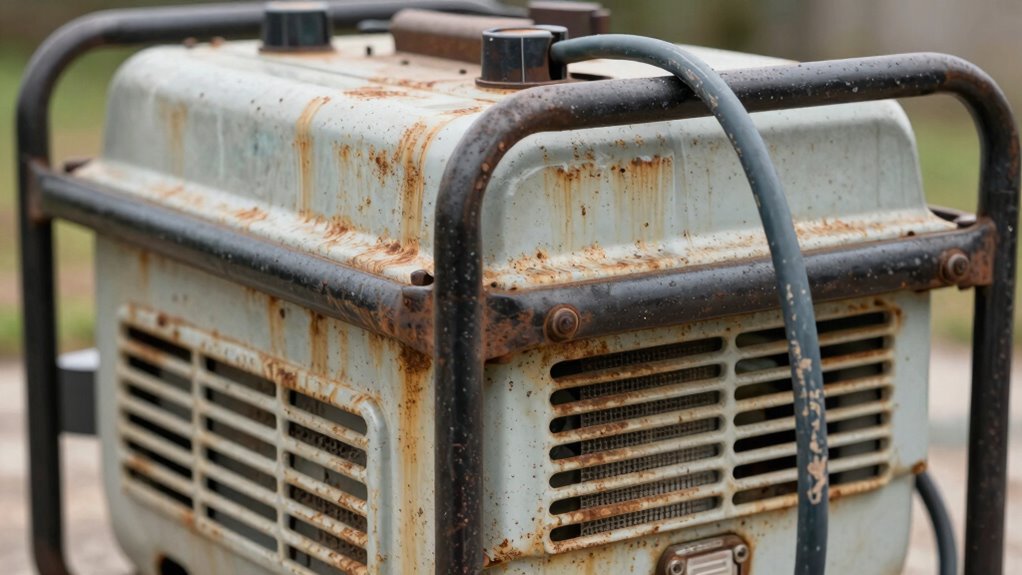
Have you ever noticed your portable generator isn’t performing as well as it used to? Maybe it struggles to start, runs unevenly, or simply doesn’t provide the power you need. Over time, generators can lose output for several reasons, and understanding these causes can help you troubleshoot and restore their performance. One key factor is fuel efficiency, which directly impacts how well your generator runs. When fuel isn’t burned efficiently, it can lead to incomplete combustion, fouling the spark plugs, and clogging the carburetor. This results in reduced power output and uneven running. To prevent this, it’s essential to use fresh, high-quality fuel and avoid letting fuel sit in the tank for long periods, as stale fuel can degrade and cause deposits that impair engine performance.
Another major cause of declining output is neglecting proper maintenance routines. Regular maintenance isn’t just a formality; it’s vital to keep your generator operating at peak levels. Over time, dirt, dust, and debris can accumulate inside the engine and cooling system, causing overheating and decreased efficiency. Changing the oil at recommended intervals ensures the engine stays properly lubricated, reducing wear and tear that can diminish power output. Additionally, inspecting and cleaning air filters prevents dirt from entering the engine, which can choke airflow and reduce combustion efficiency. Spark plugs also need regular checking and replacement, as worn or dirty plugs can cause misfires and inconsistent power delivery. Incorporating routine inspections can help catch issues early before they affect performance. Regularly checking and maintaining the fuel system can also prevent blockages and leaks that impair performance.
Furthermore, neglecting to monitor engine performance parameters can lead to unnoticed issues that compound over time, further reducing output. Many people overlook small maintenance tasks, but these can have a big impact on performance. For example, neglecting to tighten loose connections or inspect the fuel lines can lead to fuel leaks or blockages that hamper fuel flow. If you notice your generator’s output declining, it’s worth reviewing your maintenance routines and making sure you’re following the manufacturer’s recommendations. This might involve cleaning or replacing parts more frequently or checking the fuel system for contaminants. Additionally, understanding proper fuel system management can help you prevent performance issues. Keeping your generator clean and well-maintained not only boosts fuel efficiency but also extends its lifespan, saving you money in the long run.
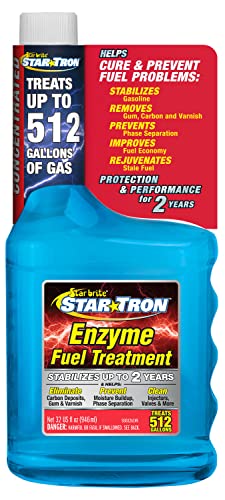
STAR BRITE Star Tron Enzyme Fuel Treatment – Concentrated Formula 32 Fl. Oz. – Treats up to 512 Gallons – Fuel Stabilizer & Treatment, Gasoline Stabilizer, Star Tron Marine Enzyme Fuel Treatment
ALL-ROUND ENGINE SOLUTION – Works in all engines and all fuels, making it the ideal fuel treatment and…
As an affiliate, we earn on qualifying purchases.
As an affiliate, we earn on qualifying purchases.
Frequently Asked Questions
Can Regular Maintenance Prevent Portable Generator Power Loss?
Yes, regular maintenance can prevent power loss in your portable generator. You should check fuel quality to prevent engine issues caused by stale or contaminated fuel. Additionally, inspecting and changing the oil helps reduce engine wear, ensuring maximum performance. Regularly cleaning air filters and spark plugs also keeps the generator running smoothly. By staying on top of these tasks, you’ll maintain consistent power output and prolong your generator’s lifespan.
How Does Altitude Affect Generator Output Over Time?
Altitude effects can cause your generator performance to decline over time because higher elevations reduce oxygen availability, which affects combustion efficiency. As you operate your generator at increasing altitudes, you might notice decreased power output and potential strain on the engine. To maintain peak performance, you may need to adjust the carburetor or use altitude-compensating kits. Regular maintenance and awareness of altitude effects help guarantee your generator runs smoothly in various conditions.
Do Different Brands Experience Different Rates of Power Decline?
You notice that some brands, like Honda, maintain better power stability and experience slower power decline than others, such as lesser-known brands. For example, Honda generators often show consistent output after years of use, thanks to superior build quality and brand consistency. In contrast, cheaper brands tend to degrade faster, leading to more significant power loss over time. Your choice affects how reliably your generator performs long-term.
What Is the Typical Lifespan Before Significant Output Reduction?
Your portable generator typically lasts around 8 to 15 years before significant output reduction. Over time, battery degradation affects start-up power, and fuel contamination can clog the system, both lowering efficiency. Regular maintenance, such as replacing batteries and draining old fuel, helps prolong its lifespan. By staying attentive to these issues, you can maximize your generator’s performance and delay the decline in output.
Can Using the Wrong Fuel Cause Long-Term Generator Damage?
Using the wrong fuel can cause long-term generator damage, like engine corrosion or reduced efficiency. For example, a homeowner used contaminated fuel, leading to clogged carburetors and engine wear. Poor fuel quality can leave residues that corrode internal parts, decreasing output over time. Always use the recommended fuel type, and store it properly, to protect your generator’s engine and guarantee consistent performance.

SYOWADA 17211-Z07-000 Air Filter Element 17218-Z07-000 Outer Filter Kit Replacement for Honda EU2000 EU2000i EB2000 EB2000i EB2000iT1 EU2000iT1 EU2000iK1 EU2200I Generators
Fitment: 17211-Z07-000 air filter element kit replacement for Honda Generator EB2000 EB2000i EB2000iT1 EU2000 EU2000i EU2200I EU2000iK1 EU2000iT1…
As an affiliate, we earn on qualifying purchases.
As an affiliate, we earn on qualifying purchases.
Conclusion
Over time, your portable generator’s power can decline due to wear and tear, clogged filters, or stale fuel. Regular maintenance helps keep it running efficiently. Did you know that neglecting maintenance can reduce your generator’s output by up to 50%? Staying on top of cleaning and servicing not only prolongs your generator’s lifespan but also ensures you have reliable power when you need it most. Keep it maintained, and it’ll serve you well for years to come.
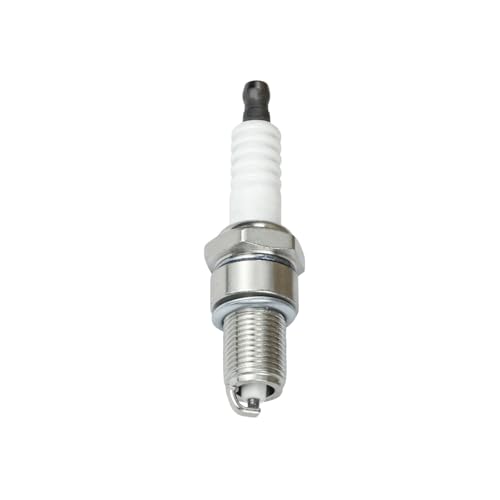
KELKONG 0J00620106 Spark Plug Compatible with Generac Models Replacement for Generac 006000-0 (LP3250) Portable Generator
Replace part number: 0J00620106
As an affiliate, we earn on qualifying purchases.
As an affiliate, we earn on qualifying purchases.

Generac 5W-20 Maintenance Kit for 20Kw-26Kw 999cc Generators (Replaces A0002074712)
Generac SAE 5W-20 Full Synthetic Engine Oil (2 Quarts)
As an affiliate, we earn on qualifying purchases.
As an affiliate, we earn on qualifying purchases.