On modern generators, CO sensors continuously monitor for dangerous carbon monoxide levels using chemical or electrochemical detection methods. When CO is detected, these sensors send signals to automatically shut off the generator, preventing dangerous buildup. They must be calibrated regularly to stay accurate, ensuring they react correctly in emergencies. If you want to understand how these sensors stay reliable and keep you safe, keep exploring how they work in detail.
Key Takeaways
- COsense sensors detect carbon monoxide levels using chemical or electrochemical methods that produce electrical signals upon CO exposure.
- They continuously monitor CO concentration and send real-time data to the generator’s control system.
- When CO levels reach dangerous thresholds, the sensor triggers an automatic shutdown of the generator.
- CO Shutoff Sensors incorporate safety algorithms to ensure immediate response and prevent CO buildup in enclosed spaces.
- Regular calibration and maintenance of sensors ensure accurate detection and reliable activation of safety shutoff features.
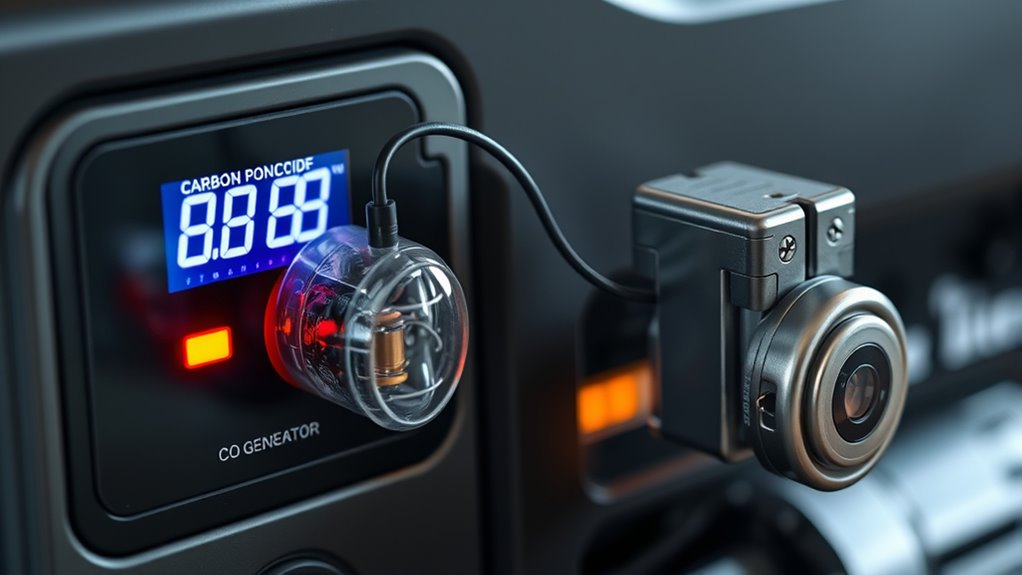
Carbon monoxide (CO) sensors play a essential role in keeping your home safe by detecting dangerous levels of this odorless, colorless gas. When it comes to modern generators, these sensors are indispensable for preventing CO poisoning, especially since generators produce exhaust that can accumulate quickly in enclosed spaces. Understanding how these sensors work can help you guarantee your safety system functions properly, which begins with proper sensor calibration. Regular calibration is key to maintaining the accuracy of your CO sensors, as it ensures they respond correctly to the presence of CO. If calibration is neglected, the sensor might give false readings—either failing to detect dangerous levels or causing unnecessary alarms—both of which compromise your safety. Most modern CO sensors come with calibration instructions, and some feature automatic calibration functions, but it’s good practice to verify calibration periodically, especially if you notice the alarm system behaving irregularly. AI advancements are also being explored to enhance sensor accuracy and reliability further.
These sensors operate by using chemical or electrochemical methods to detect CO molecules in the air. When CO binds with the sensor’s chemical components, it causes a change in electrical current or voltage, which the device interprets as a CO presence. The sensor then triggers an alert or shuts down the generator to prevent further CO buildup. This active response helps protect you and your family from potential poisoning. Because the sensors are so sensitive, even small fluctuations in CO levels can trigger alarms, which emphasizes the importance of correct calibration. Proper calibration ensures that the sensor’s readings are accurate and reliable, allowing you to trust the alarm system’s alerts.
In the context of generators, CO shutoff sensors are integrated into safety systems that automatically shut down the device if dangerous CO levels are detected. This automatic shutdown is essential for preventing CO buildup in enclosed or semi-enclosed spaces, where ventilation might be insufficient. When the sensor detects a threshold level of CO—often set by safety standards—it sends a signal to deactivate the generator immediately. This rapid response can prevent the dangerous consequences of CO poisoning. To keep these sensors functioning at their best, you should follow manufacturer guidelines on calibration intervals and procedures, which might include calibration gas tests or self-calibration features. Maintaining your sensor’s calibration status ensures it remains responsive and accurate, providing you with peace of mind during operation.
Frequently Asked Questions
How Often Should CO Sensors Be Tested or Replaced?
You should test your CO sensors at least once a month to guarantee they’re functioning properly. Regular sensor calibration helps maintain accuracy, and you should replace the sensors every 3 to 5 years, depending on the manufacturer’s recommendations. Keep an eye on their sensor lifespan, and if you notice any alerts or malfunctions, replace them sooner. Proper maintenance keeps you safe and ensures your generator’s CO detection system works effectively.
Are CO Sensors Affected by Outdoor Environmental COnditions?
Like a delicate compass, CO sensors can be affected by outdoor environmental conditions, making them sensitive to temperature, humidity, and pollutants. Environmental sensitivity can impact sensor calibration, causing false alarms or reduced accuracy. To guarantee reliable safety, you should check your sensors regularly, especially in extreme weather, and follow manufacturer guidelines. Proper maintenance helps keep your generator’s CO detection precise, protecting you from unseen dangers.
Do All Generators COme With Built-In CO Detection?
Not all generators come with built-in CO detection, which is vital for generator safety. When choosing a generator, you should look for models with integrated CO sensors, ideally placed for ideal sensor placement. These sensors detect dangerous carbon monoxide levels early, helping prevent poisoning. Installing a generator without proper CO detection increases risk, so prioritize models with reliable sensors and make sure they’re correctly positioned to monitor indoor or outdoor environments effectively.
Can CO Sensors Detect Low Levels of Carbon Monoxide?
Think of CO sensors as vigilant guards, always on the lookout for even tiny intruders. They can detect low levels of carbon monoxide, helping you maintain good indoor air quality. Regular sensor calibration is essential to guarantee accuracy, especially at low concentrations. This way, you’re warned early if CO levels rise, preventing danger and keeping your environment safe. Trust these sensors to act swiftly and protect you.
What Maintenance Is Required for CO Shutoff Sensors?
You need to regularly inspect and clean your CO shutoff sensors to make certain they work properly. Sensor calibration is essential, so follow the manufacturer’s instructions for calibration intervals and procedures. Keep an eye on the sensor lifespan, replacing sensors as recommended, typically every 3-5 years. Proper maintenance guarantees your generator’s safety features stay reliable, protecting you from carbon monoxide risks during operation.
Conclusion
Understanding how CO Sense and CO Shutoff Sensors work is like having a vigilant guardian watching over you. They constantly monitor carbon monoxide levels, ready to act in an instant if danger looms. Think of them as silent sentinels, quietly safeguarding your home and family. By catching trouble early, they prevent disasters before they happen. With these sensors in place, you’re not just using a generator — you’re empowering your safety with a high-tech shield that never sleeps.