
To make certain of proper ventilation when running a generator in garages or sheds, always position it outside in a well-ventilated area, keeping at least 20 feet away from doors, windows, and vents. Use exhaust extension pipes to direct fumes outside and open doors or windows to promote air flow. Installing carbon monoxide detectors and using exhaust fans help monitor and improve safety. Keep an eye on ventilation best practices to prevent dangerous fumes—more tips are just a step away.
Key Takeaways
- Always operate generators outside in well-ventilated areas, keeping at least 20 feet away from doors, windows, and vents.
- Use exhaust extension pipes to direct fumes outside and prevent indoor accumulation.
- Install and regularly check carbon monoxide detectors inside garages or sheds during generator use.
- Keep doors and windows open and utilize vents or exhaust fans to improve airflow around the generator.
- Avoid operating generators in enclosed spaces unless specifically designed for indoor use, ensuring continuous ventilation.
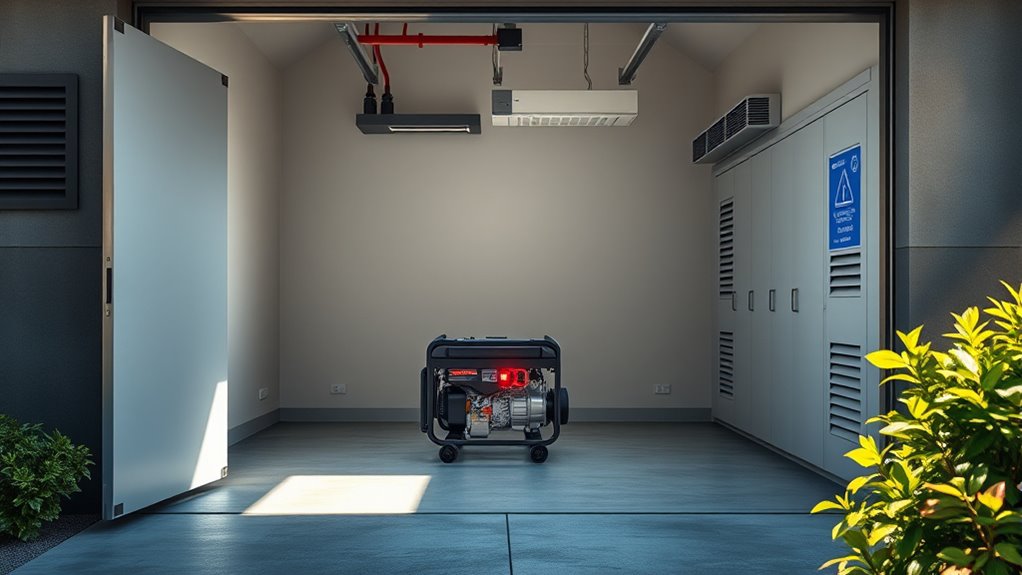
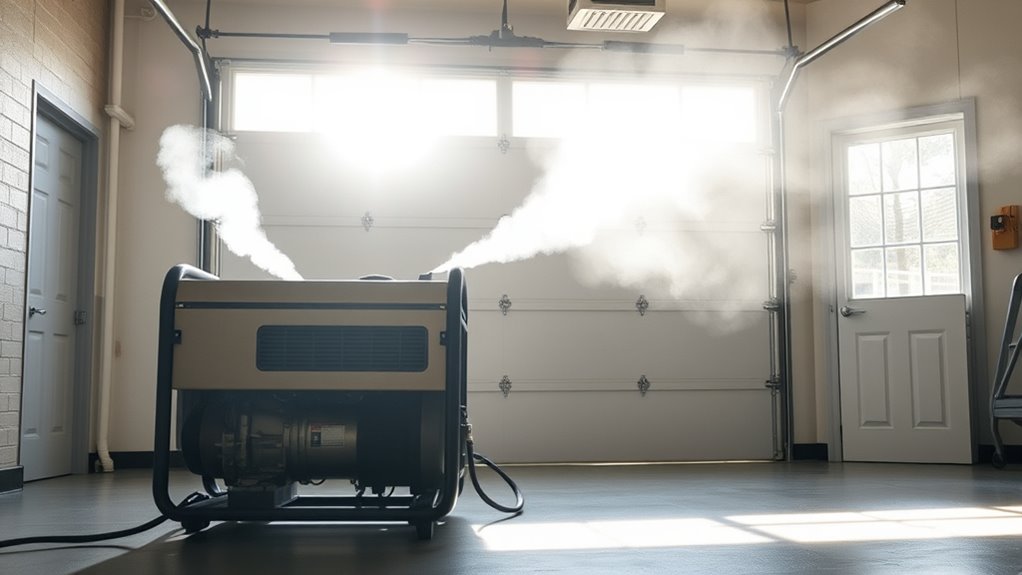
Running a generator without proper ventilation can pose serious health and safety risks. Carbon monoxide, a colorless and odorless gas produced by generator exhaust, can quickly build up in enclosed spaces like garages or sheds, leading to dangerous poisoning. That’s why understanding generator safety and implementing effective ventilation techniques are vital when operating your generator indoors or in semi-enclosed areas. You want to guarantee that fresh air circulates properly and exhaust gases escape efficiently to prevent harmful buildup.
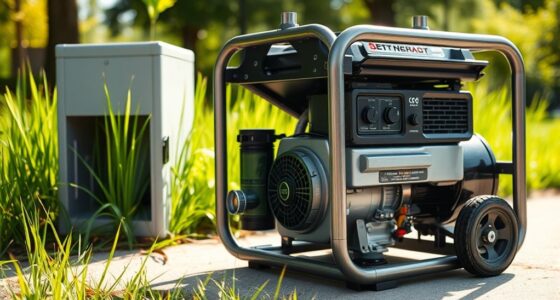
First, always position your generator outside in a well-ventilated area. If you must run it near a garage or shed, make sure it’s placed at least 20 feet away from doors, windows, and vents. This distance helps prevent exhaust fumes from entering indoor spaces and reduces the risk of carbon monoxide poisoning. Never run a generator inside a garage or shed unless it has been specifically designed for indoor use with proper ventilation systems. Even then, you should still use multiple ventilation techniques to keep the air safe for anyone nearby.
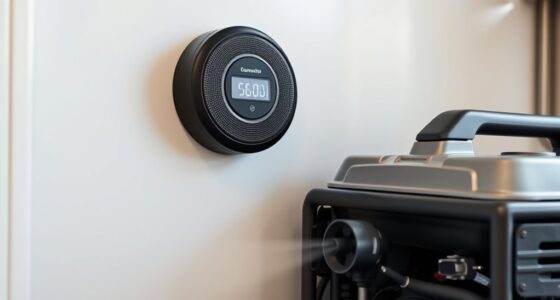
To optimize generator safety, consider creating a permanent or temporary exhaust system that directs fumes away from your workspace. Installing exhaust extension pipes can help channel the gases outside, preventing them from collecting in confined spaces. Additionally, use fans or exhaust vents to improve airflow around the generator. These ventilation techniques help dilute the concentration of harmful gases, making the environment safer for you and others. When running your generator, always keep a carbon monoxide detector inside the building, and check its batteries regularly to catch any leaks early.
Another essential aspect of ventilation involves controlling airflow within the garage or shed. Keep doors and windows open if possible, and use vents or exhaust fans to promote continuous air exchange. This prevents the buildup of dangerous gases and ensures a steady supply of oxygen. Avoid blocking vents or creating enclosed spaces where fumes can accumulate. Remember, generator safety is about reducing risk and maintaining airflow, so always plan your setup with these principles in mind.
Additionally, understanding the importance of proper ventilation can significantly reduce the risk of carbon monoxide buildup and improve overall safety during generator use. Lastly, be vigilant during operation. Never leave your generator unattended for extended periods, especially in poorly ventilated areas. Regularly inspect your ventilation setup to guarantee it’s functioning correctly, and follow manufacturer guidelines for safe operation. By combining proper placement, solid ventilation techniques, and ongoing monitoring, you can run your generator safely without putting yourself or others at risk. Safety always comes first, and effective ventilation is the key to keeping your generator operation both efficient and secure.

NICGOL 4 in 1 Upgraded Natural Gas Leak Detector and Carbon Monoxide Detectors, Dual Sensor Gas Leak Detector & Carbon Monoxide Detectors Plug in (Temperature & Humidity) for Home, RV (Black)
NICGOL 4-in-1 Advanced Detection: This upgraded 4-in-1 gas & carbon monoxide detector combines sensors for natural gas, carbon…
As an affiliate, we earn on qualifying purchases.
As an affiliate, we earn on qualifying purchases.
Frequently Asked Questions
Can Portable Fans Improve Ventilation in Garages When Running Generators?
Yes, portable fans can improve ventilation when running generators in garages. Use effective ventilation techniques by placing fans strategically near vents or open doors to direct fresh air in and exhaust fumes out. Proper fan placement is key; position them to create airflow that reduces buildup of dangerous gases. Always prioritize safety, and never rely solely on fans—combine them with open doors and vents for ideal ventilation.
What Are Signs of Poor Ventilation During Generator Operation?
Like a silent thief, poor ventilation can sneak up on you during generator use. You’ll notice symptoms like dizziness, headache, or nausea, which are signs of dangerous carbon monoxide buildup. Indoor air quality deteriorates, making it hard to breathe and risking serious health issues. If these signs appear, it’s a clear warning to enhance ventilation immediately and guarantee your space is safe before continuing to run your generator.
How Long Can a Generator Safely Run in a Poorly Ventilated Space?
You shouldn’t run your generator in a poorly ventilated space for more than a few minutes, as carbon monoxide can build up quickly and become deadly. Ventilation safety is vital—if you notice any symptoms like dizziness or headache, shut it off immediately. Always guarantee proper ventilation, keep windows open, and use CO detectors to prevent dangerous carbon monoxide accumulation during generator operation.
Are There Ventilation Accessories Specifically Designed for Garages?
Yes, there are garage ventilation accessory options designed to improve airflow. You can install exhaust fans, intake vents, or even window vents to enhance garage ventilation. These accessories help prevent dangerous buildup of fumes when running generators. By choosing the right ventilation system, you guarantee safer operation and better air quality. Regularly check and maintain these accessories to keep your garage well-ventilated during generator use.
How Does Weather Affect Ventilation Strategies for Generators?
Weather impact profoundly influences your ventilation strategies for generators. In cold or rainy weather, you might need to adjust your placement or use weather-resistant ventilation accessories to prevent moisture buildup and guarantee proper airflow. Seasonal strategies involve increasing ventilation during hot, humid months to avoid overheating and reducing it in winter to prevent drafts. Always monitor weather conditions closely and adapt your approach to maintain safe and effective generator operation.

Generator Exhaust Extension Silencer Kit with Three Universal Adapters Compatible ALL Portable Generators with ALL-IN-ONE KIT,Insulated Through-Wall Mounting Plate Safely Vent Exhaust Reduce Noise 55%
【ENHANCED COMPATIBILITY & CUSTOM FIT】Our upgraded generator exhaust extension kit is designed to fit most makes and models…
As an affiliate, we earn on qualifying purchases.
As an affiliate, we earn on qualifying purchases.
Conclusion
Remember, running a generator without proper ventilation is like playing with fire—you might think you’re safe, but one spark can cause disaster. I once heard of a neighbor who ignored this advice, and it ended in tragedy. Always make sure your garage or shed is well-ventilated; think of it as giving your generator a gasp of fresh air. Prioritize safety, and you’ll keep your loved ones protected while keeping the power flowing.

iLIVING 12" Wall Mounted Shutter Exhaust Fan, Automatic Shutter, with Thermostat and Variable Speed controller, 0.6A, 960 CFM, 1400 SQF Coverage Area Silver (ILG8SF12V-ST)
POWERFUL AIR VENTILATOR – 960 CFM, 115V, 0.6A, 1/20 Horse Power, 1650 RPM, Coverage up to 1400 square…
As an affiliate, we earn on qualifying purchases.
As an affiliate, we earn on qualifying purchases.

Solar Exhaust Fan – Compact for Small Spaces, Brushless Quiet 6" Ventilation Vent Fan, 25W Solar Panel with Bracket, Anti-Backflow Valve; for Chicken Coops, Pet Houses, Sheds, Greenhouses (Black)
【25W Solar Panel & Compact 6-Inch Design】 Our upgraded 6-inch solar exhaust fan features a brushless motor for…
As an affiliate, we earn on qualifying purchases.
As an affiliate, we earn on qualifying purchases.