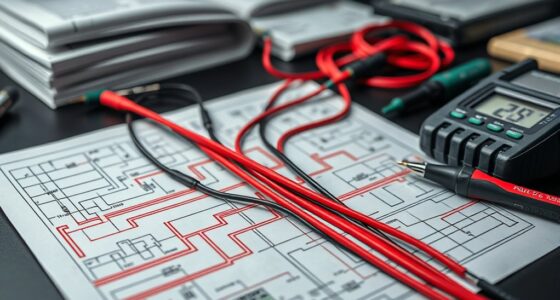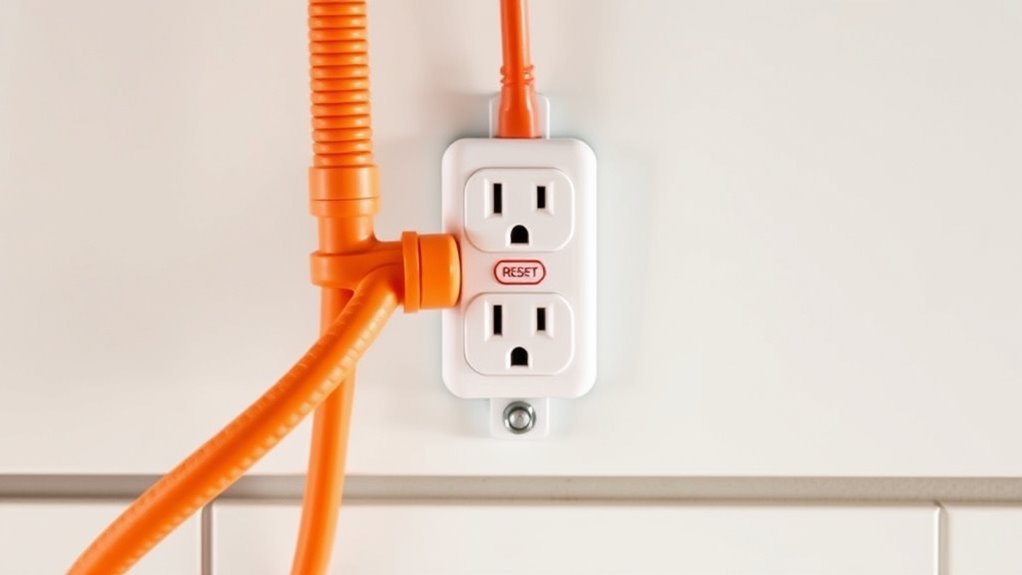

Using GFCI outlets and cords helps reduce shock hazards by quickly detecting ground faults and shutting off power before anyone gets hurt. Regularly test GFCIs to make sure they trip properly and replace them if they fail. Use cords rated for your specific needs, avoid overloading, and check for damage. When combined, these safety measures create a much safer environment; learn more to ensure you’re protecting your home effectively.
Key Takeaways
- Test GFCI outlets regularly using the built-in test button to ensure proper trip function.
- Install GFCIs correctly following manufacturer instructions or by qualified electricians for maximum safety.
- Use only cords rated for intended use, and avoid overloading to prevent overheating and shocks.
- Inspect cords frequently for damage and replace immediately if frayed, worn, or damaged.
- Combine proper GFCI use with safe cord practices to significantly reduce electrical shock hazards at home.
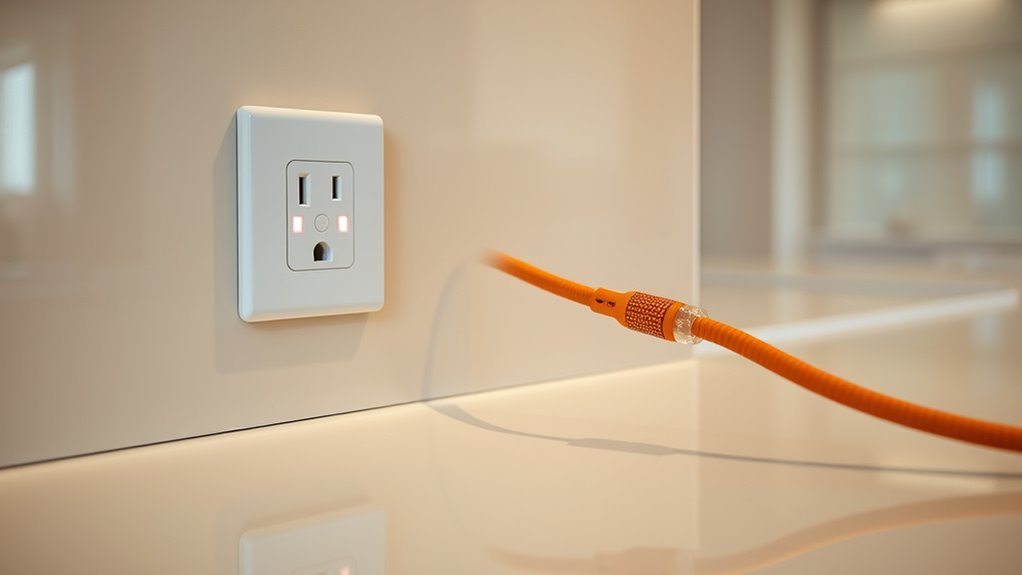
Have you ever wondered why GFCI outlets are essential for safety? Ground fault detection is the key reason. These outlets are designed to monitor the flow of electricity and quickly shut off power if they sense even a tiny leak. When you’re using appliances or cords, a ground fault can occur if the current escapes from the wiring and contacts a person or conductive surface. Without GFCIs, this could lead to a severe electric shock. Installing GFCIs outlets in areas prone to moisture, like kitchens, bathrooms, and outdoor spaces, provides an extra layer of protection. They’re especially important where water and electricity might come into contact, reducing the risk of shock hazards markedly. Think of GFCIs as your first line of defense against accidental shocks, giving you peace of mind when handling electrical devices.
To make the most of GFCI outlets, you need to understand how they work and how to use them properly. Regular testing is a vital cord safety tip that you shouldn’t overlook. Most GFCIs have a test button; pressing it simulates a ground fault and checks whether the device trips correctly. If it doesn’t, you should replace the outlet immediately. Additionally, always guarantee the GFCI is properly installed and grounded according to the manufacturer’s instructions or by a qualified electrician. Proper installation guarantees that the device functions correctly and provides the intended protection. Never bypass or disable a GFCI; doing so defeats the safety purpose and exposes you to shock hazards. Understanding ground fault detection is essential for maintaining electrical safety in your home.
Using cords safely is just as important as installing GFCI outlets. Make sure your extension cords are rated for the intended use, and avoid overloading them. Damaged or frayed cords are a common source of electrical shocks and fires. Keep cords away from water, sharp edges, and high-traffic areas to prevent accidental damage. When plugging in appliances, check that the cord’s plug fits securely and that there’s no exposed wiring. If you notice any signs of wear or damage, replace the cord immediately. Using cords properly, along with GFCIs, creates a safer environment, especially in areas where water or moisture is present.
Ultimately, understanding ground fault detection and practicing good cord safety tips can greatly reduce shock hazards in your home. GFCI outlets are a dependable safeguard, but only if you test them regularly and use them correctly. Pairing these devices with mindful cord usage ensures you’re doing everything possible to protect yourself and your loved ones from electrical accidents. Staying vigilant and educated about safety measures makes all the difference in maintaining a secure living space.
Frequently Asked Questions
Can GFCI Outlets Prevent All Types of Electric Shocks?
GFCI outlets can’t prevent all types of electric shocks, but they substantially improve electrical safety by quickly shutting off power when they detect a ground fault, which occurs when electricity leaks to the ground. This reduces the risk of severe shocks, especially in wet areas. However, they don’t protect against direct contact with live wires or other electrical hazards, so always practice caution and proper electrical safety measures.
How Often Should GFCI Outlets Be Tested for Proper Function?
Have you ever wondered if your safety devices work when you need them most? You should test your GFCI outlets at least once a month. Regular testing guarantees they’re functioning properly, reducing shock hazards. Follow simple maintenance tips like pressing the test and reset buttons and inspecting for damage. Consistent testing keeps you protected and gives peace of mind, especially in damp areas or outdoor settings where shock risks are higher.
Are GFCI Outlets Compatible With All Electrical Systems?
GFCI outlets are generally compatible with most electrical systems, but you should verify electrical compatibility before installation. Check that your system voltage and amperage match the GFCI’s specifications, and follow installation standards for safety and effectiveness. If you’re unsure, consult an electrician. Ensuring proper electrical compatibility and adhering to installation standards helps prevent electrical issues and guarantees your GFCI functions correctly to protect against shocks.
What Are the Signs of a Faulty GFCI Device?
Imagine you’re plugging in your outdoor equipment, and suddenly the GFCI trips repeatedly. You notice faulty indicator lights that don’t turn on or stay lit, and the device operates inconsistently. These signs indicate a faulty GFCI. You should test the outlet regularly, replace it if the indicator lights malfunction, and avoid ignoring inconsistent operation, as it could compromise safety. Prompt replacement guarantees continued protection from electrical shocks.
Can GFCI Outlets Be Installed Outdoors or in Wet Areas?
Yes, you can install GFCI outlets outdoors and in wet areas. They’re designed for outdoor wiring and offer essential wet area safety. Make sure to choose weather-resistant GFCI outlets rated for outdoor use, and install them properly to prevent moisture intrusion. This helps protect you from electrical shock and enhances safety in environments exposed to water or damp conditions. Always follow local codes and manufacturer instructions for best results.
Conclusion
By using GFCI outlets and cords, you protect yourself from shocks, prevent accidents, and promote safety in your home. By staying vigilant, staying informed, and staying proactive, you create a safer environment for yourself and your loved ones. Remember, safety isn’t just a rule; it’s a responsibility. Embrace the power of prevention, prioritize protection, and make safety your habit. Because when you take these steps, you’re not just avoiding harm—you’re ensuring peace of mind.