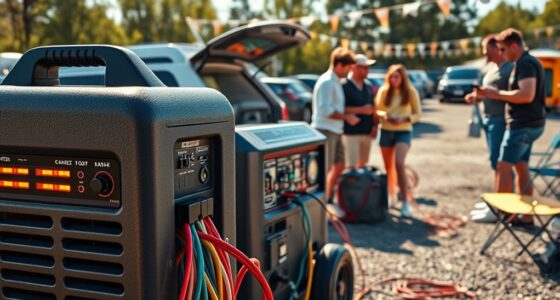
When boondocking with your RV, it’s important to be mindful of generator noise and etiquette. Keep your generator at a reasonable distance from other campers, run it mainly during daytime hours, and consider using sound shields or vibration-absorbing pads to lessen disturbance. Regular maintenance ensures quieter operation, and respecting quiet hours helps maintain a peaceful environment. If you’d like tips on choosing the best setup and minimizing noise impact, there’s more to discover below.

Get backup power and energy gear delivered free with Prime
- Fast, free delivery on millions of items
- Prime Video, Amazon Music and more included
- Member-only deals all year
Key Takeaways
- Place the generator at a reasonable distance from other campers to minimize noise disturbance.
- Operate the generator during daytime hours to avoid disrupting others’ sleep.
- Use sound shields or vibration-absorbing pads to reduce noise transmission.
- Regularly maintain your generator to ensure quiet, efficient operation and extend its lifespan.
- Be mindful of overall noise levels and respect natural surroundings to maintain a peaceful boondocking environment.
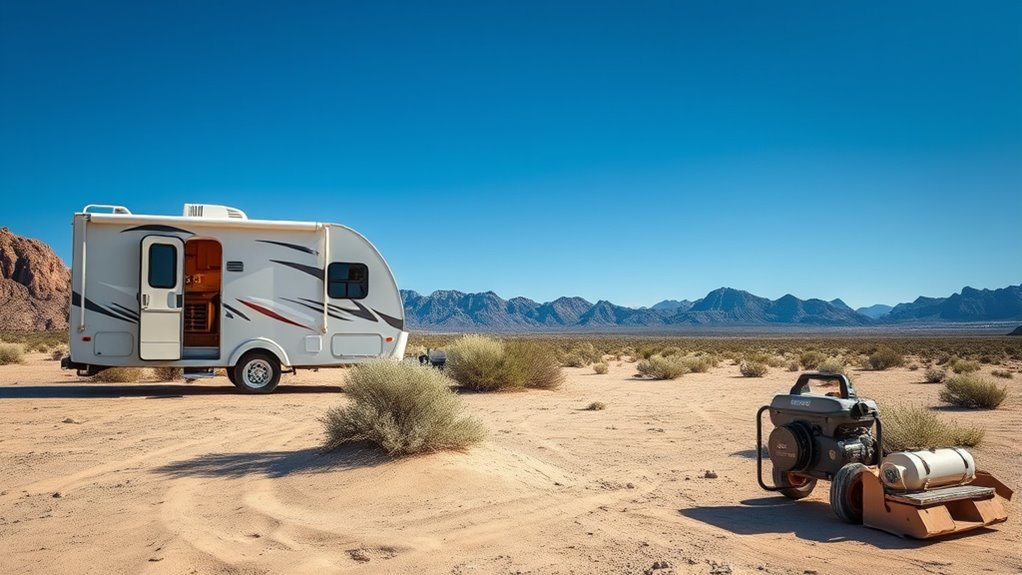
If you’re looking to enjoy the freedom of the open road without the crowds of campgrounds, boondocking with an RV offers an excellent alternative. It allows you to connect with nature on your terms, but it also comes with responsibilities, especially when it comes to managing noise and respecting others. One key aspect is understanding generator etiquette and noise considerations. Even if your RV is equipped with solar power, which minimizes the need for a generator during sunny days, there will be times when you need to run it—like during cloudy days or at night. Knowing when and how to operate your generator is essential to maintaining good relationships with fellow boondockers and preserving the tranquility of your surroundings.
Start by being mindful of your generator’s noise level. Modern units are quieter than older models, but they still produce sound that can disturb nearby campers or wildlife. Always choose a location at a reasonable distance from others when running your generator. If possible, run it during daytime hours rather than late at night, so you don’t disrupt the peace for others trying to rest. When operating your generator, keep it well-maintained—regularly check oil levels and filters—to ensure it runs smoothly and quietly. Using a sound shield or mounting it on a vibration-absorbing pad can also help minimize noise transmission. Regular maintenance and proper placement are crucial for minimizing disturbance and extending the life of your equipment.
Be mindful of generator noise—choose a distant, daytime spot, maintain it well, and use sound shields to keep peace.
Waste management is another critical component of responsible boondocking. Properly disposing of waste, including gray and black water, is essential to keep the environment pristine and avoid conflicts with land management officials. Many boondockers utilize portable waste tanks or composting toilets, which reduce the need for frequent trips to dump stations. Always follow Leave No Trace principles, and never dump waste in unauthorized areas. Be sure to store gray and black water in sealed containers until you can dispose of them safely at designated dump stations. Proper waste management not only keeps the environment clean but also ensures you’re complying with regulations, avoiding fines or penalties.
Balancing the use of solar power and generator operation is key. Solar power can often cover your basic needs during the day, reducing your reliance on the generator and noise output. When your solar setup is insufficient, running your generator thoughtfully ensures minimal disturbance. By combining responsible waste management practices with considerate generator use, you create a respectful, enjoyable boondocking experience—one that preserves the natural quiet and beauty of your surroundings for everyone. Incorporating vegetable juices into your diet can also support your overall health and energy levels during your trips.
Frequently Asked Questions
How Long Can I Run My Generator Without Risking Damage?
You can run your generator for about 8-10 hours daily without risking damage, but it’s essential to follow proper generator maintenance. To minimize noise and protect your equipment, use noise reduction techniques like installing mufflers or sound shields. Regularly check oil and air filters, and let your generator cool down between runs. Staying within these limits helps prevent wear and guarantees your generator remains dependable during extended use.
Are There Specific Times When Generator Noise Is More Acceptable?
You should operate your generator during quiet hours, typically early morning or late evening, when noise is less disruptive. Always check local noise ordinances, as some areas have strict limits on generator noise levels and times. Respecting these rules shows courtesy to fellow campers and helps prevent complaints. If you need power outside designated hours, consider using quieter inverter generators or soundproof enclosures to minimize disturbance.
How Do I Find Boondocking Spots With Good Generator Noise Restrictions?
To find boondocking spots with good generator noise restrictions, look for areas designated as generator quiet zones. Use online resources like RV forums, apps, and government websites to identify locations with noise restriction signs and quiet policies. Call ahead to confirm rules, and choose sites known for peaceful environments. These steps help you enjoy your stay without disturbing others and staying within noise limits.
Can I Use Solar Power Instead of a Generator?
Yes, you can definitely use solar power instead of a generator. While some worry about limited sunlight, investing in good solar panels and ample battery storage guarantees your RV stays powered even during cloudy days. Solar power is quiet, eco-friendly, and cost-effective over time. With reliable battery storage, you’ll enjoy a steady energy supply without disturbing the peace or worrying about noise restrictions.
What Are the Best Practices for Minimizing Generator Noise Impact?
To minimize generator noise impact, you should implement soundproofing tips like mounting the generator on a rubber mat and installing barriers or enclosures. Use noise reduction techniques such as choosing a low-noise generator model, maintaining it properly, and operating it during less disruptive hours. Keep a safe distance from your RV and neighbors, and consider adding insulation around the generator area to further dampen sound.
Conclusion
As you embrace boondocking, remember that your generator is a lighthouse guiding others through the quiet night. Respectful use guarantees the beacon remains steady, shining without drowning out the peaceful darkness. By practicing good etiquette and minding noise levels, you become a steward of serenity, preserving the delicate balance between solitude and community. In this shared wilderness, your actions are the compass that keeps everyone’s journey harmonious, allowing both you and fellow travelers to find true refuge.
Fall Picks
fall essentials
As an affiliate, we earn on qualifying purchases.