
To comply with local noise ordinances, you need to understand the specific sound level limits and restricted hours for your area. Check your neighborhood’s regulations online or contact local authorities to clarify any questions. Keep noise within permissible levels during the day and lower volumes at night to avoid complaints or fines. Following these regulations shows respect for your neighbors and helps maintain good relations; if you’re interested, there’s more to learn about staying compliant.
Key Takeaways
- Review your local noise ordinances online or in official handbooks for specific regulations.
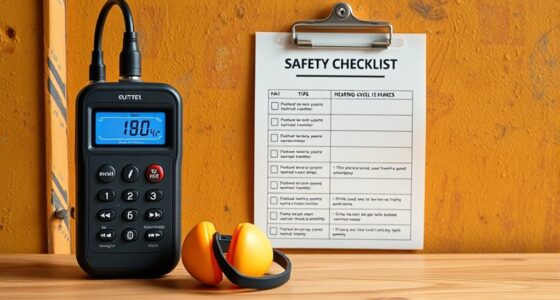
- Monitor sound levels with decibel meters to ensure compliance during permitted hours.
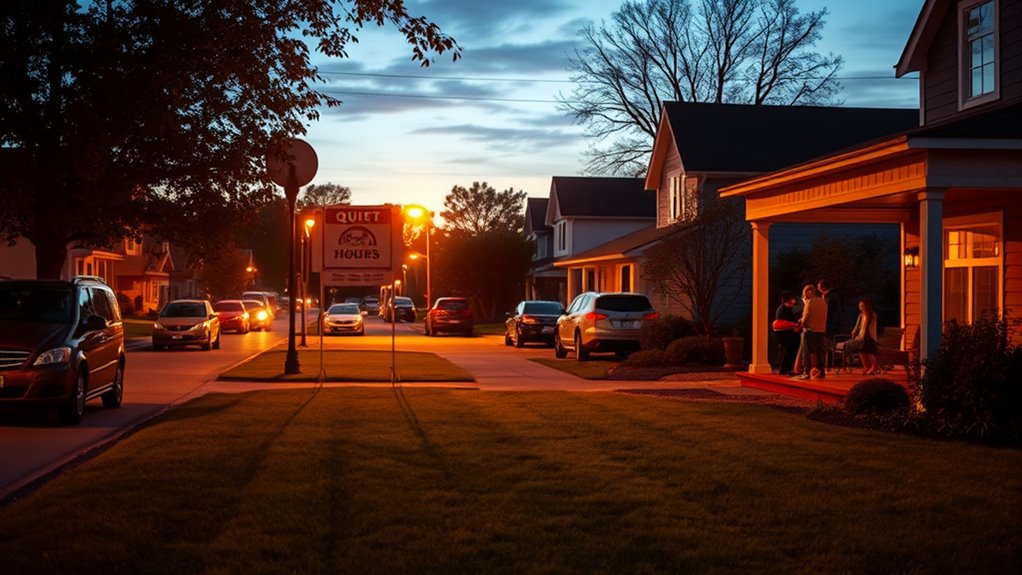
- Respect designated quiet hours, especially at night, to avoid complaints and fines.
- Communicate proactively with neighbors about loud activities or events.
- Respond politely to complaints and adjust noise levels promptly to maintain good community relations.
Understanding and following noise ordinances is vital to maintaining good relations with your neighbors and avoiding fines. Local regulations set clear boundaries on the acceptable level of noise, especially during certain hours or in specific zones. These sound restrictions are designed to balance individual freedoms with community peace, making it imperative that you stay informed about what’s permitted in your neighborhood. Ignoring these rules can lead to noise complaints, which not only disturb peaceful living but can also result in legal issues or fines. By adhering to the established noise limits, you demonstrate respect for your neighbors and help foster a cooperative community environment.
Following noise ordinances helps maintain neighborly harmony and prevents legal issues.
Noise complaints often stem from loud music, parties, or noisy equipment that exceeds the permissible sound levels. Many local ordinances specify decibel limits for different times of day, often allowing higher noise levels during daytime hours but imposing stricter limits at night. It’s your responsibility to monitor your activities and ensure they stay within these boundaries. Using a decibel meter app can help you measure sound levels and confirm you’re complying with local restrictions. If you’re hosting an event, inform your neighbors beforehand and consider lowering volume levels later in the evening to prevent complaints. Regularly checking the volume on your devices and outdoor equipment also helps you stay within the sound restrictions.
Understanding the specific rules in your area is straightforward, as most municipalities publish their noise ordinances online or in community handbooks. These documents usually outline permissible hours for outdoor work, music, or parties, as well as exceptions for emergencies or special occasions. Sometimes, local authorities offer contact information if you need clarification or want to request a temporary exemption. Being proactive about knowing these rules allows you to plan activities accordingly and avoid accidental violations. If a noise complaint does occur, responding politely and making adjustments can often resolve issues quickly. Demonstrating willingness to cooperate helps maintain good neighborly relations and minimizes the risk of escalating conflicts.
Ultimately, respecting noise restrictions is about being considerate and aware of how your actions impact others. By staying informed about local ordinances, monitoring your noise levels, and communicating openly with neighbors, you can enjoy your home without causing disturbances or facing penalties. Remember, following sound restrictions isn’t just about avoiding fines; it’s about fostering a respectful, peaceful community where everyone can coexist comfortably. Taking these simple steps ensures that you meet legal requirements and contribute to a harmonious neighborhood environment.

Decibel Meter Wireless Sound Decibel Meter with App Data Logging Bluetooth Portable Sound Level Meter 30~130dBA High Accuracy SPL Meter for Classroom, Office, Home and etc.
- Wireless Bluetooth Connectivity: Connects to iOS and Android devices
- Large Data Storage: Records up to 20,000 data groups
- Long Battery Life: No need for phone during recording
As an affiliate, we earn on qualifying purchases.
As an affiliate, we earn on qualifying purchases.
Frequently Asked Questions
How Are Noise Violations Typically Enforced by Local Authorities?
Local authorities enforce noise violations by monitoring noise levels through complaints or inspections. Once a noise level exceeds the permitted limits, they follow enforcement procedures like issuing warnings or citations. You’ll likely be notified to reduce noise, and repeated violations can lead to fines or other penalties. Enforcement procedures aim to ensure your neighborhood stays peaceful, so it’s essential to keep noise levels within the legal limits to avoid trouble with local authorities.
Are There Exemptions for Special Events or Holidays?
Imagine fireworks lighting up the night sky—you might wonder if special event exemptions or holiday noise allowances apply. Usually, yes, local ordinances often grant limited exemptions for special events or holidays, allowing louder noise levels. These exemptions let you celebrate without fear of violations, but they typically have specific time frames and restrictions. Always verify your neighborhood rules to ensure you’re compliant during these festive times.
What Are the Penalties for Violating Noise Ordinances?
If you violate noise ordinances, you face enforcement penalties that depend on your local regulations. Typically, authorities monitor noise levels and issue warnings or fines for exceeding acceptable limits. Repeated violations may lead to higher fines, community service, or even legal action. To avoid penalties, keep your noise levels within permitted limits, especially during late hours or special events. Staying compliant helps maintain good neighbor relations and prevents costly enforcement actions.
Can Residents Challenge or Appeal Noise Complaints?
You can challenge or appeal noise complaints if you believe they’re unfair. First, follow the noise complaint procedures outlined by your local authorities, which typically involve filing a formal appeal or requesting an investigation. If you face legal challenges, gather evidence like recordings or witness statements to support your case. Remember, you can’t just sweep it under the rug; sometimes, you gotta stand your ground and fight for your rights.
How Do Noise Ordinances Differ Between Urban and Rural Areas?
You’ll find that urban sound ordinances tend to be stricter, reflecting the busy, densely populated environment, while rural tranquility allows for more relaxed noise limits. In urban areas, noise levels are closely monitored to prevent disruption, whereas rural zones prioritize peacefulness, often with fewer restrictions. Understanding these differences helps you comply with local laws and avoid complaints, especially if you’re in a busy city or a quiet countryside.
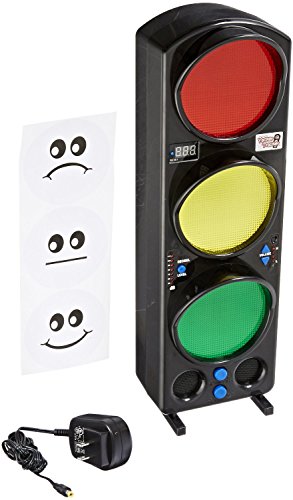
Yacker Tracker Noise Level Monitor, LED, 17 Inches, Red/Yellow/Green
- Visual Traffic Light Signals: Indicates noise levels clearly
- Pre-set Noise Levels: Adjustable for comfort preferences
- Versatile Use: Suitable for classrooms and more
As an affiliate, we earn on qualifying purchases.
As an affiliate, we earn on qualifying purchases.
Conclusion
By following your neighborhood’s noise ordinances, you not only respect your neighbors but also create a more harmonious community. It’s funny how a simple act of keeping noise levels in check can prevent conflicts and foster goodwill. When everyone’s mindful, peaceful coexistence becomes the natural outcome—almost like it was meant to be. So, stay aware of your local rules; what you do today can unexpectedly lead to a quieter, friendlier neighborhood tomorrow.

Decibel Meter, TopTes TS-501B Sound Level Meter with 2.25” Backlit LCD Screen, Portable SPL Tester with A/C Weighted, Range 30-130dB, MAX/MIN, Data Hold, Use for Home, Noisy Neighbor, Factory – Orange
- Large Backlit LCD Screen: 2.25-inch display for easy reading
- A/C Weighting Function: Measures noise from 30-130dB accurately
- Max/Min Sound Levels: Displays peak and lowest sound readings
As an affiliate, we earn on qualifying purchases.
As an affiliate, we earn on qualifying purchases.

Layla Noise & Security Monitoring Device for Airbnb, Rental, Office & Home | Noise, Humidity & Occupancy Sensor, Intruder Detection, Guest Counting | Radar-Based Motion Detection | Privacy-Safe
- Real-Time Noise Monitoring: 24/7 privacy-safe decibel tracking with alerts
- AI Occupancy & Party Detection: Radar-based head count and activity alerts
- Intruder Detection & Guest Counting: Early warning for overcrowding and intruders
As an affiliate, we earn on qualifying purchases.
As an affiliate, we earn on qualifying purchases.