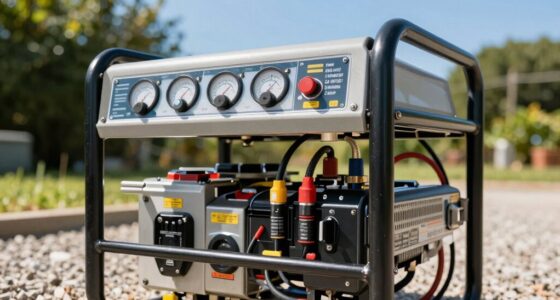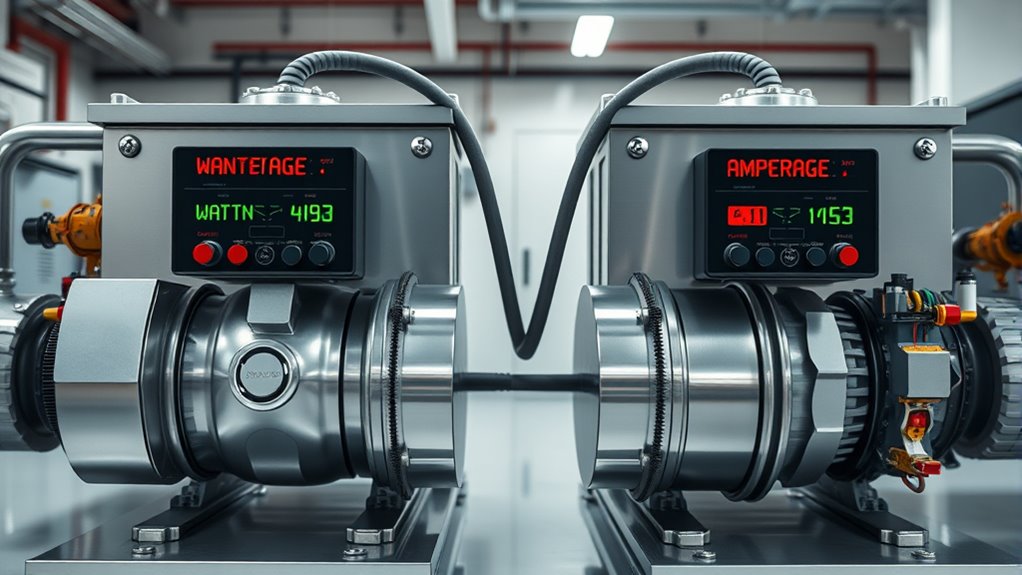

When paralleling two generators, you combine their wattages by adding each unit’s wattage capacity, ensuring the total matches your load needs. To determine amperage, use the formula Amperage = Wattage ÷ Voltage, and add the amperages if both generators operate at the same voltage. This helps prevent overloads and maintains balance across units. For safe and efficient operation, understanding these calculations is key—continue to explore to master the process fully.
Key Takeaways
- Total wattage in parallel is the sum of each generator’s wattage: W_total = W1 + W2.
- To find amperage, divide wattage by voltage: A = W / V, assuming same voltage for both generators.
- When combining generators, ensure their voltages match before summing wattages or amperages.
- For different voltages, convert to a common voltage or use power factor considerations before combining.
- Always verify that combined wattage and amperage do not exceed the individual generator capacities for safe operation.
Have you ever wondered how electrical devices run simultaneously without interfering with each other? When you connect multiple generators or power sources, understanding the math behind their combined wattage and amperage becomes vital. This is especially true when dealing with parallel operation, where two or more generators work together to supply power. A key aspect here is ensuring voltage compatibility. If the generators don’t share the same voltage, they won’t sync properly, which can cause short circuits or equipment damage. Before connecting them in parallel, you need to verify that their voltage outputs match or are compatible within acceptable limits. This step prevents potential overloads and guarantees safe operation.
Once voltage compatibility is confirmed, load balancing becomes your primary focus. Load balancing means distributing the electrical load evenly across all generators. If one generator bears most of the load while others sit idle, it can lead to overheating, increased wear, and reduced lifespan. To prevent this, you need to calculate the total wattage and amperage required for your connected devices and then determine how to split this load between the generators. For example, if you have two generators rated at 2000 watts each, and your total load is 3000 watts, you might assign 1500 watts to each. This way, both generators share the load equally, maintaining efficiency and preventing overload.
Understanding the relationship between wattage, amperage, and voltage is essential. Remember, wattage (W) equals voltage (V) times amperage (A). So, if you know the voltage output of your generators, you can determine the maximum amperage they can safely handle at a given wattage. Conversely, knowing the amperage and voltage helps you calculate the wattage capacity. When paralleling generators, ensure their ratings align so that the combined wattage and amperage don’t exceed their individual limits. This guarantees safe and reliable operation and prevents overloading either unit.
Additionally, when connecting generators in parallel, it’s important to use proper synchronization techniques. This involves matching their phase, frequency, and voltage waveforms. Proper synchronization minimizes electrical stress and helps maintain a stable power supply. If you mismatch these parameters, you risk causing power surges or damaging your equipment. Furthermore, understanding generator capacity and how it relates to your load requirements ensures you don’t overload your power sources.

Porch Shield Waterproof Universal Generator Cover 38 x 28 x 30 inch - for Most Generators 5500-15000 Watt, Black
- Compatibility: Fits 5500W to 15000W generators
- Premium Material: 600D water-resistant polyester fabric
- All-Weather Protection: Resists sun, rain, snow, wind, dust
As an affiliate, we earn on qualifying purchases.
Frequently Asked Questions
Can Two Different Brands of Generators Be Safely Connected in Parallel?
You shouldn’t connect two different brands of generators in parallel because of brand compatibility and synchronization challenges. Different brands may have varying control systems, voltages, or frequencies, making it unsafe and inefficient. Even if they seem compatible, mismatched features can cause power surges or damage. Always use identical models or those specifically designed for parallel operation, and follow manufacturer instructions to guarantee safe, reliable power sharing.
What Is the Maximum Number of Generators That Can Be Paralleled?
You can typically parallel up to four generators, but it depends on their power synchronization and load balancing capabilities. Always verify the generators are properly synchronized to match voltage, frequency, and phase to avoid damage. For safety and efficiency, consult the manufacturers’ guidelines and use an appropriate paralleling device. Overloading or improper synchronization can cause issues, so stick to recommended limits for a reliable power supply.
How Do Temperature Variations Affect Generator Performance in Parallel?
Temperature effects can substantially impact your generator’s efficiency when operating in parallel. As temperatures rise, components may overheat, reducing overall performance and potentially causing damage. Cooler temperatures usually improve efficiency by allowing better cooling and stable operation. To guarantee ideal performance, monitor temperature fluctuations and maintain proper cooling systems. Staying aware of temperature changes helps you prevent efficiency drops and keeps your parallel generator setup running smoothly and reliably.
Is There a Risk of Overloading When Combining Generators?
You’re right to worry about overloading when combining generators. Proper generator synchronization guarantees they operate in harmony, preventing overloads. Load balancing distributes electrical demand evenly, reducing the risk of exceeding each generator’s capacity. If you fail to synchronize and balance loads correctly, one generator could carry too much, leading to overload and potential damage. Always follow proper procedures to keep your system safe and efficient.
What Maintenance Checks Are Essential for Parallel Generator Setups?
You should regularly check your parallel generator setup’s fuel efficiency and cooling systems. Make sure fuel levels are sufficient and that fuel filters are clean to prevent performance issues. Inspect cooling systems, including radiators and fans, for proper operation to avoid overheating. Also, monitor oil levels and look for leaks. Regular maintenance keeps your system running smoothly, extends its lifespan, and helps prevent overloads or failures during operation.
Porch Shield Waterproof Universal Generator Cover 32 x 24 x 24 inch - for Most Generators 5000-10000 Watt, Black
- Compatibility: Fits 5000-10000W generators
- Durable Material: 600D water-resistant polyester fabric
- All-Weather Protection: Protects against sun, rain, snow, dust
As an affiliate, we earn on qualifying purchases.
Conclusion
By understanding how to combine wattage and amperage from two generators in parallel, you can effectively increase your power capacity when needed. Did you know that running two 2000W generators in parallel doubles your power output to 4000W? This simple math allows you to meet higher energy demands safely and efficiently. Mastering these calculations guarantees you get the most out of your generators without risking overloads or damage, making your setup more reliable and versatile.

Generator Cover Portable Waterproof,Generator Rain Cover for Outside,Universal Generator Cover for Most Portable Generators 5000-10000 Watt(32"L x 24"W x 24"H)
- Dimensions: 32x24x24 inches for most generators
- Universal Fit: Fits 5000-10000 Watt generators
- Windproof Design: Adjustable drawstring and Velcro straps
As an affiliate, we earn on qualifying purchases.

Portable Solar Generator 300W Portable Power Station with 60W Solar Panel
- Portable with 60W Solar Panel: Powerful 300W generator for outdoor use
- Multiple Charging Outlets: AC, DC, USB ports with SOS flashlight
- Versatile Charging Options: Recharge via AC, solar, or carport
As an affiliate, we earn on qualifying purchases.