Understanding split-phase power output helps you see why homes use both 120-volt and 240-volt systems. You receive 120 volts from a single hot wire, ideal for lights and small appliances, while 240 volts comes from two hot wires, designed for heavy-duty devices like dryers and stoves. Knowing how these systems work guarantees you select the right appliances and stay safe. Keep exploring to get a clearer picture of how these voltages operate together in your home.

Get backup power and energy gear delivered free — and shop member deals
- Fast, free delivery on millions of items
- Access to Prime Big Deal Days deals on October 6–7
- Prime Video, Amazon Music and more included
Key Takeaways
- 120-volt systems provide standard household outlets for small appliances, while 240-volt systems supply higher power for large appliances.
- Split-phase power combines two 120V lines to produce 240V, enabling efficient operation of heavy-duty equipment.
- Proper grounding and breaker sizing are essential for safety in both 120V and 240V electrical setups.
- Using the correct voltage ensures appliance compatibility, optimal performance, and prevents damage.
- Understanding the difference helps in selecting appropriate appliances and adhering to electrical codes for safe operation.
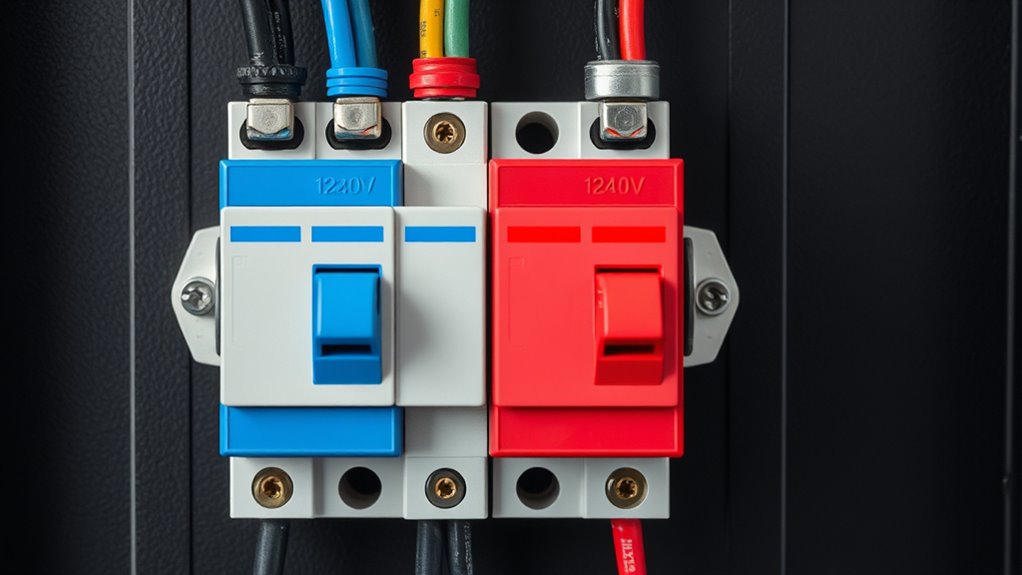
When choosing between 120-volt and 240-volt electrical systems, understanding their differences is essential since they impact appliance performance, safety, and energy efficiency. The main distinction lies in how power is supplied and used within your home. A 120-volt system is typical for most household outlets, powering smaller appliances like lamps, TVs, and computers. In contrast, a 240-volt system delivers higher voltage, suitable for heavy-duty appliances such as dryers, ovens, or air conditioners. Recognizing this difference helps you make informed decisions about wiring, safety measures, and appliance compatibility. Vetted options for proper electrical setup can ensure safer and more reliable operation.
Choosing between 120-volt and 240-volt systems affects appliance performance, safety, and wiring considerations.
Grounding safety plays a critical role in both systems. Proper grounding ensures that in the event of a short circuit or fault, excess electrical current safely dissipates into the ground, preventing electric shocks or fires. With a 120-volt system, grounding is usually straightforward because standard outlets include a grounding wire. However, for 240-volt setups, especially those involving larger appliances or dedicated circuits, guaranteeing correct grounding is vital. Incorrect grounding can lead to dangerous voltages on appliance casings or exposed metal parts, increasing the risk of electric shock. Always verify that your grounding system adheres to local electrical codes and standards, and consult a professional if uncertain.
Breaker sizing is another crucial aspect when working with these systems. Breakers serve as protective devices that disconnect the power supply if a fault or overload occurs. Using an undersized breaker can cause nuisance trips or, worse, fail to trip during a fault, leading to equipment damage or safety hazards. Conversely, oversized breakers might not provide adequate protection. For 120-volt circuits, breaker sizes typically range from 15 to 20 amps for standard outlets, but larger appliances may require 30-50 amp breakers. In 240-volt circuits, breaker sizing depends on the appliance’s power requirements; a dryer or electric range might need a 30 to 50-amp breaker. Correct breaker sizing ensures safety and efficient operation, especially considering the higher power loads often associated with 240-volt systems. Proper electrical wiring and breaker selection are essential for safe and efficient system operation.
Ultimately, understanding how grounding safety and breaker sizing differ between 120-volt and 240-volt systems helps you maintain a safe, efficient, and reliable electrical setup. Proper grounding prevents shocks and fires, while appropriately sized breakers protect your appliances and wiring. Whether you’re installing new circuits or upgrading existing ones, always follow electrical codes and consult professionals when in doubt. Doing so guarantees that your home’s electrical system delivers the right power safely and effectively, aligning with the demands of your appliances and ensuring your safety.
Frequently Asked Questions
Can I Convert a 120V System to 240V Easily?
You can’t easily convert a 120V system to 240V because of voltage conversion and circuit compatibility issues. You’ll need to upgrade your wiring, breaker, and possibly your appliances to handle the higher voltage. It’s best to consult an electrician, as working with high voltage power requires proper knowledge and safety precautions. Attempting a DIY conversion can be dangerous and may violate electrical codes.
What Appliances Require 240V Power?
You’ll find that appliances like dryers, ranges, and larger HVAC systems require 240V power because they need more energy to operate efficiently. Don’t try to cut corners with voltage conversion—it’s not a DIY project for most. Always check appliance compatibility before plugging in, and consult an electrician if you’re considering any changes. This way, you keep everything running smoothly without risking damage or safety issues.
How Does Split-Phase Power Impact Home Wiring?
Split-phase power impacts your home wiring by creating a center-tapped transformer that supplies two 120V lines and a neutral, improving grounding safety. This wiring configuration allows you to run standard appliances on 120V and heavy-duty ones on 240V. It guarantees balanced loads, reduces electrical risks, and enhances safety. Properly understanding and managing split-phase wiring helps prevent overloads and maintains a safe, efficient electrical system in your home.
Is a 240V Outlet Compatible With 120V Devices?
A 240V outlet isn’t compatible with 120V devices because of voltage compatibility and device limitations. While a 240V outlet provides higher voltage, your 120V devices are designed for lower voltage and may get damaged if connected directly. Always check your device specifications and use appropriate outlets or adapters to guarantee safe operation, preventing potential electrical issues or device failure.
What Safety Precautions Are Needed for High-Voltage Systems?
Think of high-voltage systems like a delicate dance; you need to follow strict safety steps. Always guarantee grounding safety to prevent shocks and maintain proper insulation requirements to avoid accidental contact. Use insulated tools and wear appropriate protective gear. Keep your work area dry and avoid touching live parts. By respecting these safety precautions, you protect yourself and keep the system running smoothly.
Conclusion
Think of split-phase power like a dance between two partners—each step complements the other, creating a smooth rhythm. Just like a dance, understanding the difference between 120 and 240 volts helps you move confidently through your electrical needs. When you grasp how they work together, you’ll avoid tripping over wires or overloading circuits. Embrace this knowledge, and you’ll choreograph your home’s power with ease, keeping everything running seamlessly—like a well-rehearsed performance.
Evergreen bestsellers Picks
bestsellers
As an affiliate, we earn on qualifying purchases.