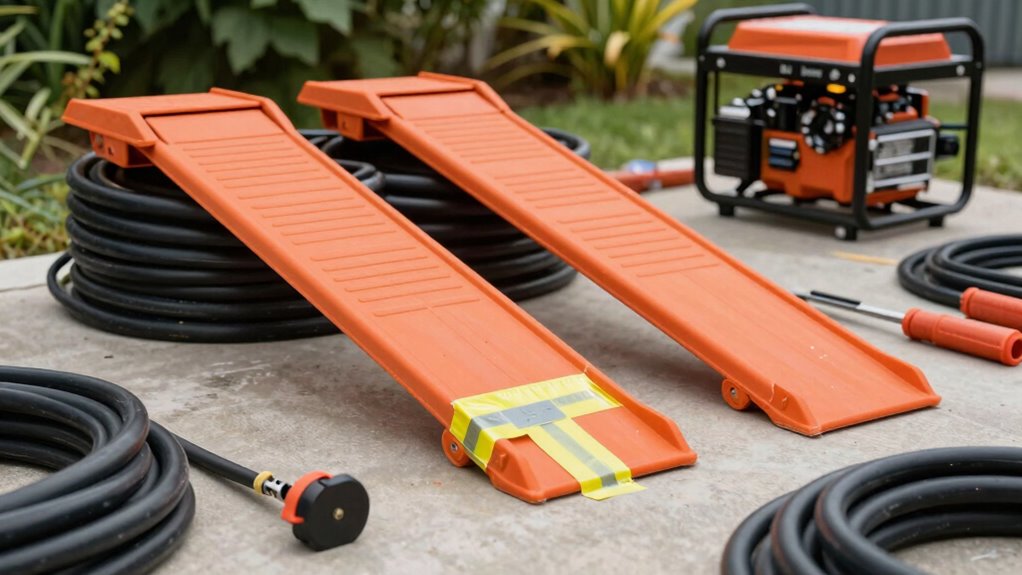

To reduce trip hazards around generator cables, you should implement safety measures like using physical barriers such as cones, barricades, and cable covers to contain and highlight cables. Properly managing and regularly inspecting cables guarantees they stay secured and visible. Adding clear signage near high-traffic areas alerts workers and visitors to caution zones. Making sure everyone is trained on hazard awareness further minimizes risks. Keep these strategies in mind, and you’ll create a safer workspace—discover more effective ways to protect yourself and others.

Get backup power and energy gear delivered free — and shop member deals
- Fast, free delivery on millions of items
- Access to Prime Big Deal Days deals on October 6–7
- Prime Video, Amazon Music and more included
Key Takeaways
- Install visible safety signage near generator cables to alert workers and visitors of potential trip hazards.
- Use physical barriers like cones, barricades, or cable covers to contain and protect cables effectively.
- Organize and secure cables properly with management tools to minimize loose or exposed wiring.
- Regularly inspect cables, signage, and barriers to ensure safety measures remain effective and visible.
- Provide worker training on hazard recognition and safe practices around generator cables.
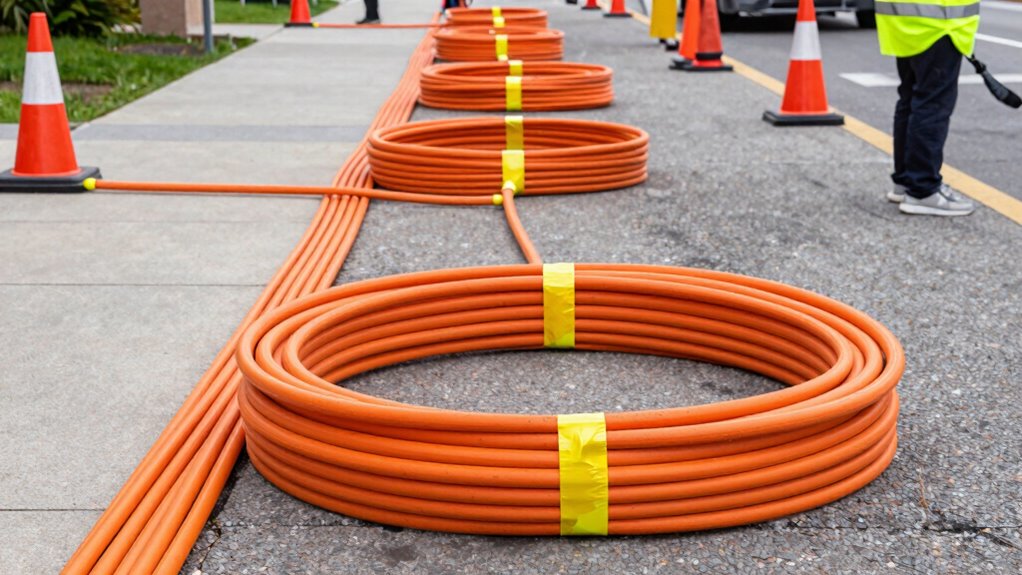
Generator cables can pose notable trip hazards if not properly managed, especially in busy work environments or outdoor settings. When cables are left loose or run across walkways, they create a risk not only for workers but also for visitors or passersby. To minimize this danger, you need to implement effective safety measures that alert everyone to the potential hazard and physically prevent accidents. Using visible safety signage is one of the simplest and most effective steps. Clearly marked signs alert workers to the presence of cables and remind them to stay alert. These signs should be placed at strategic points, especially near high-traffic areas, so that everyone is aware of the dangers before reaching the cables. Proper signage can also include instructions on safe distances or caution zones, further reducing the risk of trips and falls.
Along with safety signage, protective barriers are essential in creating a physical boundary that prevents accidental trips. Barricades, cones, or cable covers can be used to contain cables and keep pathways clear. Installing protective barriers not only makes the cables more visible but also creates a dedicated safe zone that separates foot traffic from the cable runs. This is especially important outdoors or in construction zones where the environment is constantly changing. When you use barriers, you reduce the likelihood of someone tripping over loose cables or inadvertently pulling them, which could cause damage or create additional hazards. Additionally, ensuring proper cable management techniques can help maintain a safer environment and prevent potential accidents. Regular inspections are vital to ensure that safety signage remains visible, barriers stay in place, and cables are properly secured. Implementing cable management practices can also prolong the lifespan of the cables and reduce maintenance costs. Proper organization and hazard identification are key to creating a safer workspace. When hazards are clearly marked and physically contained, the risk of trips diminishes greatly, making the work environment safer for everyone. Incorporating risk mitigation strategies can further enhance overall safety measures, especially in high-risk areas. Furthermore, training workers on hazard awareness can significantly improve safety compliance and reduce the risk of accidents related to generator cables.
cable covers for outdoor generator cables
As an affiliate, we earn on qualifying purchases.
As an affiliate, we earn on qualifying purchases.
Frequently Asked Questions
What Are the Best Materials for Cable Covers?
You should choose durable materials for cable covers that guarantee reliable cable protection and withstand heavy foot traffic. Rubber, thermoplastic, and PVC are excellent options because they resist wear and tear, weather elements, and provide good grip. These materials offer high durability, helping prevent trips and protect cables effectively. Selecting the right cable covers made from sturdy materials keeps your worksite safe, prolongs cable life, and minimizes the risk of accidents.
How Often Should Generator Cables Be Inspected?
You should inspect your generator cables at least every three to six months—because, of course, cable durability isn’t something you want to leave to chance. Regular inspections help identify wear, damage, or fraying before they turn into trip hazards or power failures. By maintaining a consistent inspection frequency, you guarantee your cables stay safe, functional, and less likely to cause unexpected trips, literally and figuratively.
Are There Legal Standards for Cable Safety?
Yes, there are legal standards for cable safety that you must follow. You need to guarantee legal compliance by adhering to safety regulations set by OSHA and other relevant authorities. These standards specify proper cable installation, secure connections, and protection measures to prevent hazards. Following these regulations helps protect workers and minimizes liability. Regular inspections and proper cable management are essential to stay compliant and maintain a safe work environment.
How Can I Mark Hazardous Cable Areas Clearly?
To guarantee safety, you should implement a clear visual warning system around cable areas. Use bright, contrasting colors for color coding to highlight potential hazards effectively. Mark hazardous zones with highly visible tape or signage, making it easy for everyone to recognize risk zones at a glance. This approach creates a smooth flow of awareness, reducing trip hazards and guiding people safely around generator cables without confusion or delay.
What Training Is Recommended for Workers?
You should provide workers with thorough training on personal protective equipment (PPE) and emergency response procedures. This training guarantees they know how to properly use PPE like gloves and safety boots to prevent injuries, and how to respond swiftly if accidents occur. Emphasize the importance of recognizing trip hazards and following safety protocols. Regular refresher courses reinforce safe practices, keeping everyone prepared and reducing risks around generator cables.
safety barricades for construction sites
As an affiliate, we earn on qualifying purchases.
As an affiliate, we earn on qualifying purchases.
Conclusion
By properly securing and organizing generator cables, you prevent trips and injuries. For example, in a construction site, a worker who safely taped down cables avoided a potential fall that could have resulted in serious injury. Always inspect your setup regularly, keep cables clear of walkways, and use appropriate covers. Taking these simple steps creates a safer environment, protecting both workers and equipment, and helps guarantee your project runs smoothly without costly accidents.
warning safety signage for trip hazards
As an affiliate, we earn on qualifying purchases.
As an affiliate, we earn on qualifying purchases.
cable management tools for generators
As an affiliate, we earn on qualifying purchases.
As an affiliate, we earn on qualifying purchases.
Fall Picks
fall essentials
As an affiliate, we earn on qualifying purchases.