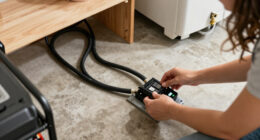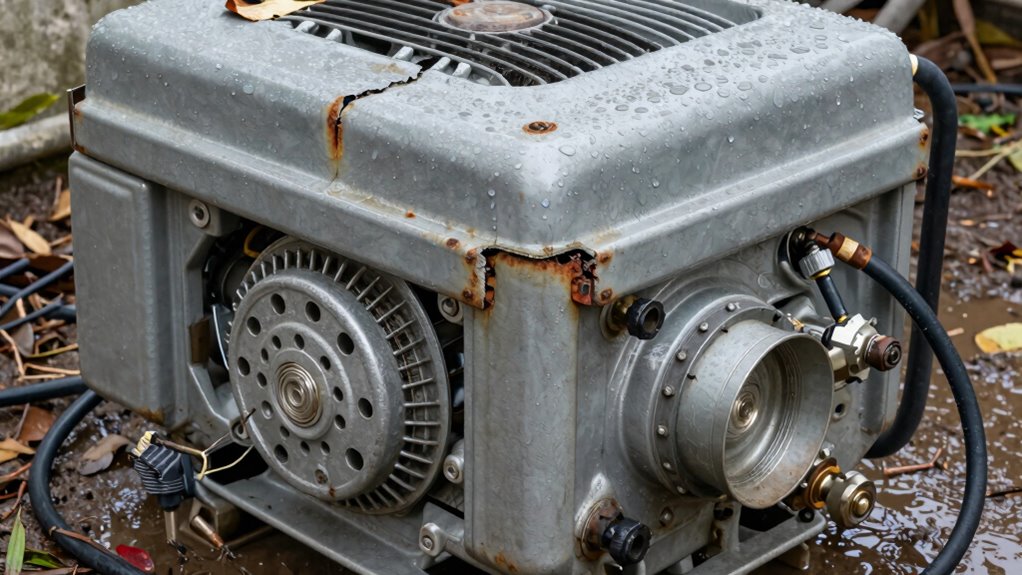

Before running a generator after flooding, disconnect it from power sources and turn it off. Check for water intrusion, corrosion, and damage in electrical components, outlets, and switches. Inspect the fuel tank for contamination and drain if needed. Look for cracks, rust, and broken parts on the engine, cooling fins, and exhaust system. Confirm the oil and air filter are clean and dry. If you’re curious about more detailed safety steps, keep exploring these important checks.

Get backup power and energy gear delivered free with Prime
- Fast, free delivery on millions of items
- Prime Video, Amazon Music and more included
- Member-only deals all year
Key Takeaways
- Inspect all electrical components for water damage, corrosion, or exposed wiring before operation.
- Drain and replace contaminated fuel to prevent engine failure.
- Check for physical damage, rust, or corrosion on the engine and structural parts.
- Ensure the air filter, oil, and other fluids are dry, clean, and at proper levels.
- Test the generator in a controlled environment to confirm safety and functionality.
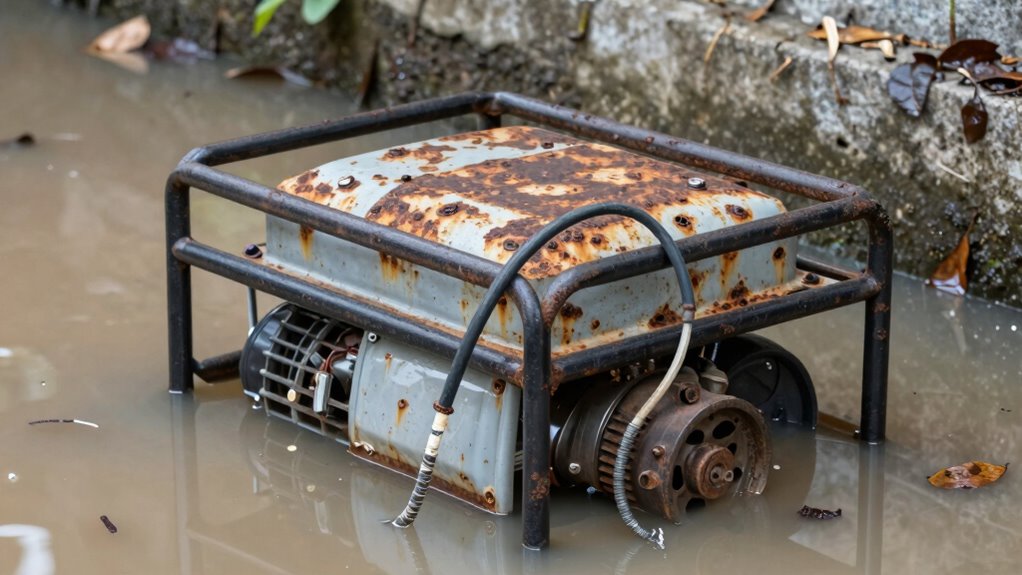
Have you ever wondered whether your generator is safe to run after a flood? Floodwaters can cause serious damage to your equipment and pose significant safety risks if you don’t check properly before restarting. One of the first concerns is electrical safety. Water and electricity don’t mix, so you need to verify that all electrical components are dry and intact. Before touching your generator, disconnect it from any power sources and turn it off completely. Inspect the power cord, outlets, and switches for signs of water intrusion, corrosion, or damage. If you notice corrosion or corrosion-related issues, it’s best to have a professional evaluate the unit before attempting to restart it. Moisture in electrical parts can cause short circuits, sparks, or even fires, so never assume that the generator is safe just because it looks fine on the surface. Proper calibration can also help ensure that your generator operates safely and efficiently after repairs. Additionally, checking for electrical safety hazards like exposed wires or damaged insulation is crucial to prevent accidents during operation. Ensuring that the electrical system is free of corrosion can extend the lifespan of your generator and prevent future failures. It’s also recommended to consult technical manuals or manufacturer guidelines to confirm safety procedures specific to your model.
It’s also important to consider fuel contamination as it can be more prevalent after flooding, potentially causing extensive engine damage. Floodwaters often carry debris, mud, and chemicals that can infiltrate the fuel system of your generator. If you suspect that water has mixed with the fuel, do not attempt to run the generator. fuel contamination can cause engine failure, damage to fuel injectors, or clogged filters. To check, drain the fuel tank and examine the fuel; if it appears cloudy, muddy, or has a film on the surface, it’s contaminated. It’s safer to dispose of this fuel properly and refill with fresh, clean fuel. Running the generator with contaminated fuel can lead to costly repairs and compromise the safety of operation.
Beyond electrical safety and fuel issues, you should also inspect the entire unit for signs of physical damage. Look for cracks, corrosion, or broken parts, especially around the engine, cooling fins, and exhaust system. Moisture can cause rust and deterioration that weaken structural integrity and affect performance. Make sure the air filter is dry and free of debris, and check the oil level and quality, replacing it if it looks contaminated or degraded. Additionally, consider testing the generator in a controlled environment before full use—this can help identify hidden issues that might not be immediately obvious.
generator water damage repair kit
As an affiliate, we earn on qualifying purchases.
As an affiliate, we earn on qualifying purchases.
Frequently Asked Questions
How Long Should I Wait Before Restarting a Flooded Generator?
You should wait at least 24 to 48 hours before restarting a flooded generator, giving it time for flood damage to dry and for thorough generator inspection. During this waiting period, check for water intrusion, corrosion, and oil or fuel contamination. Never rush the process, as restarting too soon could cause further damage or safety hazards. Always verify the generator is fully dry and inspected before powering it back on.
Can I Test My Generator Immediately After Flooding?
Can you test your generator immediately after flooding? It’s not advisable because flood damage assessment and generator maintenance require careful inspection first. Testing too soon can cause further damage or safety hazards. You should wait until you’ve thoroughly checked for water intrusion, corrosion, and debris. Only then can you confidently perform a test run, ensuring your generator operates safely and reliably after flood damage.
What Safety Precautions Are Essential Post-Flood Before Running a Generator?
You should prioritize electrical inspection and wear appropriate safety gear before running your generator after flooding. Make certain all electrical connections are dry, undamaged, and properly insulated to prevent shocks. Use safety gear like gloves and boots to protect yourself from potential hazards. It’s vital to inspect the generator thoroughly, checking for corrosion or water intrusion, and confirm the area is dry and safe. Taking these precautions helps avoid accidents and guarantees safe operation.
How Do I Identify Hidden Water Damage Inside the Generator?
You’re probably wondering how to spot hidden water damage inside your flooded generator. Start by inspecting for signs of internal corrosion—rusty parts or a sticky, grimy residue. Listen for electrical shorts—strange sparks or tripping breakers often reveal water lurking where it shouldn’t be. Carefully open the casing, and if you see corrosion or moisture, don’t dare run it until you’ve thoroughly dried and cleaned everything. Safety first, right?
Is It Necessary to Replace Oil and Filters After Flooding?
Yes, you should replace the oil and filters after flooding. Floodwater often causes oil contamination, which can damage your generator’s engine. During this process, inspect the filters thoroughly for debris or water intrusion, as they may be compromised. Replacing the oil and filters guarantees you’re removing any contaminated substances, helping prevent further damage and ensuring the generator runs smoothly and safely once it’s back in operation.
As an affiliate, we earn on qualifying purchases.
Conclusion
Even though it might seem safe to restart your generator after flooding, it’s essential to verify everything first—like inspecting for water damage and corrosion. Some folks believe that if it looks dry, it’s safe to run, but water can hide inside components, causing future failures. Always prioritize thorough checks or consult a professional. Remember, a small oversight could lead to significant safety hazards or costly repairs down the line. Safety should always come first.
electrical tester for generators
As an affiliate, we earn on qualifying purchases.
As an affiliate, we earn on qualifying purchases.
generator fuel contamination test kit
As an affiliate, we earn on qualifying purchases.
As an affiliate, we earn on qualifying purchases.
Halloween Picks
halloween
As an affiliate, we earn on qualifying purchases.