
TL;DR

Get backup power and energy gear delivered free with Prime
- Fast, free delivery on millions of items
- Prime Video, Amazon Music and more included
- Member-only deals all year
BW ESS announced on Nov. 2 that its Hams Hall battery storage site in England had entered commercial operations, 20 days after energization. The facility is rated at 350 MW and 1.24 GWh; a planned expansion would raise it to 400 MW and 1.42 GWh.
BW ESS said on Nov. 2 that its 350 MW/1.24 GWh Hams Hall battery energy storage system in the West Midlands of England had entered commercial operations, 20 days after energization. The start of operations brings a large, transmission-connected battery onto the UK grid and begins its contracted role in the electricity market.
Hams Hall is located beside National Grid’s Hams Hall substation. BW ESS described the project as one of Europe’s largest battery energy storage systems. The source report says that, by energy capacity, it is currently the largest operational battery storage system in Europe; that ranking is based on capacity measured in megawatt-hours, rather than output power.
The current installation is rated at 350 MW of power and 1.24 GWh of storage capacity. BW ESS has also planned a follow-on expansion that would increase the site to 400 MW and 1.42 GWh. The report does not say when that expansion will be built or enter operation.
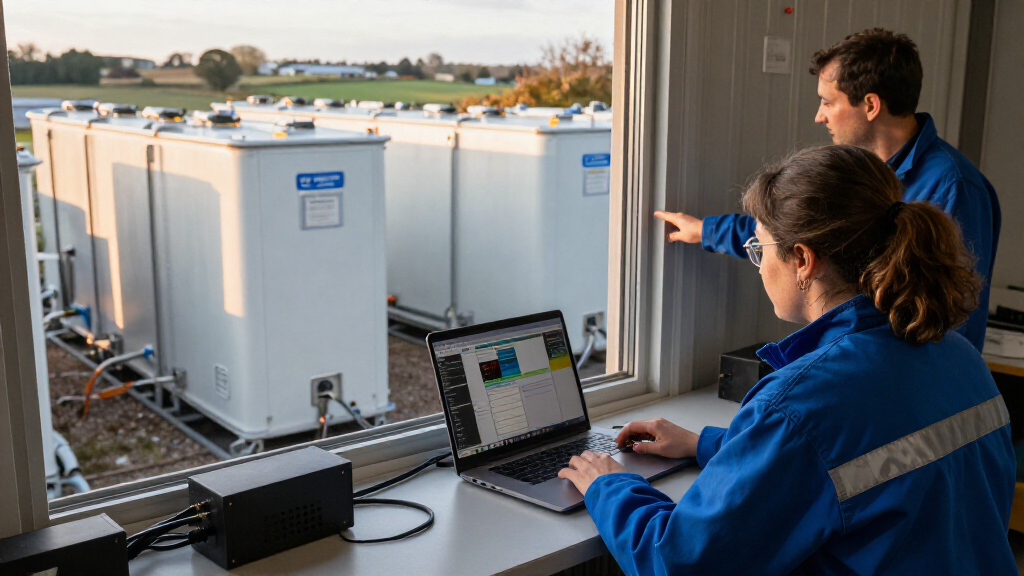
BW ESS credited Sungrow, Energy-IO, National Grid and NESO among the partners involved in reaching commercial operation. The site uses 280 liquid-cooled PowerTitan 2.0 battery units supplied by Sungrow, which was selected for the project in 2024, according to the report. Hams Hall received consent in May 2022.
A Large Battery Joins the UK Grid
Commercial operation means Hams Hall has moved beyond construction and commissioning into its operating role as a grid-connected storage asset. Batteries can take in electricity when charging and send electricity back to the grid when discharging. Their output can shift across time, making storage relevant to how electricity supply and demand are balanced; the source does not quantify Hams Hall’s expected contribution to system reliability or prices.
The site’s 350 MW rating describes its power capability, while its 1.24 GWh capacity describes the amount of energy it can store. Those are different measures and should not be treated as interchangeable. The announced expansion would raise both figures, but remains a planned future step rather than part of the currently operational facility.
The quick move from energization to commercial operation is also a notable project milestone. BW ESS reported a 20-day interval, but did not provide details of the commissioning tests, the criteria used to declare commercial operation or whether the timeline is unusual compared with other battery projects.
Products Worth Considering

Bose SoundLink Plus Portable Bluetooth Speaker, Wireless Outdoor Speaker, Up to 20 Hours Battery Life, Waterproof and Dustproof, Black

Ring Alarm Pro 14-Piece Home Security Kit with Built-In eero Wi-Fi 6 Router

Philips Hue White and Color Ambiance Smart Light Starter Kit, 2 A19 Bulbs with Hub
As an affiliate, we earn on qualifying purchases.
From Consent to Grid Operation
The project’s development has included several milestones. Hams Hall received consent in May 2022, and Sungrow was selected in 2024 to supply the battery units. In April 2026, BW ESS announced a 10-year floor agreement with EDF, which the company said would support project revenues.
Under that agreement, EDF is to optimize the battery using its PowerShift platform. The report says EDF described Hams Hall as the longest-duration battery it had contracted to date. The agreement’s financial details were not disclosed, so its pricing, precise operating terms and the level of revenue protection cannot be assessed from the available information.
BW ESS announced on Oct. 21 that it had secured debt financing for the site from OCBC, Rabobank and Société Générale. Energization was achieved on or around Oct. 13, followed by the commercial-operation announcement on Nov. 2. Those milestones mark separate stages: energization connects equipment to the electrical system, while commercial operation indicates the project has begun operating in the market.
“The project reached commercial operation just 20 days after energization.”
— BW ESS
Contract Terms and Expansion Timing
The announcement confirms the operating date and the facility’s stated ratings, but it does not provide commercial-operation test results, expected availability or actual revenue and performance data. The precise date of energization is also given only as around Oct. 13 in the source report.
The EDF floor agreement’s terms remain undisclosed. The available report does not specify its payment structure, how the floor is calculated, or what operating conditions apply. It also does not state when the planned 400 MW/1.42 GWh expansion will proceed, or whether further approvals or financing are needed.
Public UK grid data can show activity at different levels of detail depending on access and timing. The source report says Hams Hall is split into four transmission-connected Balancing Mechanism Units, each rated at 100 MW, and that a third-party data visualization showed charging and discharging during testing and operations. Those observations do not, by themselves, establish the site’s sustained commercial output or overall market impact.
Monitoring Output and Planned Growth
The immediate next step is for Hams Hall to operate as a commercial battery asset, with its charging, discharging and market activity potentially visible through available grid data. The source report identifies four 100 MW Balancing Mechanism Units at the site and says public data visualizations consolidate their activity. Data availability and update frequency vary, so those sources may not provide a complete real-time picture.
Further developments to watch include any disclosure by BW ESS or EDF on the agreement’s terms, operating performance and the schedule for the planned expansion. No expansion date or additional project milestone was given in the announcement. For now, the confirmed change is that the 350 MW/1.24 GWh facility has entered commercial operation after energization around Oct. 13.
Key Questions
Where is the Hams Hall battery project?
It is in the West Midlands of England, beside National Grid’s Hams Hall substation.
How large is the facility now?
BW ESS’s current installation is rated at 350 MW of power and 1.24 GWh of storage capacity.
What does the planned expansion involve?
The planned follow-on expansion would increase the site’s rating to 400 MW and 1.42 GWh. The announcement did not give a construction or completion date.
What is the EDF agreement?
BW ESS said the project has a 10-year floor agreement with EDF, which will optimize the battery using its PowerShift platform. The agreement’s financial and operating details have not been disclosed.
Source: ess-news.com