
To choose the right extension cord gauge, first consider the device’s power needs and the distance you’ll use it over. Lower gauge numbers like 14 or 12 are suitable for higher wattages and longer runs, while higher gauges like 16 or 18 are for lighter loads and shorter distances. Always match the cord’s capacity with the equipment to prevent overheating. Keep safety in mind—proper gauge selection can safeguard your devices and avert hazards. If you continue, you’ll discover detailed tips to ensure safe and efficient use.

Get backup power and energy gear delivered free with Prime
- Fast, free delivery on millions of items
- Prime Video, Amazon Music and more included
- Member-only deals all year
Key Takeaways
- Match extension cord gauge to device wattage, distance, and safety requirements to prevent overheating and hazards.
- Use thicker (lower gauge) cords for high-power tools and long-distance applications.
- Check insulation quality and ensure cords are undamaged before use.
- Avoid overloading cords with multiple devices to maintain safety and performance.
- Consult manufacturer guidelines or professionals when selecting the appropriate gauge for specific needs.
Extension Cord Gauge Selection Tips
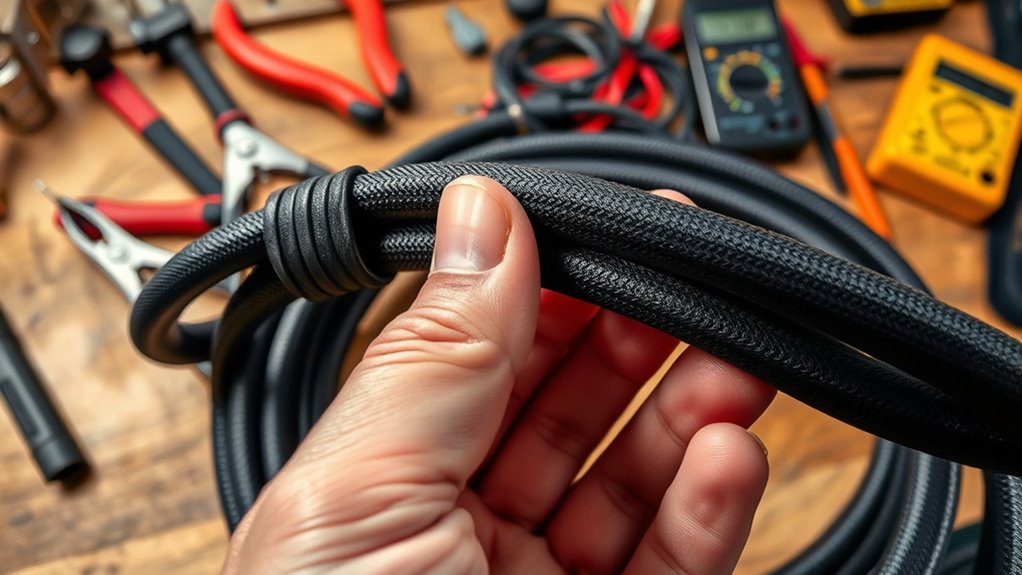
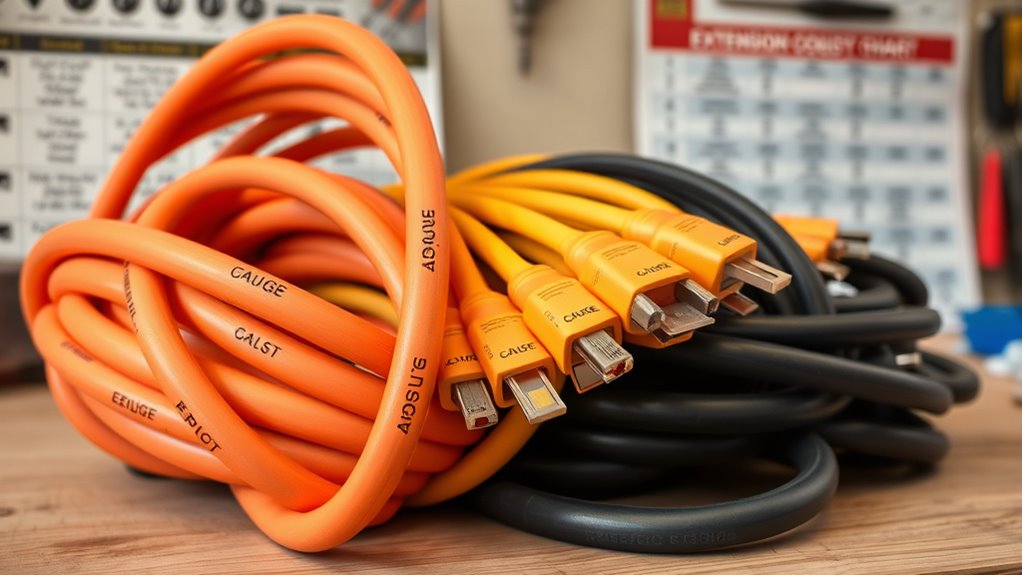
Choosing the right extension cord gauge is essential to guarantee safety and ideal performance. When selecting an extension cord, you need to consider the gauge because it directly impacts how much current the cord can safely handle. Using a cord with the incorrect gauge can lead to overheating, damage to your devices, or even fire hazards. To avoid these risks, it’s vital to understand safety precautions and dispel some common misconceptions about extension cord gauges. Many people assume that a thicker, lower-gauge cord is always better, but that’s not necessarily true. The proper gauge depends on the specific application, distance, and power demands of your tools or appliances.
One common misconception is that thicker cords are always safer and more reliable. While it’s true that lower gauge numbers (like 14 or 12 gauge) can carry more current, they are not always necessary for short distances or low-power devices. Using a thicker cord when it’s not needed can be inconvenient and more expensive without providing added safety or performance benefits. Conversely, choosing a cord with a higher gauge number (like 16 or 18) for high-power tools or long distances can be dangerous because the wire may not be capable of handling the load, leading to overheating and potential fire hazards. That’s why understanding the specific safety precautions is crucial. Always check the power requirements of your equipment and match them with the cord’s capacity, which is indicated by its gauge. Additionally, selecting cords with appropriate insulation quality can further enhance safety and durability.
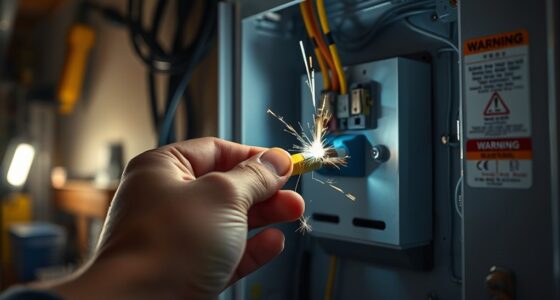
Another important safety precaution is never to overload your extension cord. Even if the gauge seems appropriate, plugging in multiple high-wattage devices can push the cord beyond its safe limits. Also, avoid using extension cords that are damaged, frayed, or have worn insulation. Damaged cords pose a significant safety risk and should be replaced immediately. Keep cords away from moisture, sharp edges, and high-traffic areas to prevent accidental damage or tripping hazards. When in doubt, consult manufacturer guidelines or a professional to determine the correct gauge for your needs.
Frequently Asked Questions
Can I Use a Thicker Gauge Cord Outdoors?
Yes, you can use a thicker gauge cord outdoors, but it’s essential to prioritize outdoor cord safety. Thicker gauge wires reduce resistance and prevent overheating, making them suitable for outdoor use. Avoid wire gauge myths that bigger isn’t always better; choose the right gauge for your needs. Always make sure your extension cord is rated for outdoor use, and inspect it regularly to keep your outdoor activities safe and efficient.
How Does Cord Length Affect Gauge Requirements?
Longer wire length increases resistance, which causes voltage drop and reduces performance. To compensate, you need a thicker gauge cord for extended distances, ensuring sufficient power delivery. Shorter cords require thinner gauges, but as wire length grows, choose a thicker gauge to maintain voltage and prevent overheating. Always consider wire length and potential voltage drop when selecting your extension cord to keep your devices running safely and efficiently.
Is a Higher Gauge Number Always Safer?
A higher gauge number doesn’t always mean safer; it simply indicates a thinner wire. Wire gauge safety depends on proper usage, including the cord’s insulation and the electrical load. Thinner cords with higher gauge numbers can overheat if overloaded or if their insulation isn’t rated for the environment. Always match your cord’s gauge and insulation quality to your power needs to guarantee safety and prevent fire hazards.
Can I Mix Different Gauge Cords?
Mixing different gauge cords isn’t recommended because it can compromise gauge compatibility and safety. When cords with varying gauges are combined, the overall amperage capacity may be uneven, leading to overheating or electrical hazards. To guarantee safety and proper function, use extension cords with the same gauge and ratings. Always prioritize matching gauges for consistent power delivery and avoid cord mixing to protect your equipment and prevent accidents.
What Are the Signs of an Overloaded Extension Cord?
They say, “A stitch in time saves nine,” and spotting overload symptoms early keeps you safe. If your extension cord feels hot, has frayed insulation, or the plug and outlet are unusually warm, you’re likely experiencing power cord safety issues. Sparks, flickering lights, or a burning smell also signal overload. Always unplug if you notice these signs, as overloading can cause damage or fire—stay alert and prevent hazards!
Conclusion
Choosing the right extension cord gauge is like finding the perfect key for a lock—when it fits well, everything flows smoothly. By understanding your power needs and selecting the appropriate gauge, you prevent potential hazards and make sure your tools and appliances work safely and efficiently. Don’t let the wrong cord be the weak link in your setup; instead, pick wisely and keep your projects running like a well-oiled machine. Your safety and success depend on it.
Columbus Day / Indigenous Peoples' Day Picks
long weekend sales
As an affiliate, we earn on qualifying purchases.