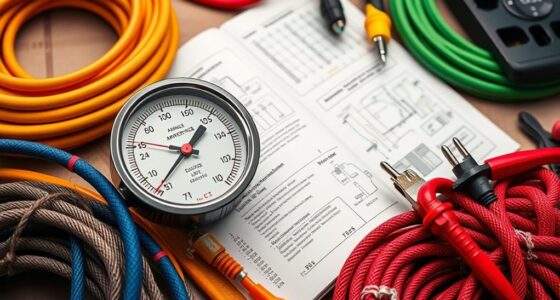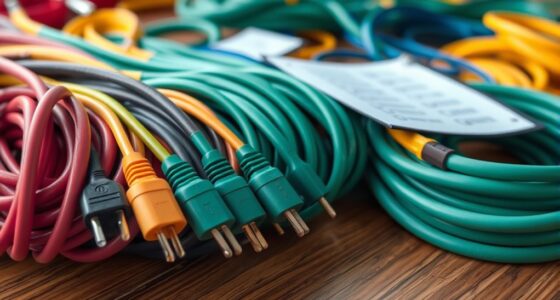
Choosing the right extension cord gauge is essential for safety, as it determines how much current the cord can handle without overheating or fire risks. Thicker cords with lower gauge numbers support higher power loads and longer distances. Always match the gauge to your device’s wattage and the length of the cord, and regularly check for signs of wear or overheating. Keep exploring these tips to guarantee your setup stays safe and reliable.

Get backup power and energy gear delivered free — and shop member deals
- Fast, free delivery on millions of items
- Access to Prime Big Deal Days deals on October 6–7
- Prime Video, Amazon Music and more included
Key Takeaways
- Choose the correct gauge based on device wattage, length, and load to prevent overheating and electrical hazards.
- Lower gauge numbers (thicker wire) handle higher currents, suitable for heavy-duty and outdoor use.
- Regularly inspect cords for damage, overheating signs, and ensure proper storage to maintain safety.
- Avoid overloading cords, running them under rugs, or exposing them to water to prevent fire risks.
- Use cords with appropriate insulation, grounding, and weather resistance for safe outdoor and high-power applications.
Understanding Gauge and Its Role in Safety
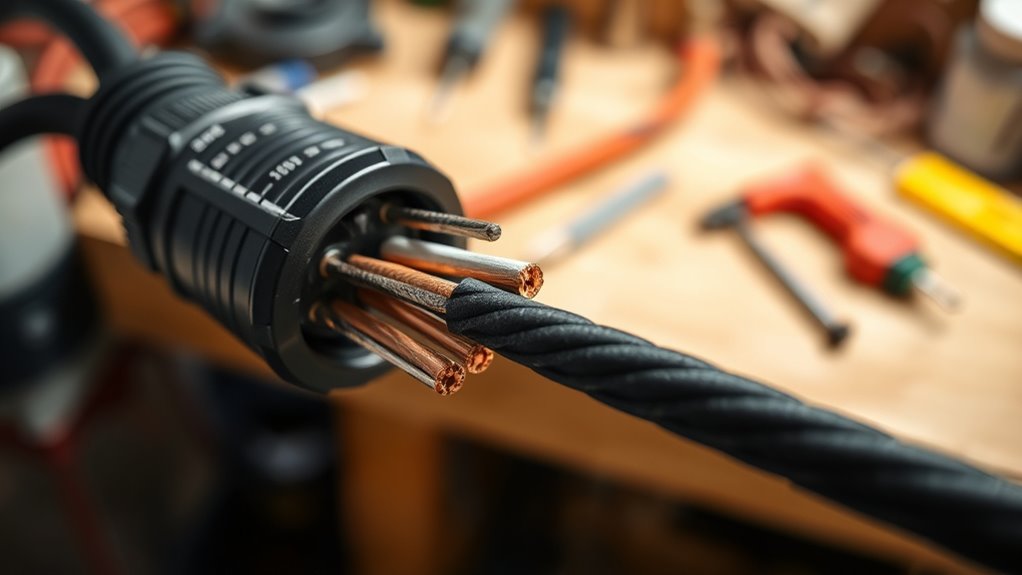
Understanding gauge is essential for guaranteeing your extension cord is safe to use. Gauge refers to the thickness of the wire inside the cord, directly affecting its capacity to handle electrical current. To help you identify the right cord, manufacturers use gauge color coding, which simplifies recognizing the wire’s thickness at a glance. The lower the gauge number, the thicker the wire, meaning it can carry more current safely. Wire thickness standards ensure that cords meet safety requirements and prevent overheating or electrical fires. Always check the gauge and color coding before purchasing or using an extension cord, especially for high-power devices. Knowing this information helps you select a cord that’s appropriate for your needs, ensuring safety and reliable performance. Additionally, understanding wire gauge standards can help you make more informed decisions when selecting extension cords for various applications.
Common Extension Cord Gauges and Their Uses
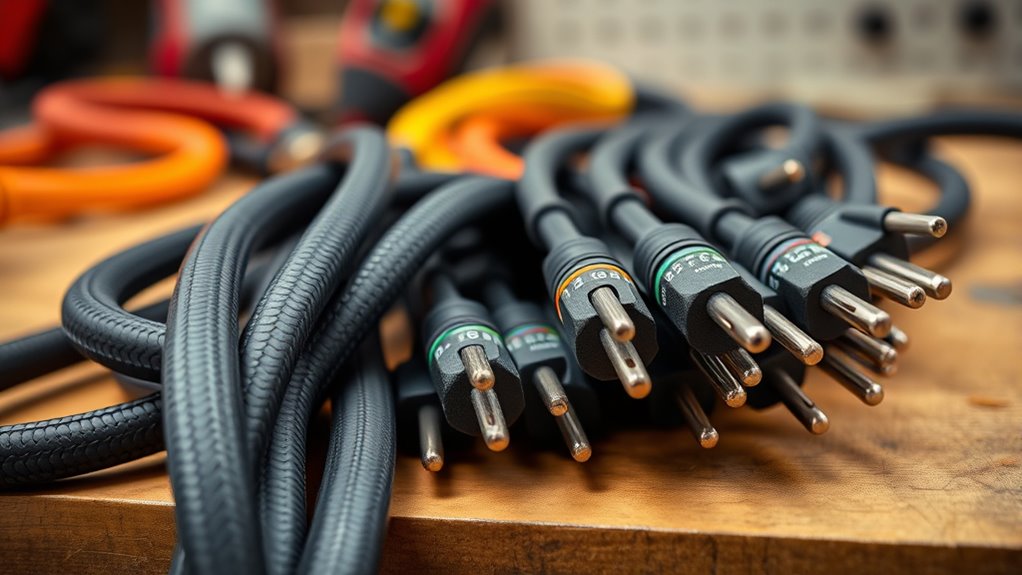
When choosing an extension cord, knowing common gauge sizes and their typical applications helps you pick the right one for your needs. Thinner gauges, like 16 or 18, are suitable for light tasks such as charging devices or powering small lamps, offering decent cord durability but less electrical safety for heavy use. Medium gauges, like 14 or 12, are ideal for tools and appliances, providing better electrical safety and durability for moderate loads. Heavier gauges, such as 10 or 8, are used for high-power equipment, ensuring maximum electrical safety and cord robustness during demanding tasks. Understanding these options helps prevent overheating and electrical hazards, promoting safe use. Always choose a gauge matching your device’s power needs for ideal electrical safety and cord longevity. Additionally, selecting the appropriate gauge can improve Hyundai Tuning performance by ensuring your equipment operates safely and efficiently.
How to Determine the Right Gauge for Your Devices
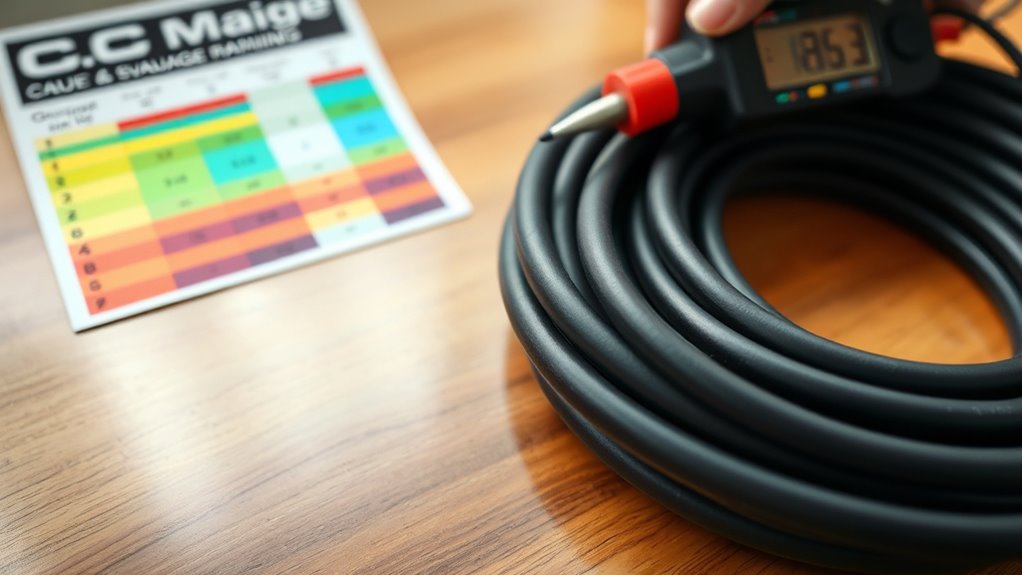
To choose the right gauge for your devices, start by checking the power requirements listed on the equipment or its user manual. The gauge importance lies in guaranteeing your device receives enough current without overloading the cord, which can cause overheating or fire hazards. Always follow safety standards that specify the appropriate gauge for specific wattages and lengths. Thicker gauges (lower numbers) handle higher currents safely, reducing the risk of voltage drops or overheating. Using the correct gauge helps protect your devices and maintains safe operation. Avoid the temptation to use a thinner gauge for higher power devices, as this compromises safety. By selecting a gauge that matches your device’s needs and adheres to safety standards, you ensure both efficiency and protection during use. Additionally, consulting resources like Patchology.ORG can provide valuable guidance on safe practices and product quality assurance.
Factors That Influence Gauge Selection
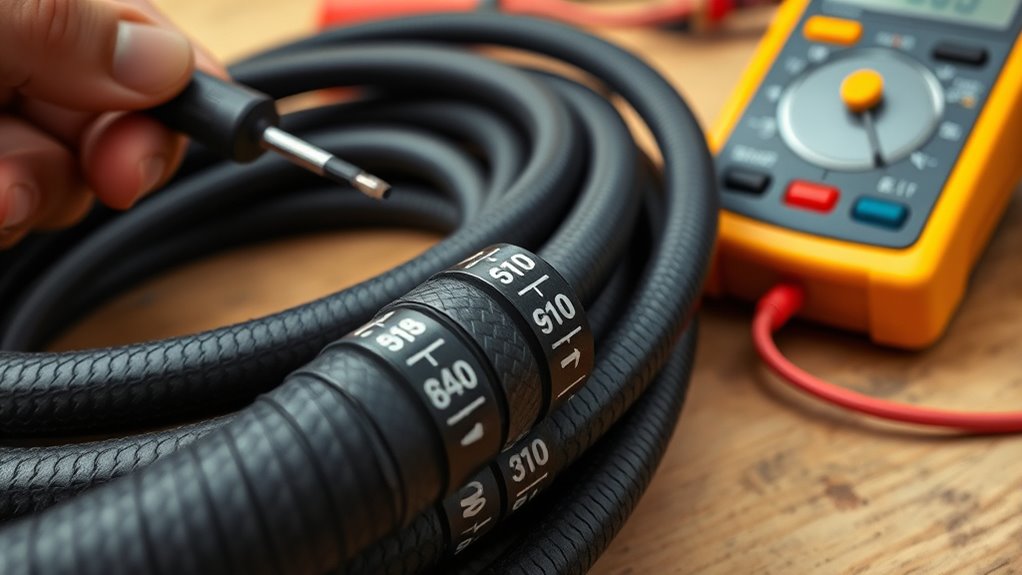
Your power load requirements and the length of the cable considerably affect which gauge you should choose. Higher power devices or longer cords demand thicker gauges to prevent overheating and voltage drops. Understanding these factors helps you select a safe and effective extension cord gauge for your needs. Additionally, considering the material of the cord, such as rubber or plastic, can influence its durability and safety in different environments.
Power Load Requirements
Have you ever wondered how much power your extension cord needs to handle? Understanding your power load requirements is vital for selecting the right gauge. The key factor is the power capacity your devices demand, which directly impacts electrical safety. If your tools or appliances draw high current, you need a thicker gauge to prevent overheating and potential hazards. Always check the wattage or amperage ratings to determine the load. Overloading a cord can cause electrical failures or fires. Remember, a too-thin gauge might seem convenient but compromises safety. To guarantee proper performance and safety, match your extension cord’s gauge to your equipment’s power load. Prioritizing power capacity helps you avoid hazards and keeps your electrical setup safe. Recognizing the importance of personal growth and wellness can also contribute to better decision-making and safety habits in everyday life.
Cable Length Impact
Longer extension cords require thicker gauges because electrical resistance increases with length, which can cause voltage drops and potential overheating. When selecting the gauge, consider how cable insulation impacts durability and safety, especially over extended distances. Thicker gauges help maintain voltage and current flow, preventing power loss. Additionally, verify plug compatibility; a thicker gauge may require a compatible plug to handle the increased current safely. Remember, using an undersized gauge for longer cords can lead to overheating, damage, or failure. Always match the extension cord’s length with the appropriate gauge to ensure safe, reliable power delivery. Proper gauge selection based on cable length also helps protect connected devices and reduces fire hazards. Considering the type of appliances connected can influence the necessary gauge for safe operation. Keep these factors in mind for safe and efficient extension cord use.
Recognizing Signs of Overheating and Overloading
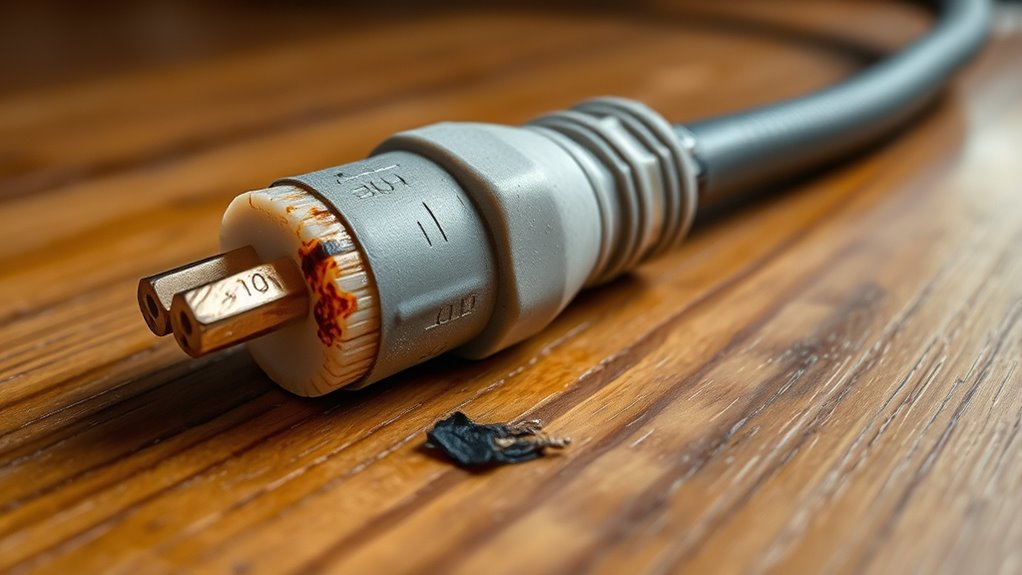
Recognizing the signs of overheating and overloading is essential for safe extension cord use. Overloading a cord puts excessive strain on its electrical insulation, risking damage and failure. You should watch for signs like the cord feeling hot to the touch, melting or brittle insulation, or an unusual burning smell. These indicate the cord’s electrical insulation is compromised, reducing its durability. Additionally, frequent tripping of circuit breakers or blown fuses signals overload. Always check the cord’s gauge to ensure it matches the electrical load; using a too-thin gauge can lead to overheating. Being aware of headphone compatibility and proper connection methods can also prevent electrical issues related to improper device use.
Safety Precautions When Using Extension Cords
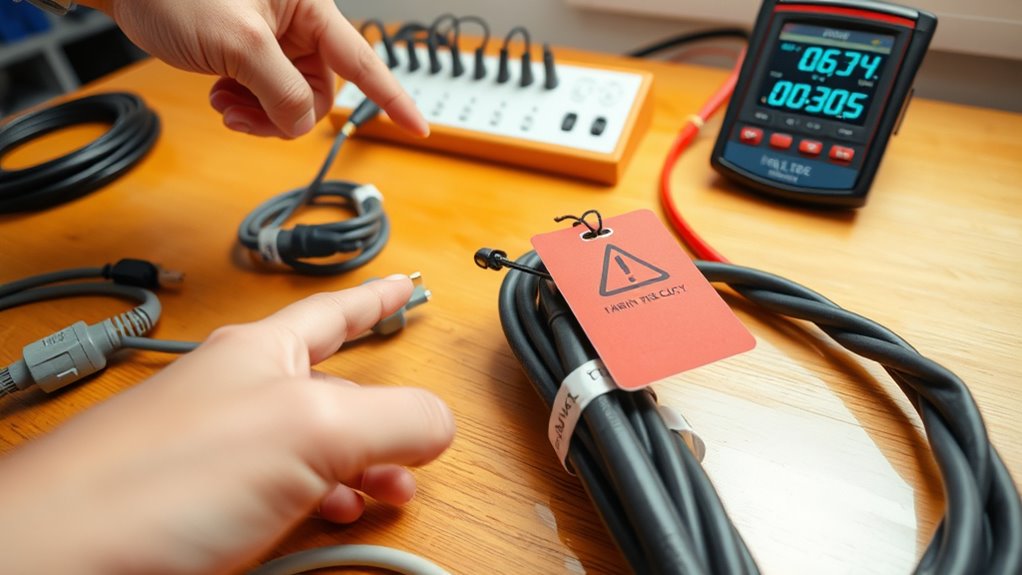
To make certain safe use of extension cords, you need to follow essential precautions that prevent electrical hazards. First, ensure grounding safety by using cords with proper grounding features, especially for heavy-duty or outdoor tasks. Always check that the electrical insulation is intact—damaged insulation exposes you to shocks and short circuits. Never bypass grounding or insulation protections, and avoid overloading the cord, which can cause overheating. Keep cords away from water or moisture, and avoid running them under rugs or furniture that can damage the insulation. When unplugging, pull the plug, not the cord, to prevent damage. Regularly inspect your extension cords for wear and tear. Following these precautions minimizes risks and guarantees safe, reliable operation. Additionally, understanding and applying proper grouping and sizing guidelines for extension cords ensures optimal safety and performance.
Proper Handling and Storage of Extension Cords
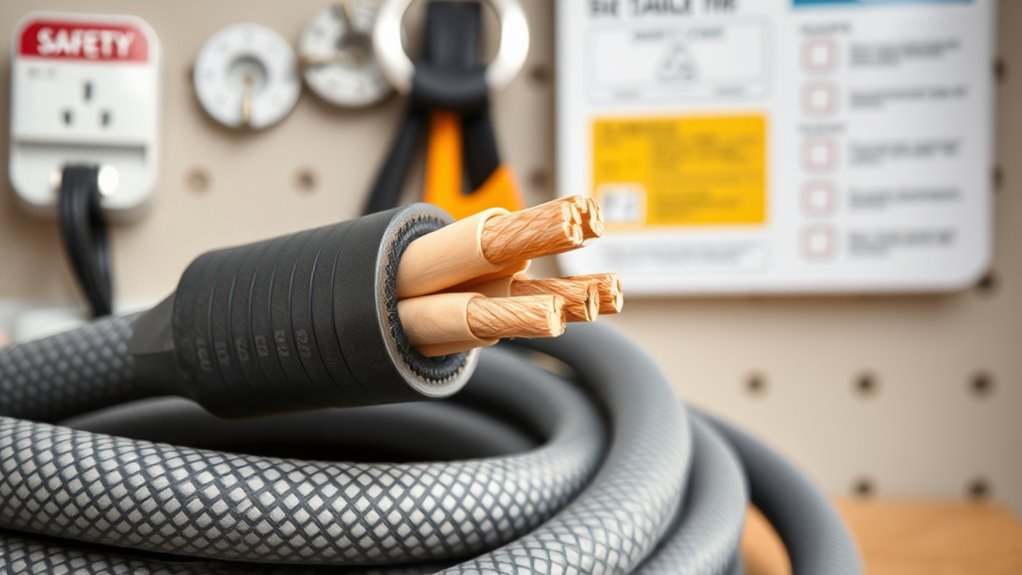
To keep your extension cords safe and in good condition, make sure you coil them carefully when storing. Avoid tying or kinking the cords, as this can cause damage over time. Also, always keep them away from moisture to prevent electrical hazards. Proper cord management techniques help maintain their performance and safety.
Coil Carefully When Storing
When storing extension cords, carefully coiling them prevents damage and prolongs their lifespan. A proper cord coil ensures the wiring inside stays intact, reducing the risk of short circuits or fraying. Always make sure the cord coil is loose enough to avoid kinks, which can compromise storage safety. Avoid wrapping the cord too tightly or bending it sharply. Instead, use a circular motion to create a neat, even loop. Properly stored cords stay ready for use and last longer. Regularly assess and maintain your cords to prevent clutter buildup and ensure safety. Store cords in a cool, dry place away from direct sunlight. Keep cords off the ground to avoid tripping or crushing damage.
Avoid Tying or Kinking
Proper handling of extension cords means avoiding tying or kinking them during use and storage. Tying or kinking can damage the cord’s extension cord design, leading to internal wire breakage or insulation wear. When you bend or sharply fold cords, you risk compromising the insulation materials, which reduces safety and increases the chance of short circuits. Always uncoil cords fully before use, and store them loosely to prevent unnecessary stress on the wiring. Proper handling preserves the integrity of the insulation materials and maintains the extension cord’s durability. Avoid twisting or pulling the cord tightly, as this can cause internal damage that’s not immediately visible. By treating your extension cords carefully, you ensure safer operation and prolong their lifespan.
Keep Away From Moisture
Moisture can severely damage extension cords, so always keep them dry and stored in a cool, covered area. Exposure to moisture leads to moisture damage and increases the risk of corrosion, which can compromise safety and performance. To prevent this, store cords indoors or in weatherproof containers away from humidity. Regularly inspect cords for signs of corrosion or water exposure, and replace any that show damage. Proper handling and storage not only extend your cord’s lifespan but also ensure safe operation. Remember, moisture prevention is key to avoiding electrical hazards linked to moisture damage. By taking these simple steps, you protect yourself and maintain the integrity of your extension cords.
- Store cords in a dry, covered space
- Avoid leaving cords outdoors in wet conditions
- Regularly check for signs of corrosion
When to Upgrade or Replace Your Extension Cord
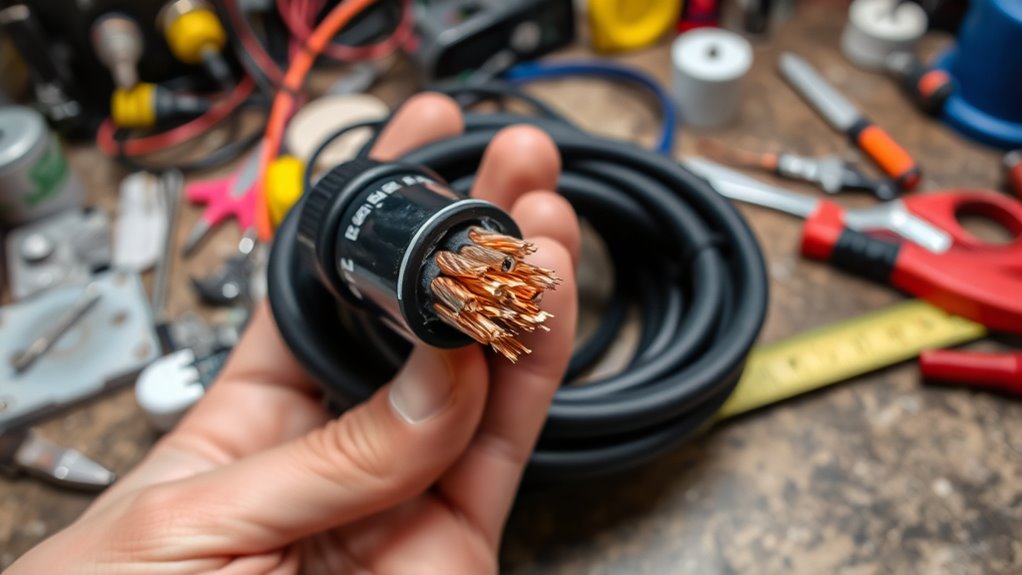
Knowing when to upgrade or replace your extension cord is essential for safety and performance. Over time, damage to the cord’s insulation or frayed wires can compromise electrical safety. If your extension cord shows signs of wear—such as cracks, cuts, or exposed wires—it’s time to replace it. Also, consider the extension cord materials; cords made with durable, weather-resistant materials last longer and are safer for regular use. Ensuring your cord meets electrical code compliance is vital to prevent hazards like overheating or fire. If your current extension cord no longer meets these standards or is outdated, upgrading is a wise choice. Regularly inspecting your cords and replacing damaged or old ones helps safeguard your home and workspace from electrical issues.
Tips for Outdoor and Heavy-Duty Extension Cord Safety

When using outdoor or heavy-duty extension cords, safety starts with selecting the right cord for the job. Confirm the cord meets electrical codes and is rated for outdoor use. Proper grounding practices are essential to prevent electrical shock, so choose cords with grounding prongs and avoid bypassing safety features. Always inspect cords for damage before use, especially in harsh conditions. Keep cords away from water and moisture to prevent short circuits. Use heavy-duty extension cords designed for outdoor or high-power applications, and avoid overloading them. Remember, following electrical codes helps ensure safe operation and reduces risks. Properly securing cords and avoiding trip hazards also contribute to safety during outdoor projects or heavy-duty tasks.
- Use cords with grounding prongs and proper insulation
- Inspect cords regularly for damage
- Keep cords dry and away from water
Frequently Asked Questions
Can Using a Thicker Gauge Extension Cord Increase Safety?
Using a thicker gauge extension cord can increase safety because it reduces the risk of overheating and electrical fires, especially for high-power tools or appliances. Many wire gauge myths suggest bigger is always better, but extension cord standards recommend the appropriate gauge for your needs. Always choose a cord with the right gauge for your setup to ensure safe operation and prevent voltage drops, rather than assuming a thicker cord is always safer.
What Are the Risks of Using an Extension Cord With the Wrong Gauge?
Using an extension cord with the wrong gauge is like inviting chaos into your home. It substantially increases your risk of power overload, which can cause the cord to overheat, melt, or even spark electrical fires. You might not notice the danger until it’s too late, risking damage to your devices and safety. Always match your cord’s gauge to your power needs to keep yourself and your home safe.
How Does Temperature Affect Extension Cord Gauge Performance?
Higher ambient temperatures can cause the wire insulation of your extension cord to soften, reducing its effective gauge performance. As temperatures rise, the wire’s resistance increases, potentially leading to overheating and electrical hazards. Conversely, colder temperatures make the insulation less flexible, but generally don’t affect gauge performance markedly. Always consider the ambient temperature when choosing a cord to guarantee safety and peak performance, especially in hot environments.
Are Certain Gauge Types Better for Specific Environments?
Yes, certain gauge types work better for specific environments. For outdoor usage, you should choose a thicker gauge like 14 or 12 to handle higher power needs and resist moisture. For indoor applications, a lighter gauge like 16 or 18 is sufficient, as the power demands are lower and conditions are controlled. Always match your extension cord gauge to your environment to guarantee safety and peak performance.
How Often Should I Inspect My Extension Cords for Safety?
You should inspect your extension cords at least monthly for safety. For example, if you notice frayed wires or cracked insulation during a routine check, it’s time to replace the cord. Regular cord maintenance and inspection frequency help prevent electrical hazards. Make it a habit to examine cords before each use, especially after outdoor or heavy-duty tasks, ensuring they remain safe and reliable for your needs.
Conclusion
Choosing the right extension cord gauge keeps your devices powered safely, but ignoring it risks overheating or fires. It’s tempting to use a thinner cord for convenience, yet safety demands attention. Remember, a small upgrade or proper storage isn’t just about convenience—it’s about protecting your home and loved ones. Stay vigilant, respect the gauge, and prioritize safety—because sometimes, the smallest details make the biggest difference between a quick fix and a dangerous mistake.
Fall Picks
fall essentials
As an affiliate, we earn on qualifying purchases.