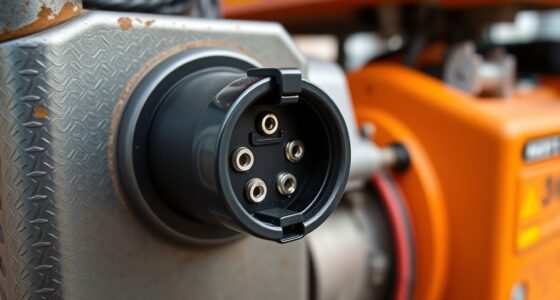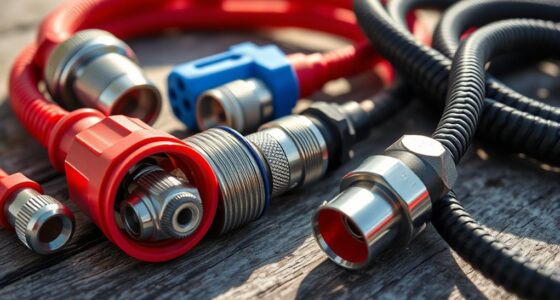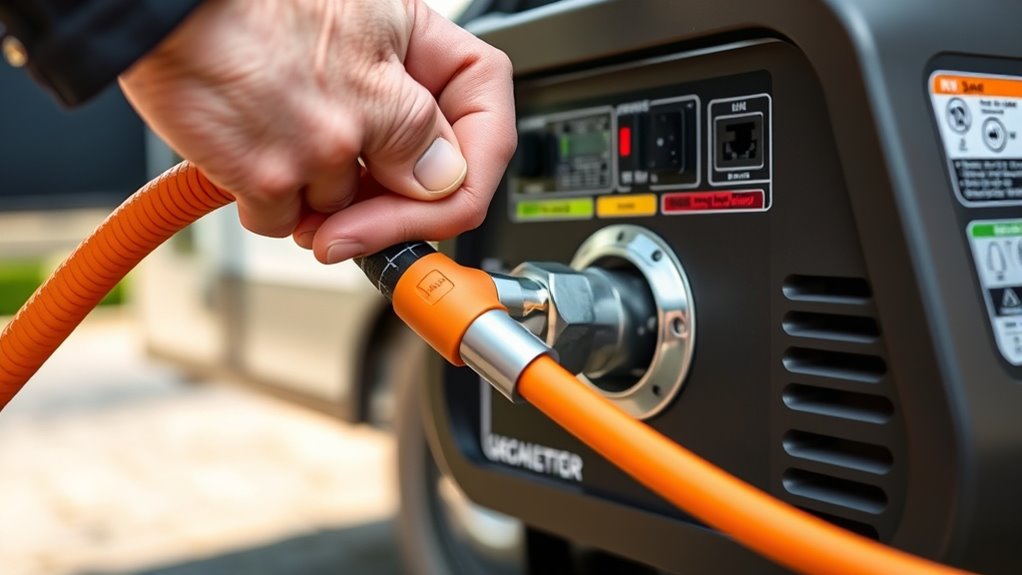

When plugging a generator into your RV’s shore power, make certain the generator matches your RV’s power rating (30 or 50 amps) and that it’s turned off before connection. Use a heavy-duty, outdoor-rated cord and properly ground the generator. Turn on the generator first, then connect, and avoid makeshift adapters. Never overload the generator or leave it unattended. To stay safe and protect your appliances, follow proper procedures closely—more tips await.

Get backup power and energy gear delivered free — and shop member deals
- Fast, free delivery on millions of items
- Access to Prime Big Deal Days deals on October 6–7
- Prime Video, Amazon Music and more included
Key Takeaways
- Always verify generator and RV power ratings (30-amp or 50-amp) for compatibility before connecting.
- Turn off the generator before plugging into the RV shore power connector to prevent electrical surges.
- Use a heavy-duty, outdoor-rated power cord designed for RV use; avoid makeshift adapters or extension cords.
- Ensure proper grounding of the generator and monitor voltage output to prevent damage to your RV’s appliances.
- Shut down the generator and disconnect the power cord safely after use; store the cord properly in a dry place.
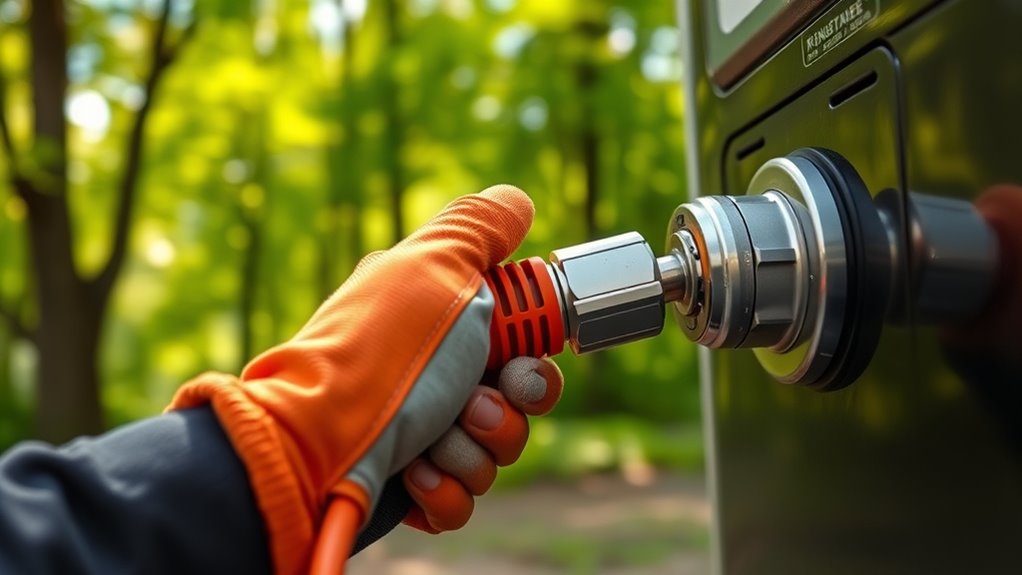
When you need backup power for your RV, plugging a generator into the shore power connector can be a practical solution. However, it’s essential to prioritize generator safety and verify power compatibility before proceeding. First, confirm that your generator’s output matches your RV’s electrical system. Most RVs run on 30-amp or 50-amp connections, so check your generator’s specifications to validate it can supply the appropriate voltage and current. Using a generator with incompatible power ratings can lead to electrical damage, safety hazards, or even fire. Always refer to the manufacturer’s guidelines for your RV and generator to confirm compatibility.
Ensure generator output matches your RV’s electrical system to prevent damage and hazards.
Next, consider the safety aspects of connecting your generator. Before plugging in, make sure the generator is turned off and properly grounded. Proper grounding prevents electrical shocks and reduces the risk of electrical faults. Inspect all cords and connectors for damage or wear, replacing any frayed or compromised cables to avoid short circuits. When you’re ready to connect, use a heavy-duty, outdoor-rated power cord designed for RV use. Avoid makeshift adapters or extension cords that aren’t rated for high current loads, as these can overheat or fail under load.
Once connected, turn on the generator before switching on your RV’s shore power switch. This sequence helps prevent voltage surges that could damage your RV’s appliances and electrical system. Keep an eye on the generator’s voltage output using a multimeter or the built-in indicators, ensuring it remains stable within safe limits. Fluctuations or surges can damage sensitive electronics, so maintaining consistent output is important. Never overload the generator; stick to its rated capacity, and if you need more power, consider a larger unit rather than plugging in multiple devices or appliances that exceed its limits.
During operation, remain vigilant for signs of trouble such as unusual noises, overheating, or electrical faults. Always keep a fire extinguisher nearby, and never leave the generator unattended while running. When you’re finished, shut down the generator first, then disconnect the power cord from the RV. Store the cord in a safe, dry place to prevent damage and make sure it’s ready for future use.
As an affiliate, we earn on qualifying purchases.
Frequently Asked Questions
Can I Connect Multiple Generators to My RV Simultaneously?
You shouldn’t connect multiple generators to your RV simultaneously without proper generator synchronization equipment. Doing so can lead to overload prevention issues and damage your power system. If you want to use multiple generators, guarantee they are synchronized correctly to match voltage, frequency, and phase. Always consult your generator’s manual or a professional to avoid overloads and ensure safe, efficient operation. Never attempt to connect generators without proper synchronization.
What Safety Precautions Should I Take During Installation?
Did you know improper grounding safety can cause electric shocks? When installing, you should always follow electrical codes to guarantee safety. Make sure to ground your generator properly, avoiding shortcuts that could lead to hazards. Use insulated tools and wear protective gear. Double-check connections before powering up, and consult a professional if unsure. Staying vigilant with grounding safety and electrical codes keeps you safe during installation.
How Do I Troubleshoot Power Issues After Connection?
If you’re experiencing power issues after connecting, first check the grounding safety to verify everything’s properly grounded. Inspect your connections for loose or damaged wires. Use a surge protector to prevent power surges that could damage your RV’s electrical system. Reset circuit breakers if needed, and test the generator output voltage. If problems persist, consult a professional to avoid risks and guarantee your setup remains safe and functional.
Is It Necessary to Use a Transfer Switch?
Yes, using a transfer switch is necessary for safe generator connection, especially to prevent backfeeding and protect your RV’s electrical system. It guarantees compatibility between your generator and RV, allowing you to switch seamlessly between shore power and generator power. A transfer switch simplifies the process, reduces risks, and ensures your generator is properly integrated with your RV’s electrical setup, making your power setup safer and more reliable.
What Maintenance Is Required for the Shore Power Connector?
You should regularly inspect your shore power connector for signs of corrosion or damage, guaranteeing it stays clean and functional. To prevent corrosion, apply dielectric grease to the contacts during maintenance. Keep the connector dry and free of dirt, and check for loose or worn parts. Proper maintenance like this helps ensure safe, reliable power connections and prolongs the life of your RV’s electrical system.
As an affiliate, we earn on qualifying purchases.
Conclusion
Remember, always follow safety guidelines when plugging your generator into your RV’s shore power connector. Think of it like balancing a fine teacup—you don’t want to spill any secrets or sparks. Keep your connections secure, avoid overloads, and never bypass safety measures. With a little care, you’ll enjoy a smooth, worry-free power supply, just like a well-orchestrated symphony in a grand hall. Stay vigilant, and your adventures will stay bright and trouble-free.
outdoor-rated heavy-duty extension cord for RV
As an affiliate, we earn on qualifying purchases.
As an affiliate, we earn on qualifying purchases.
As an affiliate, we earn on qualifying purchases.
Fall Picks
fall essentials
As an affiliate, we earn on qualifying purchases.