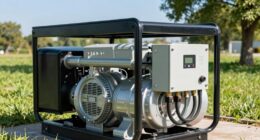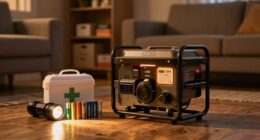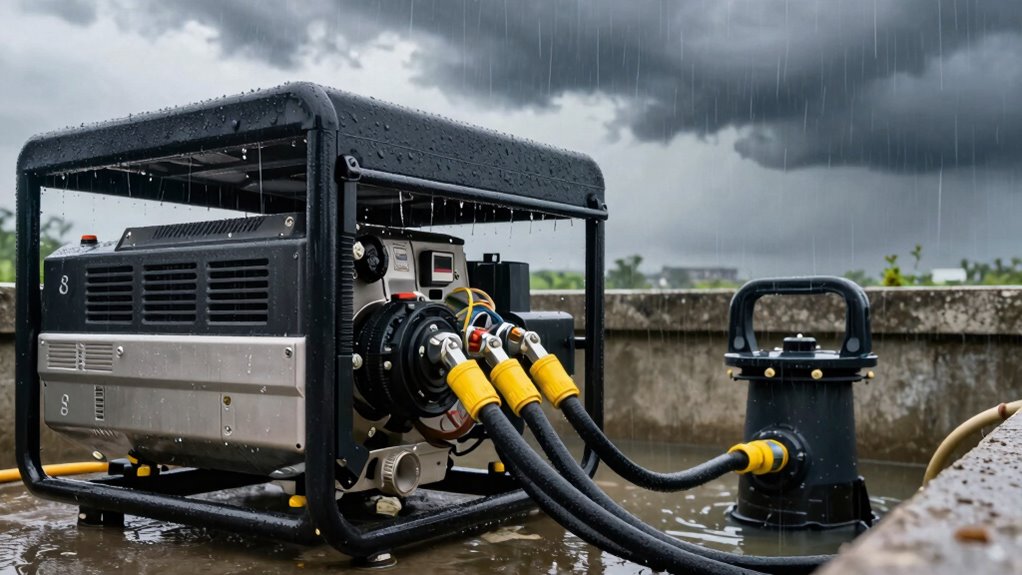
To match a generator to your sump pump during storms, first check the pump’s label for running and surge wattage. Choose a generator with a capacity slightly higher than those numbers to guarantee reliable operation without overload. Make sure the generator runs long enough to cover your potential outage duration and has sufficient fuel capacity. Proper placement, safety, and maintenance are also key. For detailed tips, keep exploring how to keep your home protected during storm season.
Key Takeaways
- Check the sump pump’s running and surge wattage on its label to select a generator with slightly higher capacity.
- Ensure the generator can handle the combined power load of the sump pump and other essential appliances.
- Use a transfer switch for safe and seamless power transfer from the generator to the sump pump.
- Position the generator outdoors in a well-ventilated area, away from windows and vents, to prevent carbon monoxide buildup.
- Choose a generator with sufficient fuel capacity and runtime to power the sump pump throughout extended storm outages.
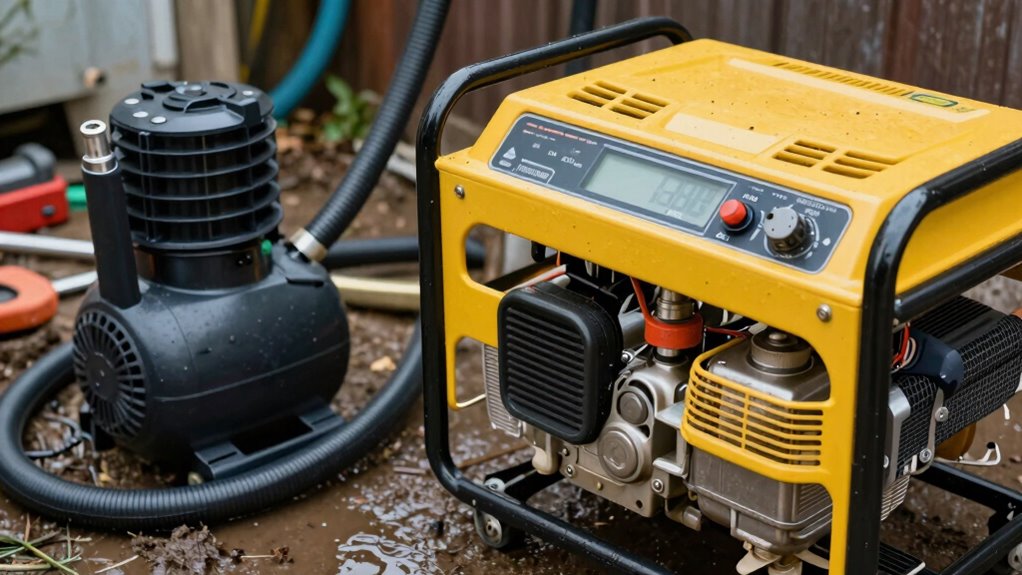
During storms, having a reliable backup power source for your sump pump can make all the difference in preventing flooding. When a power outage hits, your sump pump stops working, putting your home at risk of water damage. That’s why choosing the right generator and ensuring it’s properly maintained is essential. You want a unit that can handle your sump pump’s power needs without overloading, so understanding your pump’s wattage requirements is the first step. Check your sump pump’s label for its running wattage and surge wattage, then select a generator that exceeds these numbers slightly to guarantee reliable operation during storm conditions.
Generator maintenance plays a pivotal role in guaranteeing your backup system performs when you need it most. Regularly inspecting your generator, changing oil, checking filters, and testing it under load helps prevent surprises during a power outage. A well-maintained generator is safer to operate and less likely to fail when storms hit. Additionally, practicing power outage safety includes placing your generator outdoors in a well-ventilated area, away from windows and vents, to prevent carbon monoxide poisoning. Never run it indoors or in enclosed spaces—this is essential for your safety and the safety of everyone in your home. Proper landscaping around your generator can also help protect it from the elements and ensure easy access for maintenance. Understanding generator technology can help you select the most reliable model for your needs. Moreover, understanding the power needs of your entire home can help prioritize what should be powered during an outage. Familiarizing yourself with backup power options, such as portable or standby generators, can also help you choose the most suitable method for your situation.
Matching your generator to your sump pump also involves considering run-time. During severe storms, power outages can last hours or even days, so your generator should have enough fuel capacity to run continuously or be able to start multiple times without refueling. If your current generator runs out of fuel quickly, think about upgrading to a larger model or adding a transfer switch that allows seamless switching from grid power to generator power. Using a transfer switch is safer than plugging your generator directly into an outlet because it isolates your home’s wiring and prevents back-feed, which can endanger utility workers and damage your equipment. It’s also important to consider fuel efficiency to ensure your generator can operate for extended periods without frequent refueling.

DaranEner Portable Power Station 60,000mAh, 192Wh LiFePO4 Battery Backup w/2 300W (Surge 600W) AC Outlets, 2H Fast Charging, Power Bank for Hurricane Emergency/Home/Outdoor Camping/RVs Use
【192Wh Capacity, 300W Pure Sine Wave Output】This portable power station delivers a reliable 300W (600W surge) output, perfect…
As an affiliate, we earn on qualifying purchases.
As an affiliate, we earn on qualifying purchases.
Frequently Asked Questions
How Long Should a Generator Run to Fully Power a Sump Pump?
You should run your generator long enough to keep your sump pump operating continuously during power outages, typically about 8-12 hours, depending on storm severity. Backup batteries can supplement power, but for full operation, an automatic transfer switch connects your generator seamlessly. Make certain your generator’s capacity matches the sump pump’s wattage needs, and run it until the storm subsides, then let it cool down before turning off.
Can I Connect a Generator Directly to My Home’s Electrical System?
You shouldn’t connect a generator directly to your home’s electrical system; it’s like trying to open a floodgate with a single key. Instead, use a transfer switch for safe generator placement, ensuring fuel efficiency and protecting your home’s wiring. This setup prevents backfeeding and electrical hazards, giving you peace of mind during storms. Always hire a professional to handle the connection, keeping safety and efficiency at the forefront.
What Maintenance Is Needed for a Generator Used During Storms?
You should regularly check your generator’s fuel storage to guarantee it has enough fuel for storm use, refilling as necessary. Keep the generator clean and inspect for any corrosion or damage. To minimize noise during storms, consider noise mitigation options like soundproof enclosures or placing it on a vibration pad. Regularly test the generator to confirm it starts easily and runs smoothly, making certain it’s ready when storms hit.
How Do I Determine the Right Wattage for My Sump Pump?
Imagine the steady hum of your sump pump working tirelessly, clearing water like a steady stream. To determine the right wattage, check your pump’s label for power requirements, usually in watts or amps. Consider its pump capacity—how much water it moves per minute. Add a safety margin, then select a generator that can handle that wattage comfortably. This guarantees your sump pump keeps running smoothly during heavy storms.
Are There Safety Precautions When Using a Generator Outdoors?
Yes, there are important outdoor precautions to guarantee generator safety. Always operate your generator in a well-ventilated area, away from windows and vents to prevent carbon monoxide buildup. Keep it dry and on a flat surface to avoid hazards. Use heavy-duty outdoor extension cords, and never overload the generator. Following these outdoor precautions helps prevent accidents and keeps you safe while powering your sump pump during storms.
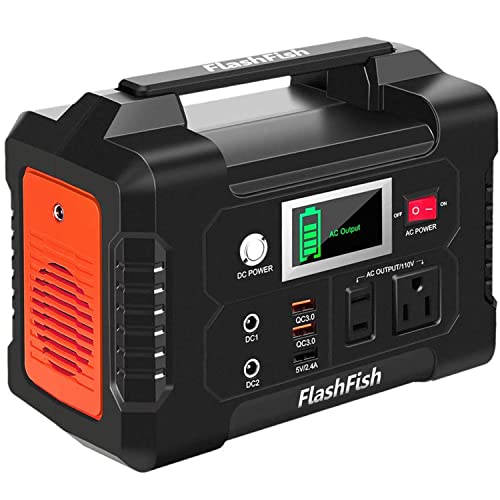
Portable Power Station 200W, FF Flashfish 40800mAh Backup Power Battery Pack With 110V AC Outlets/2 DC Ports/3 USB Ports, Solar Generator Power Supply For Home Backup, Power Outages, and Camping
[Multiple Outputs for All Your Devices] Flashfish portable power station features versatile outputs: 110V AC outlet (200W), 2…
As an affiliate, we earn on qualifying purchases.
As an affiliate, we earn on qualifying purchases.
Conclusion
When you match your generator to your sump pump, you’re not just preparing—you’re fortifying your home against the relentless fury of storms. Think of it as giving your house a shield so strong, it could withstand the apocalypse. By choosing the right generator, you guarantee your sump pump runs seamlessly, preventing water damage and chaos. Stay vigilant, stay protected, and turn storm season into just another chapter in your fortress of preparedness.

MUJURUR 100A Generator Transfer Switch, 24000W Heavy Duty Double Throw Safety Switch, 120/240V Manual Transfer Switch, Stronger Stability, Enlarged NEMA 3R Enclosure for Outdoor, 10-Year Warranty
【100 Amp Generator Transfer Switch】This transfer switch is perfect for shifting power from the utility grid to an…
As an affiliate, we earn on qualifying purchases.
As an affiliate, we earn on qualifying purchases.
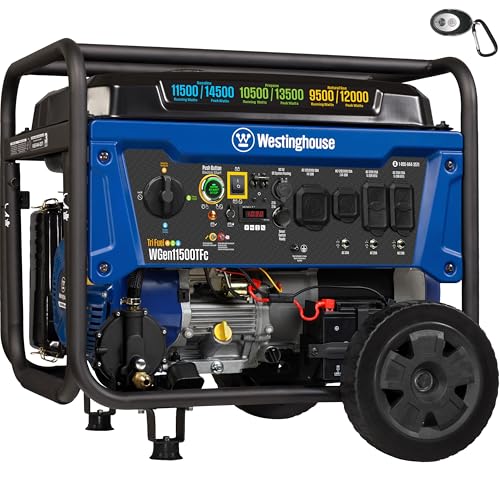
Westinghouse 14500 Peak Watt Tri-Fuel Home Backup Portable Generator, Remote Electric Start, Transfer Switch Ready, Gas, Propane, and Natural Gas Powered
Perfect as a backup power source for larger homes or a dependable source of portable power
As an affiliate, we earn on qualifying purchases.
As an affiliate, we earn on qualifying purchases.