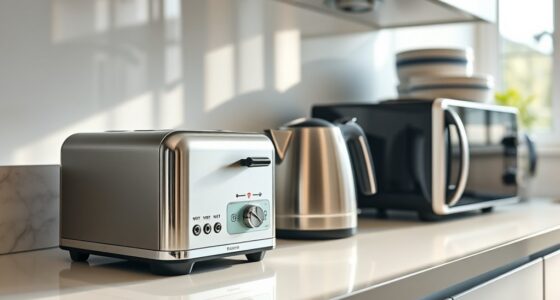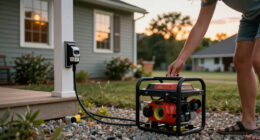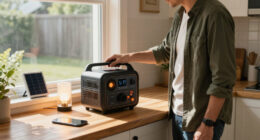
When thinking about generator capacity, start by listing all the appliances you’ll need power for and noting their start-up and running wattages. Add these to find your total load, making sure the generator can handle it comfortably. Consider how long you’ll need backup power and choose a size that matches that duration, factoring in fuel efficiency. Proper sizing prevents overloads and saves costs. Keep these points in mind, and you’ll be on your way to choosing the right generator for your needs.

Get backup power and energy gear delivered free — and shop member deals
- Fast, free delivery on millions of items
- Access to Prime Big Deal Days deals on October 6–7
- Prime Video, Amazon Music and more included
Key Takeaways
- Calculate total wattage of all essential appliances to determine the minimum generator capacity needed.
- Consider backup duration to select a generator with sufficient fuel capacity and runtime.
- Match generator size to peak startup wattages, especially for appliances like refrigerators or air conditioners.
- Prioritize efficiency to reduce fuel consumption and operating costs during extended use.
- Avoid overloading by choosing a generator with capacity slightly above your total power requirements.
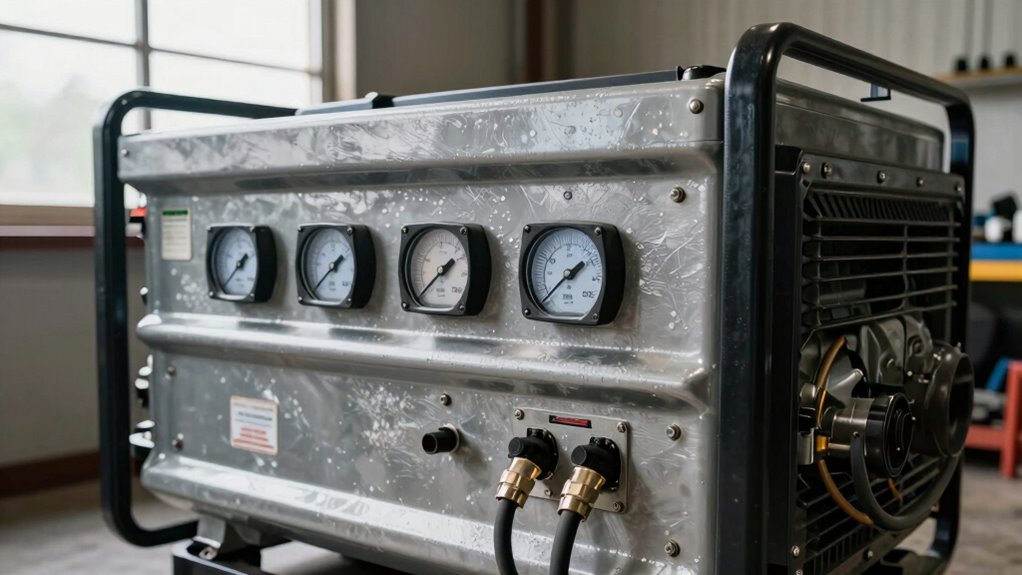
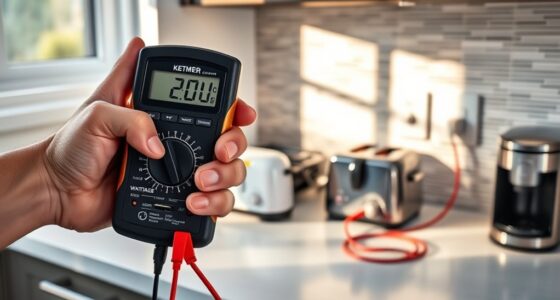
Have you ever wondered how to determine the right size generator for your needs? It all starts with understanding your power load—the total amount of electricity your appliances and devices require to operate. To figure this out, you need to list everything you want to keep running during a power outage or when using a portable generator. Add up the wattage of each item, paying attention to their starting and running wattages, since some devices like refrigerators or air conditioners demand extra power at startup. This total gives you a clear picture of your essential power load. Knowing this helps you choose a generator that can handle your current needs without being overkill or underpowered.
Next, consider backup duration, which is how long you expect the generator to run during an outage. If you only need power for a few hours, a smaller, portable generator might suffice. But if you want to keep your whole house running for days, you’ll need a larger capacity generator with a fuel supply that can last that long. Backup duration also influences fuel efficiency and consumption. Some generators are designed to run longer on the same amount of fuel, which is crucial if outages tend to last for extended periods. Think about your typical outage length and your fuel availability when sizing your generator, because a generator that runs out of fuel prematurely will leave you back in the dark. Additionally, understanding your generator capacity ensures you select a unit that provides reliable power without unnecessary expense. Considering the power demands of your appliances can help you avoid under- or overestimating your needs, leading to more efficient operation.
Informed sizing also involves considering generator efficiency, which can significantly impact operating costs and fuel consumption over time.
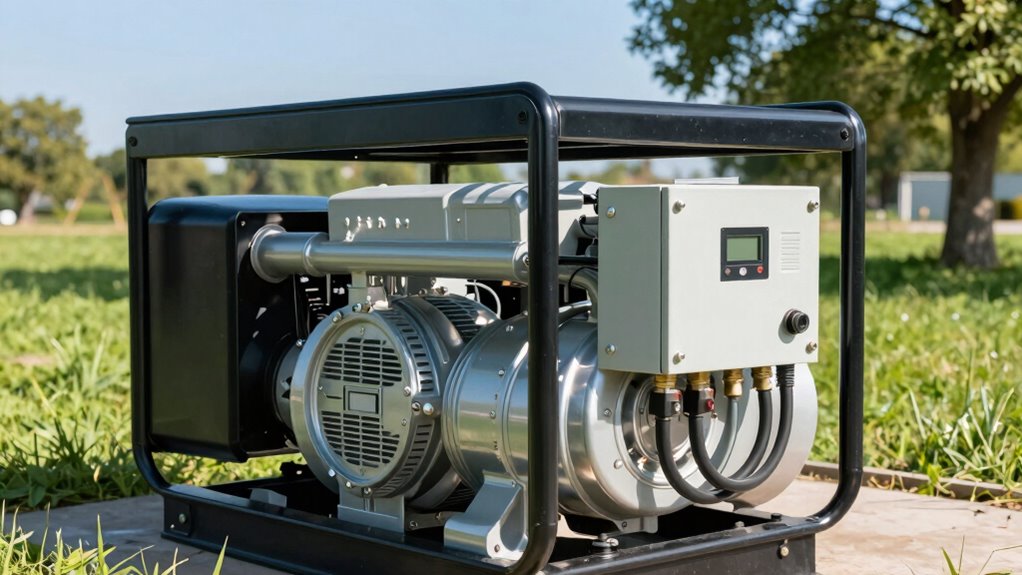
portable generator with high starting wattage
As an affiliate, we earn on qualifying purchases.
As an affiliate, we earn on qualifying purchases.
Frequently Asked Questions
How Does Altitude Affect Generator Capacity?
Altitude effects cause power reduction in your generator because higher elevations mean thinner air. This reduced air density decreases the engine’s combustion efficiency, leading to less power output. As you go higher, expect your generator’s capacity to drop, sometimes considerably. To compensate, you might need a generator designed for high-altitude use or consider derating your current unit to prevent overloads and ensure reliable performance in such conditions.
Can Generator Capacity Be Increased After Purchase?
Imagine you’re in a sci-fi movie, and yes, generator capacity can be increased after purchase, but it’s not like upgrading a spaceship. You can enhance it with additional modules or parallel setups, improving fuel efficiency and power output. Keep in mind, regular maintenance schedules are crucial to sustain this boost. Upgrading isn’t simple, so consult a professional to avoid overloading and guarantee your setup remains efficient and safe.
What Are the Signs of an Underpowered Generator?
If your generator struggles to power your appliances, you’re likely dealing with an underpowered unit. You might notice frequent tripping of circuit breakers, higher noise levels, and poor fuel efficiency as it works harder than necessary. It may also produce inconsistent power or overheat. These signs indicate your generator isn’t supplying enough capacity, and upgrading to a more suitable size can improve performance, reduce noise, and save fuel.
How Does Temperature Impact Generator Performance?
Temperature profoundly impacts your generator’s performance. As temperatures rise, fuel efficiency decreases because the engine works harder to cool itself, leading to more frequent maintenance needs. Conversely, cold weather can cause thickened lubricants, straining components and reducing efficiency. In hot conditions, you might notice increased wear, so regular maintenance becomes essential. Monitoring temperature and adjusting operation accordingly helps keep your generator running smoothly and efficiently.
Is It Better to Oversize or Undersize a Generator?
It’s better to slightly oversize your generator. When you do, you benefit from improved fuel efficiency and lower noise levels because the generator isn’t pushed to its maximum capacity all the time. This prolongs its lifespan and guarantees reliable power during peak demand. Undersizing risks overloads, higher fuel consumption, and noisy operation, which can lead to early failure. Striking the right balance keeps your system efficient and quieter.
home backup generator for extended outages
As an affiliate, we earn on qualifying purchases.
As an affiliate, we earn on qualifying purchases.
Conclusion
Understanding generator capacity isn’t just about numbers; it’s about grasping how your actual power needs align with what your generator can provide. While some believe a larger capacity always means better, the truth is, efficiency and proper sizing matter more. By carefully analyzing your energy demands and considering real-world usage, you guarantee reliable backup power without overspending. Remember, a well-chosen generator isn’t just a machine—it’s a smart investment in your peace of mind.
fuel-efficient portable generator
As an affiliate, we earn on qualifying purchases.
As an affiliate, we earn on qualifying purchases.
As an affiliate, we earn on qualifying purchases.
Fall Picks
fall essentials
As an affiliate, we earn on qualifying purchases.