TL;DR
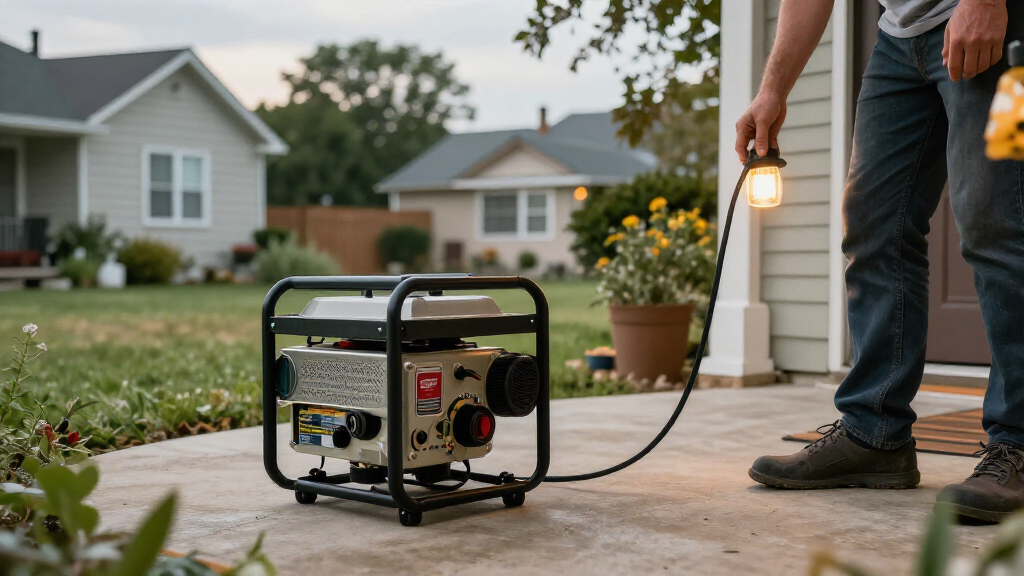
Portable inverter generators use an engine, alternator, and inverter to produce AC electricity for selected appliances and devices during an outage. Choose by continuous wattage, startup surge, fuel and runtime, noise, and approved connections; operate outdoors well away from the home, and never connect one through a wall outlet.
A refrigerator can hum along on modest power, then briefly demand much more when its compressor kicks on. That small surge is why a generator that looks powerful enough on paper can still struggle during an outage.

Get backup power and energy gear delivered free with Prime
- Fast, free delivery on millions of items
- Prime Video, Amazon Music and more included
- Member-only deals all year
Portable inverter generators can keep selected essentials running when the grid goes dark. They use fuel to make electricity and can be easier to move and quieter than many conventional generators, though the details vary by model and load.
This guide explains how they work, how to choose a size that fits your needs, and how to plan for fuel, connections, and safe outdoor use. You’ll come away with a practical way to decide what to power and what to check before the next storm.
Match continuous watts to the loads you plan to run, and account for startup surges from motors such as refrigerators and pumps.
Treat runtime and noise ratings as model-specific estimates that depend on load and measurement conditions.
Check fuel mode, outlets, portability, maintenance, and parallel compatibility in the manufacturer’s specifications.
Operate fuel-burning generators outdoors according to the manual, away from the home, with working carbon-monoxide alarms.
Never backfeed a home through a wall outlet; ask a qualified electrician about an approved transfer switch or connection.
How an inverter generator turns fuel into usable power
A portable inverter generator uses an engine to turn an alternator, then converts that electrical output into stable AC power with an inverter. In many models, the engine can slow down when demand drops, which may reduce fuel use and noise compared with a conventional generator that runs at a steadier speed.
That design helps explain why these powered generators that produce electricity for appliances, electronics, and some household circuits are popular for outages, campsites, and worksites. They can feel less like a roaring engine and more like a steady mechanical hum, especially when powering a light load. The sound and fuel use still depend on the specific model, its load, and where you place it.
The word inverter does not promise that every unit is suitable for every device or connection. Check the manufacturer’s specifications for output quality, grounding, and permitted uses. For example, if you want to run a laptop during a two-hour outage, confirm that the generator’s output meets the laptop maker’s guidance rather than relying on the product name alone.
Think of the inverter as a power conditioner between the engine and your equipment: useful, but still something you should check against the equipment’s requirements.
Before buying, make a short list of what you want to run. A few lamps and phone chargers require a different setup than a refrigerator, sump pump, or heating system. That list turns a vague search for “backup power” into a more useful comparison of rated output, outlets, and intended use.
Products Worth Considering

Roborock Q7 M5+ Robot Vacuum and Mop with Self-Emptying Dock

Dyson Airwrap i.d. Multi-Styler with Bluetooth Connectivity
Google Nest Smart Thermostat, Programmable Wi-Fi, Charcoal
As an affiliate, we earn on qualifying purchases.
Choose a generator that can handle the moment appliances start
Portable inverter generators for backup power need enough continuous running watts for the loads you plan to use and enough capacity for appliances’ short starting surges. Motors in refrigerators, pumps, and air conditioners may draw more power when they start than they use while running, so simply adding their normal wattages can leave you short.
Start with a realistic outage scenario. Suppose you want to keep a refrigerator cold, charge two phones, and run a few LED lamps. Write down each device’s running watts, find the refrigerator’s startup requirement from its label or manufacturer, then consider whether you will use everything at the same time. If a sump pump may also need to start, include that surge in the plan.
The practical goal is to choose for your actual loads, not every appliance in the house. A portable unit may power selected appliances or, with approved equipment, selected household circuits; it is not automatically a whole-home generator. If your plan includes a furnace or air conditioner, check the electrical demand and connection method with the appliance and generator specifications.
- List your priority appliances and the circuits you want available.
- Find running and starting wattages for each appliance, especially equipment with a motor.
- Check which loads may overlap and compare that demand with the generator’s rated output.
- Ask a qualified electrician about connecting selected household circuits.
For example, if the refrigerator and pump might start together, a model that handles each appliance separately may still be undersized for both at once. You can reduce the needed capacity by planning when to run loads, but you should follow the manufacturer’s limits and never overload the generator.
Compare fuel, runtime, noise, and portability before you buy
The best fit depends on how you expect to use the generator: fuel options, runtime, noise, weight, outlets, and maintenance all matter alongside wattage. A unit that is easy to move but runs out of fuel quickly may frustrate you during a long outage; a larger unit may offer more output but be harder to store and handle.
Gasoline is common, while some generators also run on propane or offer dual-fuel operation. Dual fuel can give you another option when one fuel is hard to find, but output and runtime can differ between fuels. Use the manufacturer’s figures for each mode and treat runtime as an estimate: tank size, load, fuel, and operating conditions affect how long a tank lasts.
Noise ratings also need context. Inverter models are often quieter than similarly sized conventional generators, yet readings vary by model, load, and measurement method. If the unit will sit outside a bedroom window, check the stated sound level and its test conditions, then consider distance and surroundings. A low load may sound calmer than a pump cycling on and off.
| What to compare | Why it matters | Example question |
|---|---|---|
| Fuel and runtime | Determines how you refuel and how often you may need to do it. | What runtime does the manual state at the load I expect? |
| Weight and handles | Affects storage, lifting, and moving the unit outdoors. | Can one person move it safely, or does it have wheels? |
| Outlets and connections | Must match your devices and approved home setup. | Does it support the connection method my electrician recommends? |
| Parallel capability | May let compatible units increase available output. | Are both models and the connection kit approved to work together? |
Before choosing, read the maintenance schedule too. Oil changes, air-filter care, battery maintenance, and fuel-storage guidance are easier to manage when you know what the manual requires. For example, someone who stores a generator through several quiet months should plan fuel care and periodic inspection before storm season, following the maker’s directions.
Keep the generator outside and connect it safely
Run any fuel-burning generator outdoors, away from the home and openings, in the location and clearance conditions specified by its manufacturer. Exhaust contains carbon monoxide, a gas that can be fatal; a garage, porch, or partly open window does not make indoor operation safe. Working carbon-monoxide alarms add a layer of protection inside your home, but they do not make unsafe placement acceptable.
Never plug a generator into a wall outlet to energize your home’s wiring. That practice, called backfeeding, can send electricity onto utility lines and put repair crews at risk, as well as damage equipment. A properly installed transfer switch or another generator-approved connection method can supply selected circuits; ask a qualified electrician about the right setup and local electrical rules.
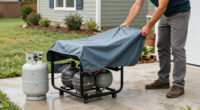
Weather and refueling need attention too. Keep the generator dry using a setup permitted by its manufacturer, while maintaining the required airflow and clearances. Handle fuel as the manual directs, and remember that hot engine parts and spilled gasoline can create a fire risk. For example, if rain begins during an outage, don’t solve the problem by moving a running unit into the garage.
Never operate a generator indoors, in a garage, or near open doors or windows. Place it outdoors according to the manual and use working carbon-monoxide alarms.
If your plan involves household circuits, have an electrician explain the connection before an outage. Electrical work can create shock and fire hazards, and code and permit requirements depend on your location. A clear plan made in daylight beats trying to improvise by flashlight while the refrigerator warms up.
Pick generator or battery backup for the outage you expect
A portable inverter generator can make electricity as long as it has usable fuel and runs safely, while a battery power station stores electricity for you to use later. Generators suit some longer or higher-demand outages when outdoor operation and fuel are practical; batteries suit quiet indoor use and produce no exhaust during use, but their usable energy and recharge options depend on the battery and charging setup.
Consider a winter outage in a home where a refrigerator, lights, and a pump matter most. A fuel-powered unit may be useful if you can operate it outdoors and store fuel safely. A battery could cover short, quiet periods for phones and lights, but a large appliance or prolonged outage may exceed its stored energy unless you can recharge it.
Hybrid systems can combine a generator with battery storage where supported. That arrangement may let stored power cover quiet, lower-demand periods while a generator serves a different role, but the equipment must be designed for the setup. Remote starting, app monitoring, and automatic features are appearing on some generator models; these features do not make a portable unit a permanently installed or unattended backup system.
- Choose a generator when fuel access, outdoor placement, and the required output fit your outage plan.
- Choose a battery station when quiet operation and no exhaust during use matter most and its stored energy is enough.
- Compare a hybrid setup only when the equipment is compatible and you understand how each part operates.
For a cabin weekend, a compact generator might run selected gear away from the grid. For a short apartment outage, a battery station may be simpler for lights and device charging. Your likely loads and safe operating space should guide the choice more than a feature list or a broad market trend.
Prepare a simple backup plan before the lights go out
A useful backup plan spells out what you will power, where the generator will run, how you will connect loads, and how you will manage fuel and maintenance. The aim is to make decisions before the storm, when you can read labels and manuals in good light instead of searching for instructions by phone flashlight.
Start with a written priority list. Put essentials such as a refrigerator or medical device first, then add lights and phone charging if capacity allows. Check each appliance’s running and startup needs, and confirm the generator’s specifications for your intended use. If you need selected household circuits, arrange an approved connection with a qualified electrician before an outage.
Next, choose an outdoor location that meets the manufacturer’s clearance instructions and keeps exhaust away from the home. Make sure your carbon-monoxide alarms work. Store fuel only as permitted by local rules and the generator manual, and buy suitable extension cords or connection equipment for the loads you plan to run. Keep the manual where you can find it.
- Write down priority loads and their running and startup requirements.
- Confirm the generator and connections match those loads and follow the manufacturer’s instructions.
- Plan outdoor placement with required clearances and working carbon-monoxide alarms.
- Review fuel storage and maintenance before storing the unit between outages.
For instance, a household expecting a winter storm could test its plan by asking: Can the chosen unit handle the refrigerator starting while the lights are on? Is there an approved way to power the intended circuits? Who will refuel it, and where? These specific questions turn portable power from a box in the shed into a plan your household can follow.
Frequently Asked Questions
What size inverter generator do I need for my home?
List the appliances or circuits you want to use, find their running and starting wattages, and account for which may run at the same time. A refrigerator and a pump can demand a brief startup surge, so ask a qualified electrician for help if you plan to power household circuits.
Can an inverter generator run a refrigerator, furnace, or air conditioner?
It depends on the appliance’s electrical demand, its startup surge, and the generator’s rated output. Check both manufacturers’ specifications and confirm that the planned connection method is approved.
Can I power my house through a wall outlet?
No. Plugging a generator into a wall outlet can backfeed household wiring, endangering utility workers and damaging equipment. Ask a qualified electrician about a properly installed transfer switch or another approved connection method.
Can I run a generator in a garage or on a porch?
No. Operate fuel-burning generators outdoors in the location and clearance conditions specified by the manufacturer because carbon-monoxide exhaust can enter buildings. Keep working carbon-monoxide alarms inside the home.
Are inverter generators safe for laptops and other sensitive electronics?
Many models provide stable output suitable for electronics, but “inverter” alone does not guarantee suitability for every device. Check the generator’s output specifications and follow your device manufacturer’s guidance.
How long will a tank of fuel last?
Runtime varies with the model, fuel, load, and operating conditions. Use the manufacturer’s runtime figures as estimates, and follow its instructions for fuel storage and maintenance.
Can I connect two portable inverter generators?
Only if the models support parallel operation and you use the specified connection equipment. Check the manufacturers’ instructions to confirm that both units are compatible.
Conclusion
Choose a generator around a short, realistic list of essential loads, then check both running demand and startup surges. Confirm the fuel, connections, and maintenance fit your situation, and plan outdoor operation before an outage arrives.
A generator should make a dark evening feel manageable, not turn it into a risky scramble. Write the plan now, while the lights are still on.