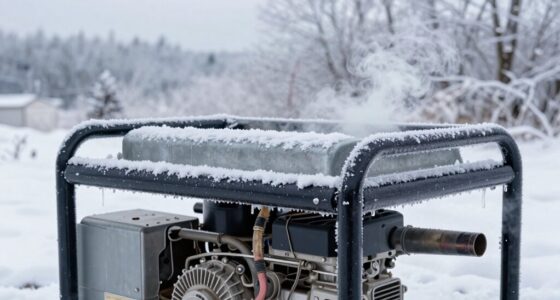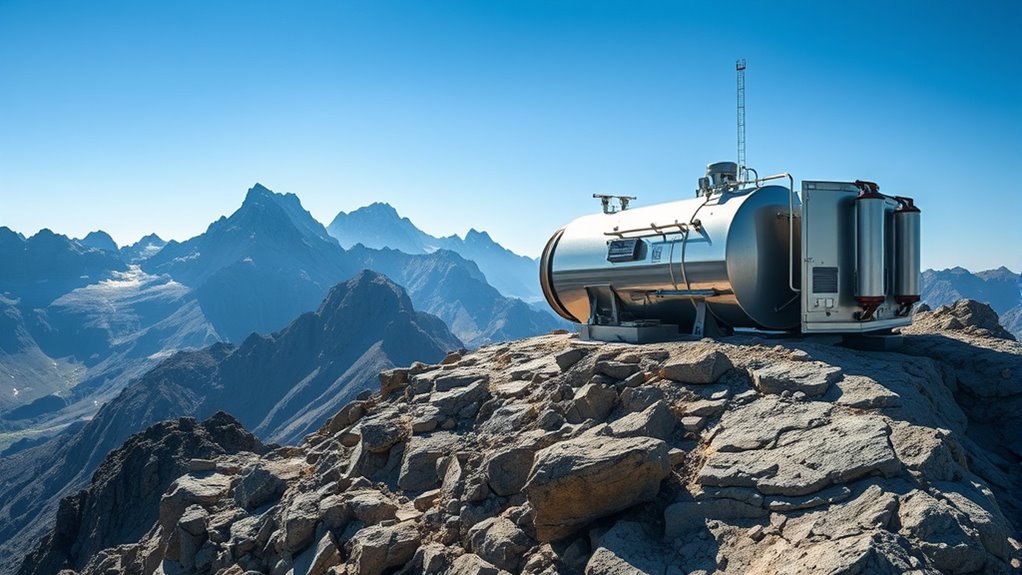

At higher altitudes, your generator’s performance drops because thinner air means less oxygen for combustion. This forces the engine to work harder, reducing power output and causing it to run less smoothly. Fuel consumption increases as it’s less efficient, and engine strain rises, risking damage over time. Proper adjustments, like tuning the fuel mixture, can help. Explore further to find out how to keep your generator running reliably at all altitudes.

Get backup power and energy gear delivered free with Prime
- Fast, free delivery on millions of items
- Prime Video, Amazon Music and more included
- Member-only deals all year
Key Takeaways
- Higher altitudes have thinner air with less oxygen, reducing generator combustion efficiency.
- Reduced oxygen causes power output to decline and can lead to rough operation or stalling.
- The engine works harder, increasing fuel consumption and accelerating wear and tear.
- Proper altitude adjustments, like carburetor tuning, improve performance and fuel economy.
- Failing to adjust for altitude can result in inconsistent power, higher fuel costs, and potential engine damage.
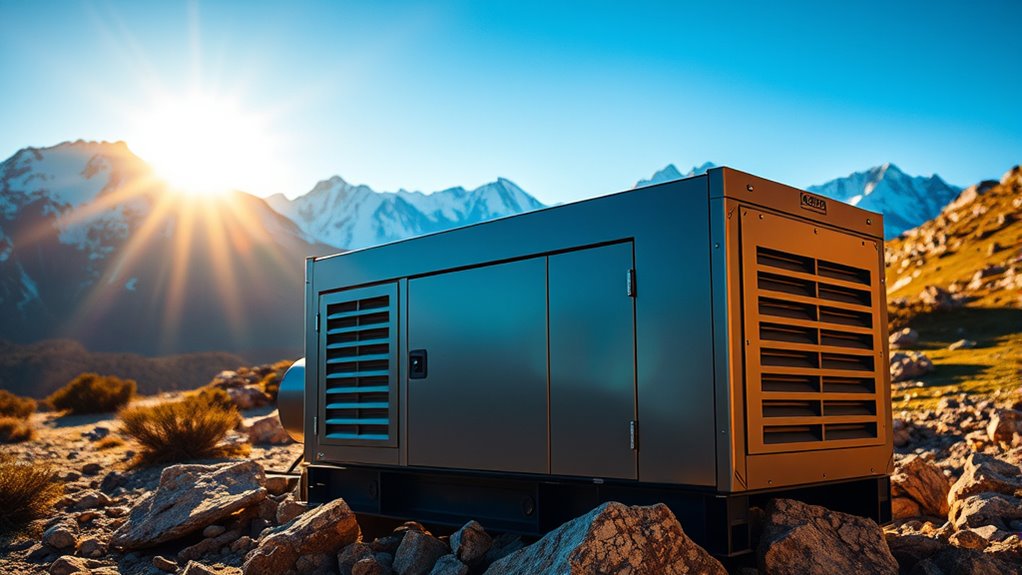
When operating a generator at high altitudes, you may notice a decline in its performance. The thinner air means less oxygen available for combustion, which directly impacts your generator’s efficiency. As altitude increases, you might observe that your generator isn’t producing the same power output it did at lower elevations. This drop in generator efficiency isn’t just about power loss; it can also cause the engine to work harder to compensate for the reduced air density. To counteract this, altitude adjustments are necessary to maximize performance and fuel consumption. Without these adjustments, your generator could run less smoothly, consume more fuel, and wear out faster.
The key to maintaining maximum performance lies in properly configuring your generator for high-altitude operation. Many models come with built-in altitude compensation features, but if yours doesn’t, you’ll need to manually make altitude adjustments. This often involves adjusting the carburetor or fuel mixture to ensure the right amount of fuel and air are being mixed. When you do this correctly, your generator can operate more efficiently, with improved power output and fuel economy. It’s important to understand that these adjustments are not one-time fixes; they should be revisited whenever you change operating altitudes or if you notice a decline in performance.
Failing to make proper altitude adjustments can lead to several issues. Your generator might run rough, stall frequently, or produce inconsistent power. Fuel consumption will likely increase because your engine is working harder to achieve the same output. Over time, this extra strain can cause excessive wear and tear on components, leading to costly repairs or replacements. Proper air-fuel mixture adjustments are essential for optimal operation in varying conditions. By proactively adjusting for altitude, you also help extend your generator’s lifespan. These small but critical changes ensure that your equipment runs smoothly, stays fuel-efficient, and provides reliable power when you need it most.
Proper altitude adjustments prevent generator issues, extend lifespan, and ensure reliable, efficient power in high-altitude conditions.
Keep in mind that altitude adjustments aren’t just about the immediate performance; they’re about protecting your investment. Regularly check your generator’s settings, especially if you’re operating in variable altitudes. Consult your manufacturer’s guidelines or a professional technician if you’re unsure how to perform these adjustments correctly. With the right approach, you’ll maintain maximum generator efficiency regardless of elevation, ensuring consistent power and better fuel economy. In high-altitude environments, making these small tweaks can make a significant difference in how well your generator performs and how long it lasts.
high altitude generator carburetor adjustment kit
As an affiliate, we earn on qualifying purchases.
As an affiliate, we earn on qualifying purchases.
Frequently Asked Questions
How Does Altitude Impact Generator Cooling Systems?
At higher altitudes, your generator’s cooling system faces challenges like reduced cooling efficiency because of thinner air. This limits heat dissipation, causing the generator to run hotter. You need to monitor temperatures closely and possibly upgrade cooling components or increase airflow to guarantee effective heat dissipation. Proper maintenance helps maintain ideal cooling efficiency, preventing overheating and ensuring reliable generator performance in elevated environments.
Are There Specific Generator Models Optimized for High-Altitude Use?
Think of high-altitude generators as mountain climbers equipped with altitude-specific engines and high-altitude accessories. These models are specially designed to perform reliably at elevations, optimizing fuel efficiency and power output where standard units struggle. You’ll find many brands offering high-altitude versions that incorporate these features, ensuring your generator adapts to thin air and maintains performance, giving you peace of mind even at the highest elevations.
How Does Altitude Influence Generator Startup Reliability?
Altitude effects can make your generator’s startup less reliable, especially if it’s not designed for high elevations. Reduced oxygen levels at higher altitudes can hinder engine combustion, causing difficulty in ignition or delayed starts. To maintain generator efficiency, you might need altitude-specific adjustments or models built for such conditions. Ensuring proper maintenance and selecting equipment suited for high-altitude use helps improve startup reliability and overall performance.
What Maintenance Adjustments Are Needed at High Altitudes?
At high altitudes, altitude effects demand adjustments to your maintenance schedules. You should regularly inspect and clean air filters to prevent clogging, as thinner air reduces cooling efficiency. Additionally, check fuel systems and combustion components more frequently, since altitude impacts fuel vaporization. These maintenance tweaks help guarantee reliable generator performance, optimize fuel consumption, and prevent unexpected breakdowns, keeping your equipment running smoothly in challenging high-altitude environments.
Does Altitude Change the Noise Levels of Generators?
Yes, altitude can influence the noise levels of your generator. At higher elevations, noise reduction may be less effective due to thinner air, which can amplify sound. To counter this, you should invest in sound insulation measures and use sound barriers. These adjustments help contain noise and minimize disturbance, ensuring your generator operates quietly despite the altitude. Proper noise management keeps your environment comfortable and compliant with local noise regulations.
generator altitude compensation device
As an affiliate, we earn on qualifying purchases.
As an affiliate, we earn on qualifying purchases.
Conclusion
As you reach higher altitudes, imagine your generator as a hummingbird, its wings fluttering faster to gather less air. The thinner atmosphere makes it work harder, draining more fuel and reducing power. But with careful adjustments, you can keep it soaring smoothly, like a mountain breeze. Embrace the challenge of altitude, and your generator will continue to serve you well, quietly humming through the mountain air, ready for whatever comes next.
portable generator fuel mixture tuner
As an affiliate, we earn on qualifying purchases.
As an affiliate, we earn on qualifying purchases.
high altitude generator performance kit
As an affiliate, we earn on qualifying purchases.
As an affiliate, we earn on qualifying purchases.
Halloween Picks
halloween
As an affiliate, we earn on qualifying purchases.