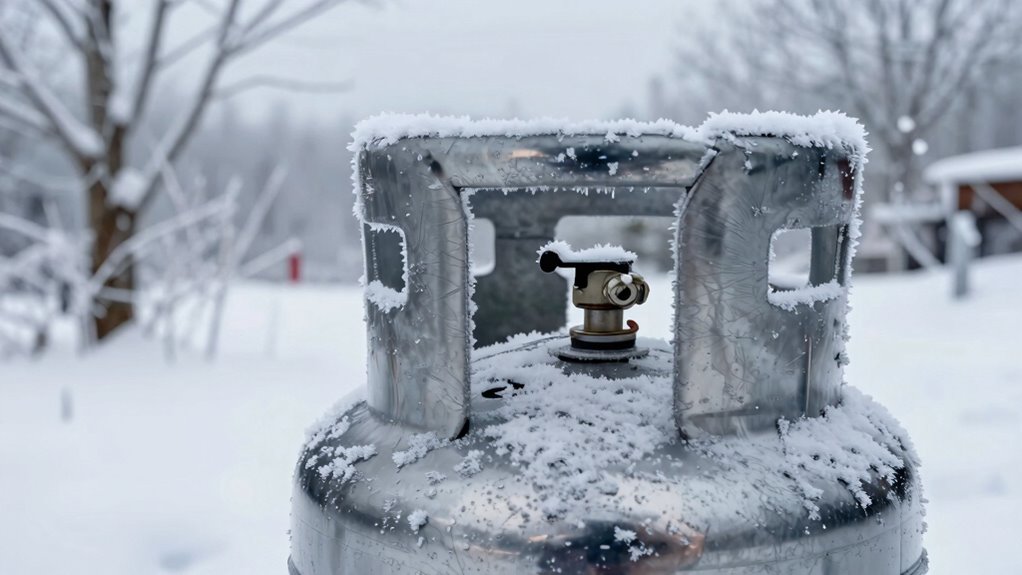
In freezing temperatures, you can expect propane to stay in liquid form inside the tank, but pressure will decrease considerably, which may affect appliance performance. You might notice less gas flow or trouble igniting your appliances. It’s important to monitor pressure levels and keep tanks upright and sheltered to prevent leaks or damage. Warming the tank slightly can help restore proper flow. Want to know how to keep your propane system safe and reliable in cold weather? Keep exploring for helpful tips.
Key Takeaways
- Propane remains liquid but its pressure inside tanks decreases significantly in freezing temperatures.
- Reduced pressure can impair appliance ignition and performance.
- Cold weather may cause gas flow interruptions or decreased efficiency.
- Proper tank storage, insulation, and monitoring help maintain safe operation.
- Warming the tank slightly can restore optimal gas flow during extreme cold.
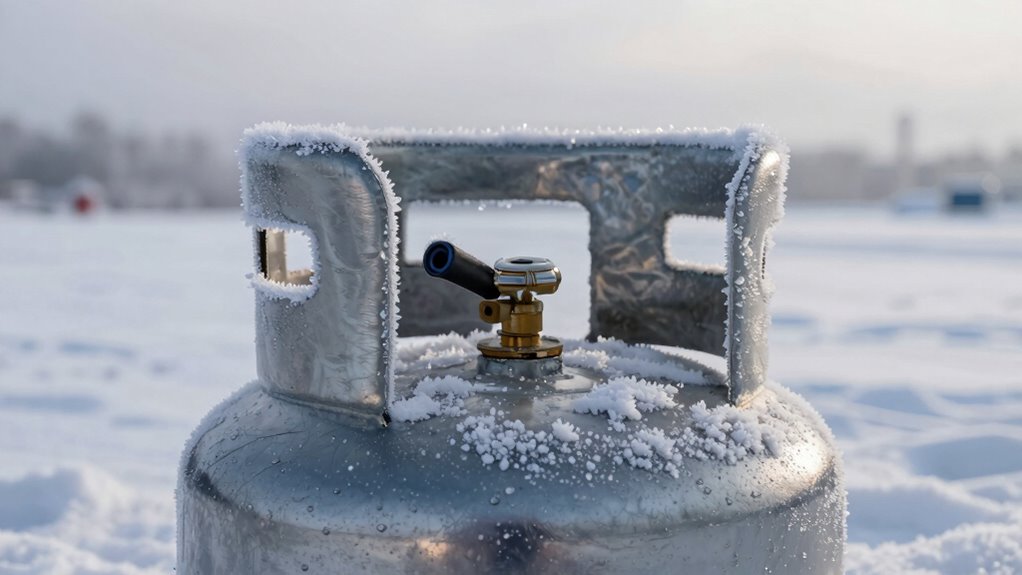
When temperatures drop below freezing, handling propane can become more challenging, but with proper precautions, you can keep your supply safe and reliable. Cold weather affects propane’s behavior and storage, so understanding what to expect is essential to maintaining safety and efficiency. As temperatures fall, propane remains in a liquid state within your tank, but the pressure inside the tank can decrease considerably. This can lead to issues with ignition or appliance performance if you’re not prepared. To prevent problems, you should regularly check your tank’s pressure and verify your appliances are functioning correctly. Knowing how cold temperatures influence propane helps you plan better and avoid disruptions. Monitoring pressure levels ensures your propane system operates smoothly even in freezing weather.
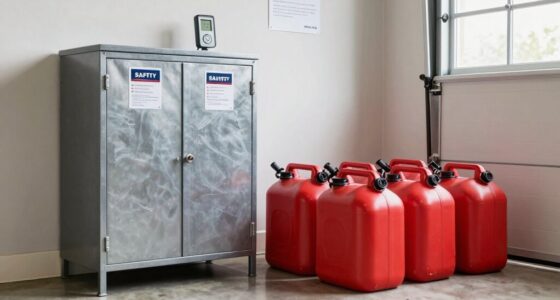
One of the most important aspects of managing propane in freezing weather is following strict safety precautions. Always store your propane tank outdoors in a well-ventilated area, away from windows, doors, or any sources of heat or open flame. Never store propane tanks indoors or in enclosed spaces, as this can lead to dangerous gas buildup. During cold snaps, avoid exposing your tank to direct sunlight, which can cause uneven heating and pressure fluctuations. Also, keep your tank upright to prevent leaks or damage, especially when the ground is icy or snowy. Regularly inspect your tank and connections for leaks or corrosion, using soapy water to check for bubbles around fittings. If you suspect a leak, turn off the supply immediately and contact a professional.
In addition to safety precautions, proper storage tips are crucial to ensure your propane stays in good condition throughout the winter. Keep your tank in a sheltered location, such as a shed or a covered area, to protect it from harsh weather. However, make sure the shelter remains ventilated—closed containers or enclosures can trap gas in case of leaks, increasing fire or explosion risk. If you use a propane cylinder for outdoor appliances, consider installing a regulator or pressure relief valve designed for cold weather. These devices help maintain consistent pressure despite temperature fluctuations. Also, keep your tank’s valve closed when not in use to prevent accidental leaks. During extreme cold, you might notice a decrease in gas flow or appliance performance, which can often be remedied by warming the tank slightly or checking connections carefully.
As an affiliate, we earn on qualifying purchases.
Frequently Asked Questions
Can Propane Tanks Freeze and Burst in Extreme Cold?
Propane tanks can’t typically freeze and burst in extreme cold because propane remains in a liquid state at low temperatures if properly maintained. To prevent issues, you should focus on propane tank maintenance and guarantee proper cold weather insulation. Keeping your tank protected from harsh elements helps maintain pressure and prevents freezing. Regular inspections and adding insulation around the tank are simple steps to keep your propane system safe during frigid weather.
How Does Cold Weather Affect Propane Appliance Performance?
Think of your propane appliance as a delicate performer on a cold stage. Cold weather challenges its performance by affecting propane storage and temperature regulation. When temperatures drop, propane may struggle to vaporize, causing appliances to run less efficiently or shut down. To keep your home warm, guarantee proper insulation and maintain stable propane storage, helping your appliances perform smoothly despite the chilly environment.
Is Propane Safer Than Other Fuels During Freezing Temperatures?
Propane safety is generally high during freezing temperatures, especially when compared to fuels like gasoline or kerosene, which can pose higher fire or explosion risks. Propane is stored under pressure, making it less likely to leak or ignite unexpectedly. Its fuel comparison shows it’s a reliable, safe choice for cold weather, provided you follow proper handling and storage procedures. Always make sure your propane system is well-maintained for maximum safety.
What Are Signs of Propane Line Freezing?
You might notice your propane line freezing if you experience reduced or no gas flow, which can cause appliances to shut off unexpectedly. You may also hear hissing sounds or see frost buildup near the line. Don’t worry—staying aware of these propane safety signs helps prevent issues. During winter maintenance, make certain your propane tank and lines are properly insulated and protected. Recognizing these signs keeps you safe and keeps your propane system running smoothly in cold weather.
How Can I Prevent Propane Issues in Winter?
To prevent propane issues in winter, make sure your propane tank is well-insulated with proper propane tank insulation. Keep the tank in a sheltered, protected area to avoid extreme cold exposure. Follow winter safety tips, like checking for leaks and maintaining your system regularly. Additionally, keep your appliances in good condition, and consider installing a propane heater to prevent freezing. These steps help maintain efficient propane flow and avoid freezing problems.
As an affiliate, we earn on qualifying purchases.
Conclusion
When temperatures drop, propane stands ready—warming your home, fueling your appliances, and providing reliable heat. With proper storage, regular maintenance, and the right precautions, you can trust propane to perform seamlessly in freezing conditions. It’s your steadfast partner in winter’s chill, your dependable source of comfort and safety. Embrace the cold with confidence, knowing propane will keep the cold at bay, the warmth alive, and your worries at bay.
propane regulator for cold weather
As an affiliate, we earn on qualifying purchases.
As an affiliate, we earn on qualifying purchases.
As an affiliate, we earn on qualifying purchases.