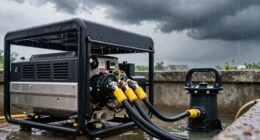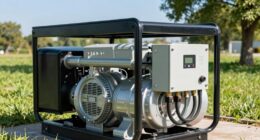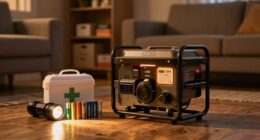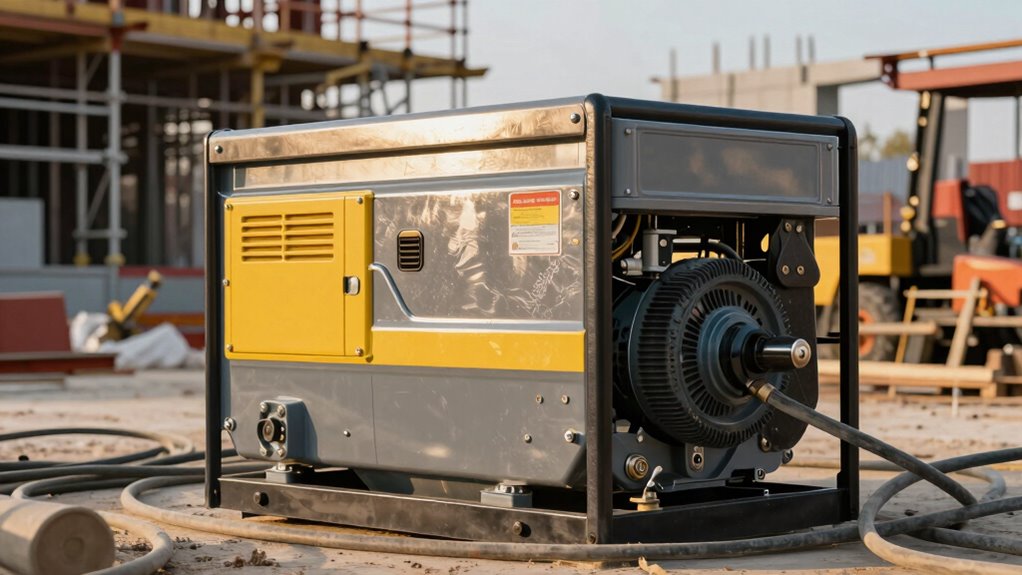
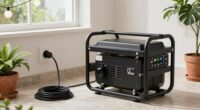
To set up a safe and efficient jobsite generator, you need to match its capacity to your total load, guaranteeing it can handle all tools and equipment without overloading. Secure all connections, inspect cords, and use proper placement to promote good ventilation and reduce noise. Position the generator away from occupied areas and consider noise barriers for safety and comfort. For more tips on optimizing your setup, keep exploring how each factor ensures smooth, reliable power.
Key Takeaways
- Ensure generator capacity exceeds total load to prevent overload and equipment damage.
- Conduct thorough inspections of cords, outlets, and connections for safety before use.
- Select a generator with noise reduction features and position it away from occupied areas.
- Place the generator for proper ventilation to manage exhaust gases and enhance safety.
- Consider environmental impact and noise regulations to maintain a safe, compliant, and efficient site.
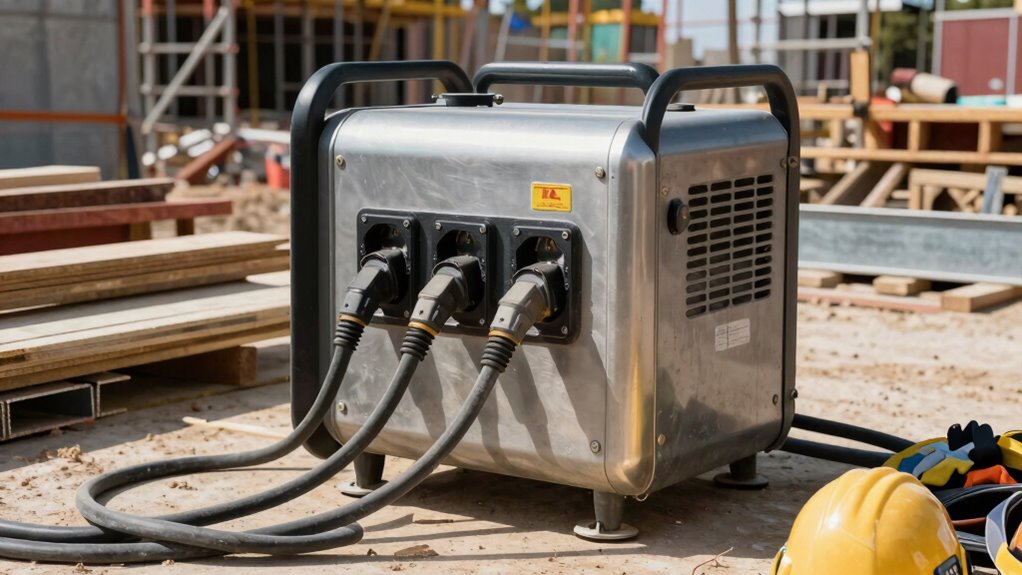
Setting up a jobsite generator correctly is essential to guarantee reliable power and prevent potential safety hazards. Your first priority should be ensuring the power source is suitable for the demands of your project. You need a generator that can handle the total load you plan to run, whether it’s power tools, lighting, or other equipment. Overloading can cause the generator to shut down unexpectedly or, worse, damage your tools and appliances. To avoid this, calculate the total wattage of all devices you’ll operate simultaneously and select a generator with a slightly higher capacity to handle surge power. Properly connecting the power source also involves inspecting cords, outlets, and connections for damage. Faulty wiring increases the risk of electrical fires or shocks, so double-check all connections before turning the generator on.
Ensure your generator matches your project’s load and inspect all connections to prevent safety hazards and equipment damage.
Another critical aspect to consider is noise levels. Jobsite generators can be loud, and excessive noise not only disrupts your work but can also violate local regulations or disturb nearby residents. When choosing a generator, look for models designed with noise reduction features, such as mufflers or soundproof enclosures. Position the generator in a location where noise won’t bother workers or the surrounding environment, ideally at a distance from occupied areas. Using sound barriers or enclosures can further reduce noise exposure, helping to maintain a safer and more comfortable work environment. Remember, excessive noise isn’t just a nuisance—it can also mask warning sounds or alarms, which are vital for safety. Additionally, noise mitigation techniques can significantly improve the overall work environment and safety. Implementing proper placement techniques is also crucial to optimize safety and efficiency in your setup. Proper placement can also help with ventilation and exhaust management, reducing the risk of dangerous buildup of exhaust gases.
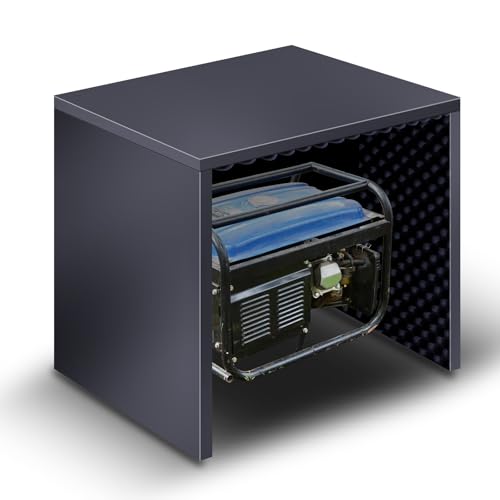
Otoolling Generator Running Cover with Acoustic Panels for Most 3500w-12000w Generators Noise Reduction Quiet Box Heavy Duty Generator Shelter All Weather Outdoor Enclosure, 36 x 33 x 32 Inch
Packing List: generator running cover with acoustic panels set are consists of 4 heavy metal plates, 8 corrugated…
As an affiliate, we earn on qualifying purchases.
As an affiliate, we earn on qualifying purchases.
Frequently Asked Questions
How Often Should I Perform Maintenance on My Generator?
You should perform maintenance on your generator every 100-200 hours of operation or at least annually, whichever comes first. Regular checks help optimize fuel efficiency and keep noise levels low. Change the oil, check filters, and inspect the exhaust system regularly. Performing consistent maintenance guarantees your generator runs smoothly, saves fuel, and minimizes noise, which is especially important on busy job sites.
What Safety Precautions Are Necessary During Installation?
During installation, you need to prioritize safety by wearing appropriate safety gear, such as gloves, goggles, and ear protection. Follow the installation steps carefully, ensuring the generator is on a stable, level surface and away from flammable materials. Make sure to disconnect power sources before starting, and use insulated tools. Prevent accidents by working in a well-ventilated area and double-checking all connections before powering up the generator.
Can I Run Multiple Tools Simultaneously on One Generator?
Like a modern-day Hercules, you can run multiple tools simultaneously on one generator if it has enough power output and fuel efficiency. Make certain the generator’s rated wattage exceeds the combined power needs of your tools. This way, you prevent overloads and maintain peak performance. Always check the specifications and avoid overloading, which can strain your equipment and compromise safety. Proper setup guarantees your jobsite runs smoothly and efficiently.
What Is the Typical Lifespan of a Jobsite Generator?
A typical jobsite generator lasts about 8 to 12 years with proper maintenance. To maximize its lifespan, focus on power efficiency and keeping noise levels low, which helps prevent overheating and wear. Regularly check oil, filters, and coolant, and confirm it’s stored properly when not in use. Investing in a quality generator and following the manufacturer’s guidelines will help you get the most out of your equipment over time.
How Do I Choose the Right Fuel Type for My Generator?
You should choose a fuel type based on fuel efficiency and noise levels. Diesel generators often offer better fuel efficiency and durability, making them suitable for longer jobs. Gasoline models are typically quieter and easier to refuel, ideal for smaller or temporary setups. Propane generators provide cleaner emissions and stable fuel costs. Consider your project’s duration, noise restrictions, and fuel availability to select the best fuel type for your needs.

WEN 4,750-Watt 120V/240V Dual Fuel Portable Generator with Wheel Kit and Electric Start (DF475T)
Switch between gasoline (4750 surge watts, 3800 running watt) and propane (4350 surge, 3500 running) with the simple…
As an affiliate, we earn on qualifying purchases.
As an affiliate, we earn on qualifying purchases.
Conclusion
In the end, your jobsite generator setup isn’t just a choice—it’s the heartbeat of your entire project. Get it wrong, and chaos could reign, halting progress and draining your patience like a black hole. But when you choose wisely, it’s like wielding a power so mighty, it turns impossible tasks into smooth sailing. Invest the time and effort now, and watch your worksite transform into a fortress of efficiency that’s unstoppable.

KKnoon 150W 20A Adjustable Constant Current Electronic Load 2.4inch TFT Color Display 4 Working Modes USB Lithium Battery Capacity Monitor Tester Discharge Meter
✔️This product is a direct current CNC electronic load, with a maximum power of 150W and a maximum…
As an affiliate, we earn on qualifying purchases.
As an affiliate, we earn on qualifying purchases.

Hudson Generator Box, SD Aluminum Generator Enclosure with Ventilation, Heat Dissipation & Reduce Noise, Accommodates The Maximum Size of 39.4"x32"x31.7", White
【Efficient Ventilation, Goodbye Overheating】Still dealing with your generator overheating during long hours of operation? Our generator enclosure features…
As an affiliate, we earn on qualifying purchases.
As an affiliate, we earn on qualifying purchases.