

To master generator break-in procedures in a weekend, start by preparing a clean, well-ventilated workspace with all necessary tools and safety gear. Carefully review the manufacturer’s manual, check all parts for damage, then fill the oil and fuel correctly. Begin with a low load, gradually increasing over time while monitoring temperature, voltage, and performance data. Perform a second break-in cycle, and finish with final checks. If you want detailed steps, keep going to learn more.
Key Takeaways
- Prepare a safe, organized workspace and review the manufacturer’s manual thoroughly before starting.
- Use low initial loads, gradually increase, and monitor engine temperature, oil pressure, and voltage during each stage.
- Check all fluids, connections, and components before startup, ensuring proper lubrication and secure fittings.
- Record performance data such as fuel consumption, temperature, and voltage to track progress and identify issues.
- Conduct a second break-in cycle with moderate load, ensuring components seat properly and noise levels decrease.
Preparing Your Workspace and Tools

Before beginning the generator break-in process, it’s essential to prepare your workspace and gather the necessary tools. Start by choosing a well-ventilated area away from buildings and people to ensure safety precautions are met. Clear the space of clutter and obstacles to prevent accidents. Use soundproof mats or barriers to help with noise reduction during operation, protecting nearby areas and maintaining a quieter environment. Gather basic tools like wrenches, screwdrivers, and oil for easy access. Make sure fire extinguishers and first aid kits are nearby in case of emergencies. Organizing your workspace beforehand minimizes interruptions and keeps safety top of mind, making the break-in process smoother and more efficient. Proper preparation ensures safety and noise control from the very start. Additionally, understanding generator operation best practices can help prevent issues and prolong your equipment’s lifespan.
Reading the Manufacturer’s Manual Carefully
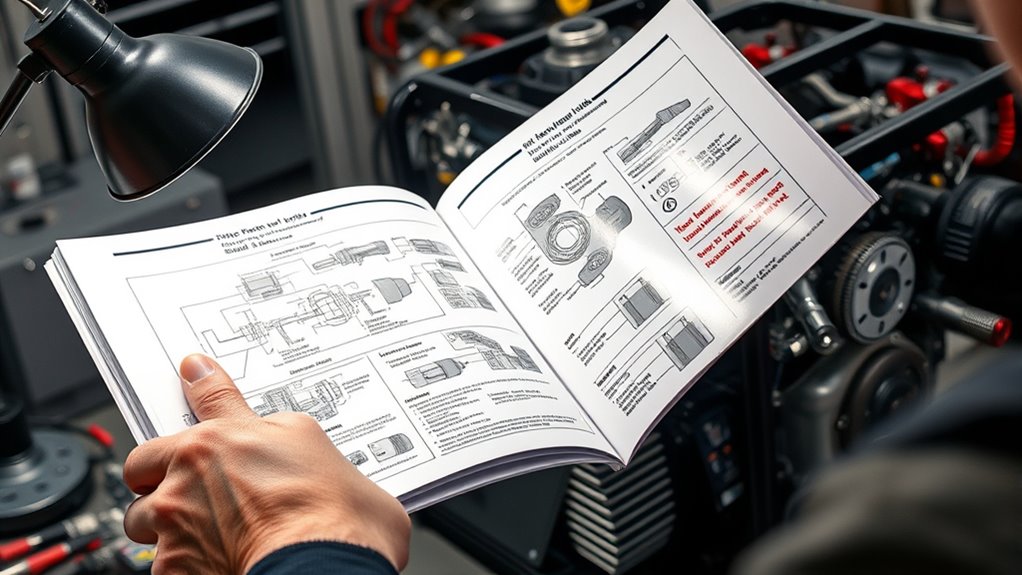
Reading the manufacturer’s manual carefully is a crucial step to guarantee you understand your generator’s specific requirements and safety guidelines. It provides essential details about fuel compatibility, ensuring you use the correct type to prevent damage and optimize performance. The manual also outlines proper operation procedures, maintenance schedules, and break-in habits that promote longevity. Pay close attention to any recommended noise reduction measures; many manuals include tips for minimizing sound during startup and operation. Understanding these instructions helps you avoid common mistakes, reduces the risk of accidents, and ensures your generator runs smoothly during break-in. Additionally, being aware of best practices for generator efficiency can help you maximize performance and avoid unnecessary wear. Skipping this step could lead to issues that might compromise your generator’s efficiency or safety, so take the time to read it thoroughly before proceeding.
Inspecting and Assembling Your Generator

Before assembling your generator, you need to check all components carefully to make certain everything is in proper condition. Follow correct assembly practices to avoid damaging parts or creating safety hazards. Taking these steps now helps guarantee a smooth break-in process and reliable operation later. Additionally, understanding AI-powered discoveries can inform maintenance and troubleshooting strategies for advanced equipment.
Check Components Thoroughly
To guarantee your generator operates smoothly, you should thoroughly inspect all components before assembly. Check each engine component for signs of wear, damage, or corrosion, ensuring everything is in proper condition. Pay close attention to the electrical connections, making sure they’re clean, tight, and free of corrosion or fraying. Loose or damaged connections can cause malfunctions or safety hazards. Confirm that all parts are present and match the manufacturer’s specifications. Look for any debris, dirt, or debris that could interfere with operation. If you find any issues, address them immediately before proceeding. Taking the time to carefully evaluate each component ensures your generator will run reliably during break-in and beyond. Proper inspection now prevents problems later. Be aware that unplanned weather changes can also impact your setup and should be considered during inspection.
Correct Assembly Practices
Ensuring your generator is correctly assembled is vital for safe and reliable operation. Start by verifying that all components are properly aligned and secured, following the manufacturer’s bolt torquing standards. Using correct lubrication techniques is essential; apply the recommended lubricants to moving parts to prevent wear and ensure smooth operation. When tightening bolts, use a torque wrench to achieve the specified torque values, avoiding under-tightening or over-tightening that can cause damage or failure. Double-check electrical connections for tightness and proper insulation. Confirm that all fasteners are secure and that no parts are missing or misaligned. Proper assembly, combined with attention to lubrication techniques and bolt torquing standards, helps prevent issues during break-in and ensures your generator runs safely and efficiently. Staying informed about legislative changes that affect maintenance and safety standards can further enhance your assembly practices and operational reliability.
Filling the Oil and Fuel Reservoirs Correctly

Properly filling the oil and fuel reservoirs is essential to guarantee your generator runs smoothly and reliably. Start by selecting the correct oil type recommended by the manufacturer, as using the wrong oil can cause engine wear. When adding fuel, confirm you use high-quality fuel with good fuel quality standards to prevent deposits and clogging. Fill the oil reservoir to the specified level, avoiding overfilling, which can cause leaks or engine damage. For the fuel tank, use a clean funnel to prevent dirt from entering and check for any contaminants. Always double-check the oil and fuel levels before starting your generator. Vetted – Appliances Labs also recommends choosing energy-efficient models when possible. Proper filling practices promote maximum performance and extend your generator’s lifespan, ensuring it’s ready whenever you need it.
Starting the Generator for the First Time

Starting your generator for the first time requires careful preparation to guarantee smooth operation. Before starting, double-check that you’ve filled the fuel tank properly and that all oil levels are correct. Once ready, turn on the fuel supply and set the choke if needed. Start the engine and listen carefully to its sound. During the initial run, focus on smooth operation to promote fuel efficiency and noise reduction over time. Avoid revving the engine excessively, as this can hinder proper break-in. Monitor for any unusual vibrations or sounds, and ensure the generator runs steadily. This initial startup sets the foundation for peak performance, helping the generator break in properly while maximizing fuel efficiency and minimizing noise during future use. Additionally, paying attention to engine temperature during the break-in process is essential to prevent overheating and ensure optimal performance.
Running the Generator at Varying Loads

As you run your generator at different loads, you should gradually increase the power to guarantee stress on the equipment. Keep a close eye on its performance during these changes to catch any issues early. This careful approach ensures a smooth break-in process and long-term reliability. Monitoring security in payment processing measures can help protect your equipment from potential cyber threats during operation.
Gradually Increase Load
To guarantee your generator operates smoothly and safely during break-in, you should gradually increase the load rather than running it at full capacity immediately. Proper load management helps prevent strain on the engine and reduces the risk of damage. Remember to follow safety precautions, including monitoring temperature and noise levels. Additionally, understanding narcissistic traits can help recognize signs of imbalance in your own approach to maintenance and safety procedures. Here are four key steps:
- Start with a low load to ease the engine into operation.
- Incrementally increase the load in small, controlled steps.
- Allow the generator to run at each stage for a set period before adding more load.
- Avoid sudden surges or overloading to protect internal components.
Monitor Performance Closely
Monitoring your generator’s performance closely while running it at varying loads is essential to guarantee it operates safely and efficiently. Keep an eye on fuel efficiency during different load levels to identify how well the generator adapts and to prevent wastage. Check for any unusual noises or vibrations, as these can indicate mechanical issues or inefficiencies. Pay attention to temperature gauges and voltage stability to ensure safe operation. Varying loads help you observe how the generator responds and whether it maintains peak performance. Noise reduction is also important; listening for excessive sound can reveal problems that may affect longevity or user comfort. Regular monitoring allows you to catch potential problems early, ensuring your generator runs smoothly and efficiently during break-in and beyond. Additionally, understanding the generator tuning process can help optimize performance and prolong the lifespan of your equipment.
Monitoring and Recording Performance Data
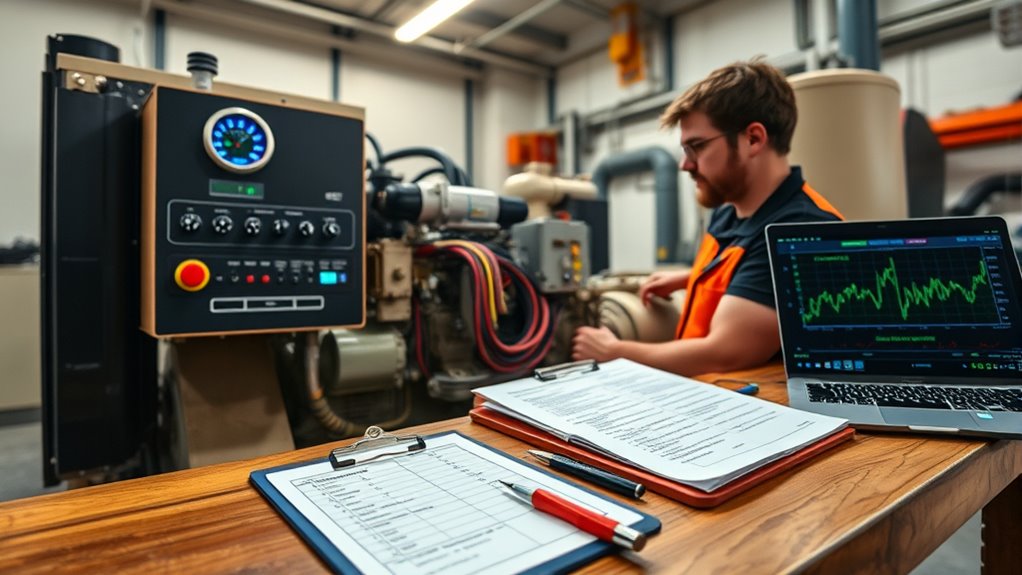
Keeping a close eye on your generator’s performance during break-in is essential for ensuring it operates smoothly and reliably. Monitoring and recording data helps you identify issues early, such as fluctuations in voltage stability or decreasing fuel efficiency. Use these key steps:
- Track voltage stability regularly to prevent surges or dips that could damage equipment.
- Measure fuel consumption to assess efficiency and detect potential issues with the fuel system.
- Record engine temperature and oil pressure to ensure proper lubrication and cooling.
- Log runtime and load levels to analyze how the generator handles different demands.
Consistent documentation provides valuable insights, allowing you to make informed adjustments and confirm the generator’s readiness for long-term operation.
Performing a Second Break-In Cycle

Have you considered performing a second break-in cycle to guarantee your generator reaches peak performance? Repeating the process helps ensure ideal fuel efficiency by thoroughly seating the internal components. During this cycle, keep the load moderate to allow parts to settle properly, which also contributes to noise reduction. A second break-in can eliminate residual imperfections, leading to smoother operation and less vibration. It allows you to identify any lingering issues early, so you can address them before full use. Remember to monitor performance data again, focusing on consistent fuel consumption and quieter operation. This additional step solidifies the break-in, maximizing your generator’s reliability and efficiency for long-term use. Don’t skip this essential phase if you want a quieter, more efficient, and better-performing generator.
Performing Final Checks and Maintenance Tips

Before putting your generator into regular use, it’s essential to perform final checks and follow proper maintenance tips to guarantee peak performance. First, inspect the oil and fuel levels to ensure ideal fuel efficiency and smooth operation. Next, check for loose bolts or connections that could increase noise and compromise safety. Third, test the starting mechanism to confirm reliable ignition. Finally, clean or replace air filters to improve airflow and reduce noise. Regular maintenance, like changing oil and keeping vents clear, enhances fuel efficiency and noise reduction. Remember, a well-maintained generator runs quieter, lasts longer, and consumes less fuel, making it more reliable during power outages. These steps help you get the most from your investment.
Frequently Asked Questions
How Long Should Each Break-In Session Last?
You should keep each break-in session around 1 to 2 hours. During this time, monitor oil viscosity and engine temperature closely to prevent overheating and guarantee proper lubrication. Take short breaks if the engine runs too hot or if oil viscosity changes markedly. This approach helps the engine settle in gradually, avoiding stress and ensuring ideal performance during the break-in process.
What Safety Precautions Are Essential During Break-In?
During break-in, you must prioritize safety by monitoring oil viscosity to prevent engine damage and keeping noise levels manageable to avoid startling yourself or others. Always wear protective gear, ensure proper ventilation, and avoid distractions. Check oil frequently, and don’t ignore unusual sounds or vibrations. Staying alert and following these precautions helps you maintain a safe environment while properly breaking in your generator.
Can I Use Synthetic Oil for Break-In?
Using synthetic oil for break-in is like pouring a smooth, advanced shield over your engine’s delicate parts. While some experts advise against it due to oil additives that might reduce initial wear, synthetic oils excel at maintaining stable engine temperature and offering superior lubrication. Just be cautious, follow manufacturer guidelines, and monitor engine temperature closely. Synthetic can work, but confirm it’s formulated for break-in to keep your generator humming perfectly.
How Often Should I Check for Leaks During Break-In?
You should check for leaks at least every 2 hours during break-in. Keep an eye on the oil change levels and inspect the spark plug area for any signs of leaks or damage. Regularly monitoring these aspects helps prevent engine issues. If you notice any oil seepage or unusual sparks, address them immediately to guarantee a smooth break-in process and peak generator performance.
Is It Necessary to Run the Generator at Full Load?
You don’t need to run your generator at full load during break-in; instead, focus on load testing gradually. Running at full load can cause excessive oil consumption and strain parts that aren’t yet fully seasoned. Think of it like a new athlete warming up—gentle starts build strength without injury. Keep the load moderate, monitor oil consumption, and gradually increase, ensuring everything settles in smoothly without unnecessary stress.
Conclusion
Mastering your generator’s break-in is like nurturing a young sapling—patience and care guarantee it grows strong. By following these steps, you’ll turn a simple machine into a reliable workhorse ready for anything. Keep a close eye on performance, record your findings, and don’t rush the process. With a little dedication, you’ll have a powerhouse that runs smoothly for years to come. Your weekend project will pay off in steady, dependable power.