To keep your electric-start generator reliable, regularly inspect and clean the battery terminals, applying a baking soda solution and terminal protectant to prevent corrosion. Check the water levels if it’s a flooded battery and maintain tight, clean connections for ideal performance. Use a multimeter to monitor voltage; replace the battery if it consistently drops below 12.6 volts or shows signs of weakness. Proper maintenance now can save you from unexpected failures—learn more about how to keep your battery in top shape.

Get backup power and energy gear delivered free with Prime
- Fast, free delivery on millions of items
- Prime Video, Amazon Music and more included
- Member-only deals all year
Key Takeaways
- Regularly inspect and clean battery terminals to prevent corrosion and ensure good electrical contact.
- Check and maintain electrolyte water levels in flooded batteries with distilled water.
- Test battery voltage with a multimeter; replace if voltage drops below 12.6 volts.
- Apply terminal protectors or petroleum jelly after cleaning to prevent future corrosion.
- Replace batteries promptly when they show signs of difficulty starting or frequent charge loss.
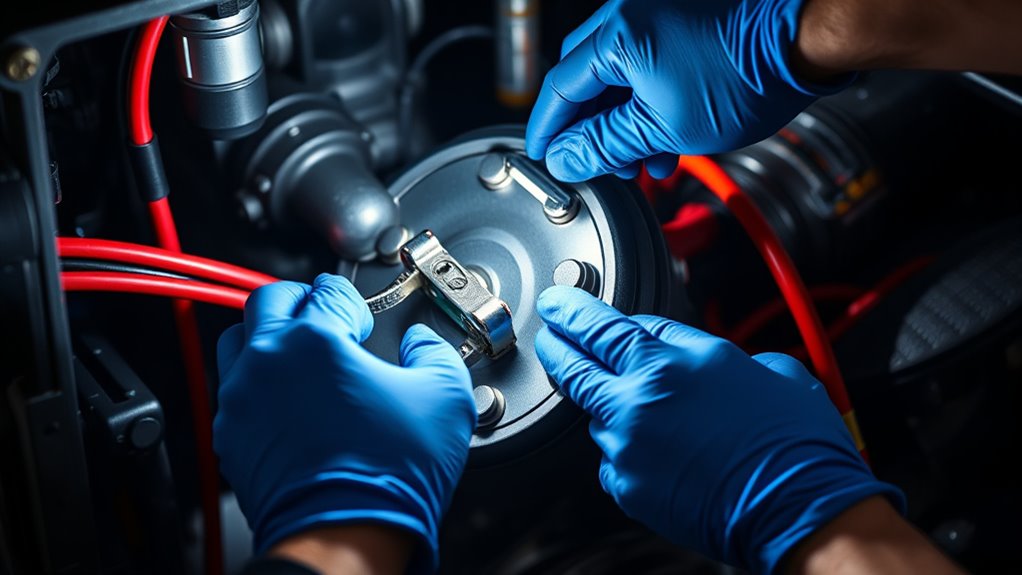
Electric-start generators rely on their batteries to provide reliable, effortless startup, but proper maintenance is crucial to keep them functioning smoothly. The battery is the heart of your generator’s start-up process, and neglecting it can lead to unexpected failures when you need power most. Over time, batteries can develop issues like corrosion, which can hinder their performance and lifespan. Battery corrosion appears as a white or bluish-green crust on the terminals, and if left unchecked, it can prevent the battery from providing the necessary charge to start your generator efficiently. Regular inspection of the terminals is essential. If you notice corrosion, clean it promptly using a mixture of baking soda and water, a wire brush, or a terminal cleaner. Wearing gloves and eye protection is recommended during this process to avoid contact with any corrosive residue.
Maintaining proper battery health also involves ensuring the terminals are tightly connected and free of dirt or grease, which can hinder conductivity. After cleaning, applying a terminal protector or a light coating of petroleum jelly can help prevent future corrosion. It’s equally important to check the battery’s water levels if it’s a flooded lead-acid type. Low water levels can cause the plates to be exposed, impairing battery function. If the electrolyte is low, top it up with distilled water, but avoid overfilling. Regularly testing the battery’s voltage with a multimeter will help you monitor its condition. A healthy, fully charged 12-volt battery should read around 12.6 volts or higher. If it falls below this, it’s time to recharge or consider battery replacement. Proper maintenance is essential for prolonging the lifespan of your generator’s battery and ensuring reliable starts.
You should also be aware of signs that indicate your battery is nearing the end of its life. If your generator struggles to start, the battery is more than a few years old, or it frequently loses its charge, it may be time for a new one. Battery replacement isn’t complicated but requires selecting a compatible model and installing it correctly. When replacing the battery, ensure the terminals are clean and the connections are secure to prevent future issues. Proper maintenance extends the life of your battery and ensures your generator starts reliably when needed. Neglecting these steps can lead to costly repairs or being stranded without power, so commit to regular inspection, cleaning, and timely replacement to keep your generator ready for any situation.
electric start generator battery
As an affiliate, we earn on qualifying purchases.
As an affiliate, we earn on qualifying purchases.
Frequently Asked Questions
How Long Should I Run My Generator to Keep the Battery Charged?
You should run your generator for about 30 minutes to an hour once a month to maintain the battery charge. This guarantees the battery’s capacity stays healthy and prevents it from losing its ability to hold a charge. Regularly check the battery’s condition and maintain a consistent charging frequency, especially if you use the generator infrequently. This keeps your battery reliable and ready when you need it.
Can I Use a Car Battery Charger for My Generator’s Battery?
Think of your generator’s battery as a delicate flower, needing proper care. You shouldn’t use a car battery charger because different battery types require specific charging methods. Car chargers often deliver higher voltage, risking damage. Instead, use a charger designed for deep-cycle or lead-acid batteries, ensuring safe, effective charging. Always check your generator’s manual for the recommended charging method to keep your battery healthy and reliable.
What Are Signs of a Failing Generator Battery?
You’ll notice signs of a failing generator battery if you see corrosion around the terminals or if it struggles to start. Voltage drops suddenly or regularly, especially after charging, suggest declining battery health. Also, if the engine cranks slowly or doesn’t turn over at all, it’s a clear sign. Keep an eye on corrosion and voltage levels to catch issues early and ensure your generator runs smoothly when needed.
How Do Temperature Changes Affect Battery Lifespan?
Temperature changes considerably impact your generator battery’s lifespan due to thermal effects. High temperatures accelerate battery degradation by speeding up chemical reactions, which reduces capacity and shortens its life. Conversely, cold temperatures can slow down chemical processes, leading to reduced performance and starting power. To extend your battery’s life, keep it in a stable, moderate environment and avoid exposing it to extreme heat or cold. Proper temperature management helps maintain ideal performance and longevity.
Is It Necessary to Disconnect the Battery During Storage?
Storing your generator safely starts with simple steps. You should disconnect the battery during storage to prevent potential damage or drain. For battery safety, keep it in a cool, dry place and follow storage tips like keeping it charged and clean. Disconnecting reduces risk of corrosion and accidental discharge, ensuring your battery stays healthy and ready when you need it most. Proper storage keeps your generator reliable and ready to roar back to life.
generator battery terminal cleaner
As an affiliate, we earn on qualifying purchases.
As an affiliate, we earn on qualifying purchases.
Conclusion
By taking care of your generator’s battery, you’re giving it the heartbeat it needs to keep running smoothly. Regular checks and proper maintenance are like tending to a trusted engine—keep it healthy, and it’ll power your adventures without a hitch. Think of your battery as the root of your generator’s strength; neglect it, and everything else could falter. Stay proactive, and your generator will be ready to fire up when you need it most.
flooded lead acid battery for generator
As an affiliate, we earn on qualifying purchases.
As an affiliate, we earn on qualifying purchases.
As an affiliate, we earn on qualifying purchases.
Halloween Picks
halloween
As an affiliate, we earn on qualifying purchases.