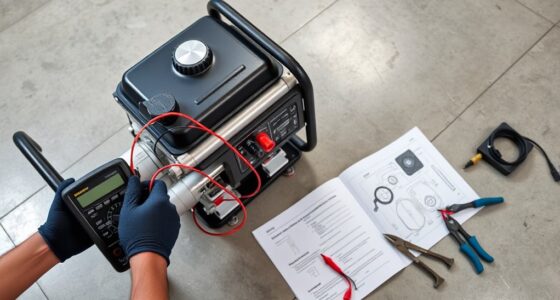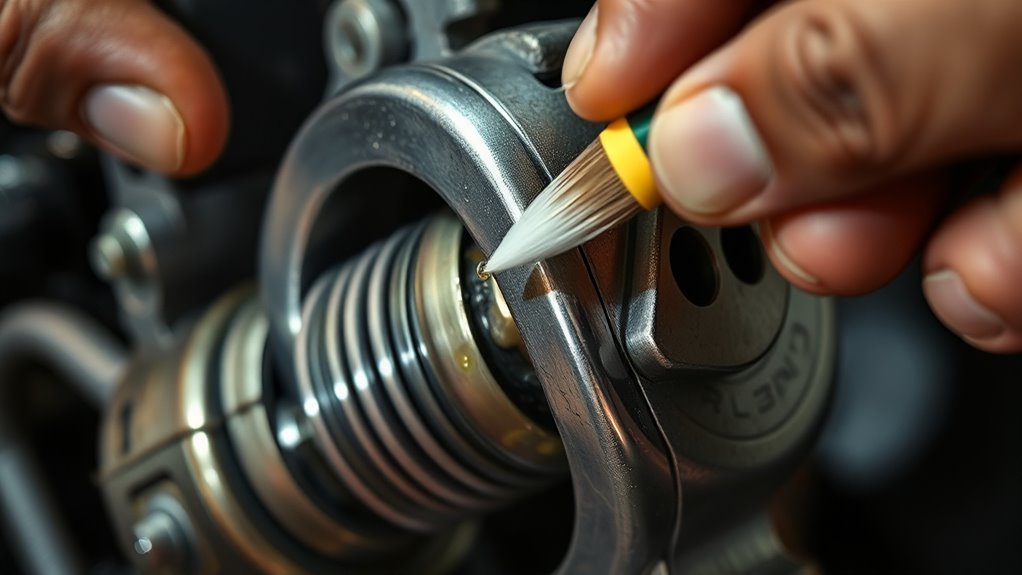

To keep your recoil starter working smoothly, regularly clean off dirt, grass, and debris from the assembly using a dry cloth or compressed air. Apply a small amount of light machine oil or spray lubricant to the recoil spring and pivot points to reduce friction and prevent rust. Make certain the rope retracts properly and replace it if frayed. Proper cleaning and lubrication help your starter last longer and operate more easily—stay tuned for tips on perfecting your maintenance routine.
Key Takeaways
- Use a light machine oil or spray lubricant on recoil spring and pivot points to ensure smooth operation.
- Remove debris, dirt, and grass from the recoil assembly with a dry cloth and compressed air.
- Regularly inspect the recoil rope for fraying or wear, replacing it if necessary.
- Clean the recoil cover and housing to prevent dirt buildup that can cause jams or tension issues.
- Handle the recoil spring carefully during lubrication and cleaning to avoid injury and ensure proper tension.
Recoil starters are crucial for easily starting small engines, but over time, dirt, debris, and lack of lubrication can cause them to become stiff or jam. To keep your recoil starter functioning smoothly, you need to pay attention to starter rope maintenance and recoil spring adjustment. Regularly inspecting the starter rope ensures it doesn’t fray or become too worn, which can make pulling the cord difficult. If the rope shows signs of wear, replace it promptly to prevent it from snapping during startup. When inspecting the rope, check that it retracts smoothly and doesn’t catch or stick. Keeping the rope clean and free of debris also helps maintain proper operation.
Regularly inspect and maintain your recoil starter rope for smooth operation and to prevent wear or snapping.
Equally important is examining the recoil spring. Over time, the spring can lose tension or become misaligned, leading to startup issues. Adjusting the recoil spring involves carefully removing the recoil cover, which may require loosening screws or clips. Once exposed, check the spring for signs of rust, deformation, or breakage. If the spring has lost tension, you can often tighten or reposition it to restore proper recoil action. Be cautious during this process, as springs can be under tension and may snap if mishandled. Proper recoil spring adjustment ensures the starter cord retracts smoothly and with enough force to start the engine easily.
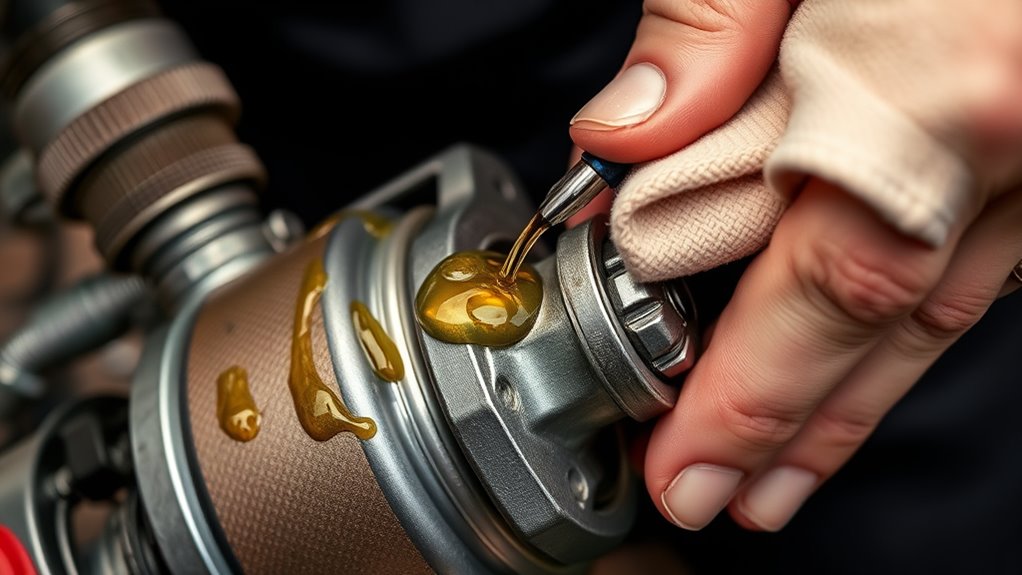
Lubrication plays a critical role in keeping the recoil starter operating efficiently. Applying a small amount of light machine oil to the recoil spring and other moving parts reduces friction and prevents rust. Use a spray lubricant or a few drops of oil along the spring’s surface and pivot points. Avoid over-lubricating, as excess oil can attract dirt and debris, leading to more buildup and potential jams. After lubricating, manually operate the starter a few times to distribute the oil evenly and check for smooth movement. Additionally, choosing the right type of lubricant can help prevent corrosion and extend the lifespan of the recoil components.
Cleaning the recoil starter regularly is also essential. Remove dirt, grass, and debris from the recoil assembly, especially around the pulley and spring. A clean, dry cloth can wipe away grime, while compressed air can blow out stubborn debris from tight spaces. Keeping the starter clean prevents dirt accumulation that can interfere with spring tension and rope movement.

3 Pack, 10 ft x 9/64" (3.5mm) Pull Cord Rope with Handle
- Extended Length Rope: 10 feet of durable pull cord
- High-Quality Material: 16-strand braided polyester for durability
- Comfortable Handle: Ergonomic, palm-safe pull handle
As an affiliate, we earn on qualifying purchases.
As an affiliate, we earn on qualifying purchases.
Frequently Asked Questions
How Often Should Recoil Starters Be Lubricated?
You should lubricate your recoil starter during every maintenance session, typically every 25-50 hours of use or once a season. Following a regular lubrication schedule helps prevent rust and keeps the recoil mechanism functioning smoothly. Always check for any signs of wear or dirt, and clean before lubricating. Regular maintenance ensures your recoil starter stays reliable, so you can start your equipment easily whenever needed.
What Type of Lubricant Is Best for Recoil Starters?
Think of your recoil starter as a well-oiled machine needing a gentle touch. You should use a lightweight, oil-based lubricant, like 3-in-1 oil or silicone spray, that’s compatible with the starter’s parts. Always check lubricant compatibility before applying, and if you’re out of traditional options, alternative lubricants like graphite powder can work. Avoid thick or corrosive substances to keep your recoil starter running smoothly.
Can Cleaning Damage the Recoil Starter Mechanism?
Cleaning the recoil starter mechanism can pose some risks if you’re not careful. If you use harsh chemicals or too much water, you might damage the internal parts or cause rust. Always avoid soaking the starter or using abrasive tools. Instead, gently clean with a dry brush or compressed air, and make certain everything is dry before reassembling. Proper cleaning reduces risks and keeps your starter working smoothly.
Are There Signs Indicating a Recoil Starter Needs Cleaning?
About 60% of recoil starter failures are due to dirt and debris buildup. If you notice difficulty pulling the starter, a sluggish spring, or the pulley feels rough, it’s a sign you should clean it. Regular pulley maintenance and checking the starter spring’s tension help prevent issues. Don’t ignore these signs, as timely cleaning guarantees smooth operation and extends the life of your recoil starter.
Is It Necessary to Replace Parts During Cleaning?
You don’t always need to replace parts during cleaning, but it’s wise to contemplate part replacement if components are damaged or worn out. Regular cleaning reduces the need for frequent part replacement, extending your recoil starter’s lifespan. Follow the recommended cleaning frequency, and inspect parts carefully. If you notice cracks, excessive wear, or broken pieces, replacing parts ensures proper function and prevents further damage.
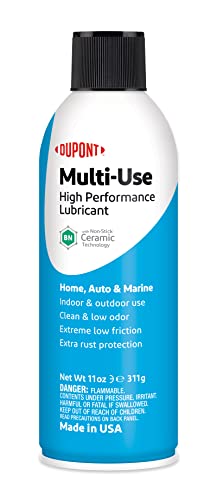
Dupont Teflon Multi-Use Lubricant Aerosol Spray, 11 Oz.
- Teflon-enhanced for wear protection: Increases durability and lubricity
- Corrosion-resistant additives: Protects against rust and corrosion
- Wet-style lubricant: Provides long-lasting lubrication
As an affiliate, we earn on qualifying purchases.
As an affiliate, we earn on qualifying purchases.
Conclusion
Now that you’ve lubricated and cleaned your recoil starter, imagine it as a smooth-running engine, ready to spring to life with just a tug. With a little care, your starter will glide effortlessly, like a well-oiled machine awakening from slumber. Keep it maintained, and you’ll feel that satisfying snap each time you pull—like a secret handshake between you and your equipment, always ready to roar back to action whenever you need it.

ANSUDT Recoil Starter Repair Kit for STIHL BG56C BG86C
- Compatible Models: STIHL BG56C, BG86C, SH86C, SH56C
- Complete Repair Kit: Includes pawl clip, springs, carrier, pawls, washer, rope rotor
- Precise Fit and Performance: Ensures smooth operation of leaf blowers
As an affiliate, we earn on qualifying purchases.
As an affiliate, we earn on qualifying purchases.

YAMAKATO Recoil Starter Spring for Honda gx120 gx140 gx160 gx200
- Compatible Engines: Honda GX series and Chinese engines
- Easy Installation: No extra parts needed, simple setup
- High-Quality Material: Sturdy, durable metal construction
As an affiliate, we earn on qualifying purchases.
As an affiliate, we earn on qualifying purchases.