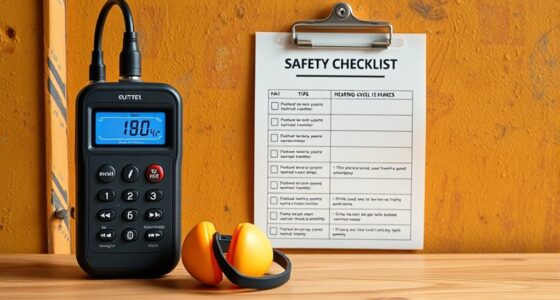
When measuring generator noise, Db(A) focuses on how humans perceive sound, emphasizing mid-range frequencies important for comfort and regulation compliance. Db(C), on the other hand, captures a broader spectrum, including low-frequency sounds like vibrations and rumbling. Understanding these differences helps you assess whether noise levels are acceptable for people or if low-frequency impacts might cause structural issues. Keep exploring to learn how choosing the right measurement improves noise management.
Key Takeaways
- Db(A) emphasizes mid-range frequencies, aligning with human perception of loudness, ideal for measuring generator noise impacting nearby residents.
- Db(C) captures broader, low-frequency sounds like generator rumble and vibrations often felt more than heard.
- Use Db(A) for compliance with noise regulations affecting human comfort, while Db(C) helps identify low-frequency vibrations.
- Comparing both measurements provides a comprehensive view of generator noise, addressing both perceived loudness and structural impact.
- Choosing between Db(A) and Db(C) depends on whether the focus is on human perception or low-frequency noise effects.
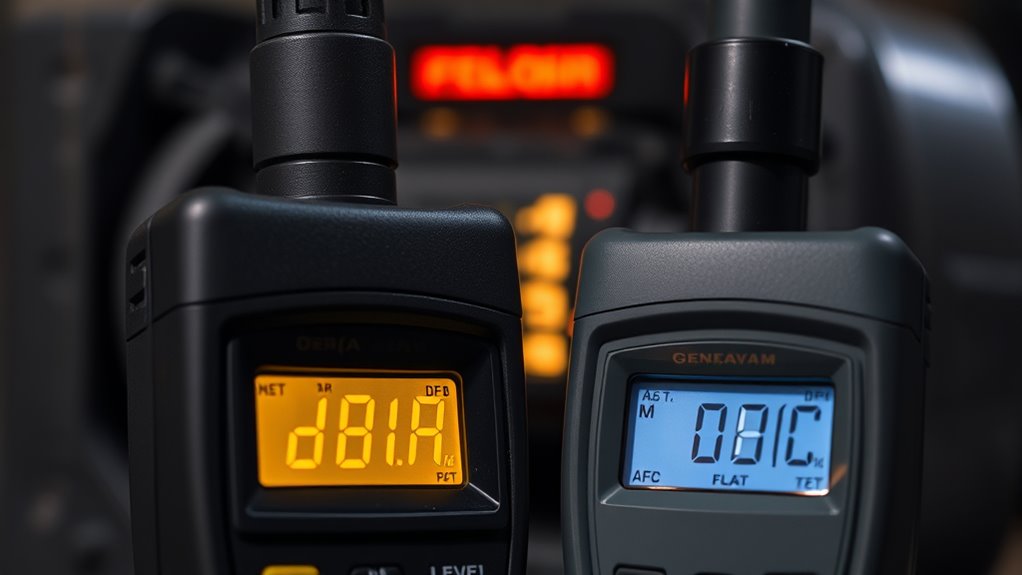
Have you ever wondered what the difference is between Db(A) and Db(C)? When it comes to sound measurement, understanding these two units is vital, especially if you’re dealing with noise regulation or evaluating generator noise levels. Both Db(A) and Db(C) are used to quantify sound, but they do so in different ways, focusing on different parts of the sound spectrum. Recognizing the distinction helps you determine whether a noise level complies with local regulations or if it might be disruptive to your environment.
Db(A) is designed to mimic how the human ear perceives sound. It filters the sound spectrum to emphasize frequencies that are most sensitive to human hearing, typically in the mid-range. This makes Db(A) measurements ideal for evaluating noise in environments where human comfort is a concern, such as residential areas or workplaces. When you measure sound levels using Db(A), you’re fundamentally evaluating how loud a noise will seem to a person standing nearby. This is why many noise regulations specify limits in Db(A), guaranteeing that noise pollution remains within acceptable levels for people.
In contrast, Db(C) captures a broader range of frequencies, including those at the lower end of the spectrum. It’s less sensitive to the mid-range frequencies that dominate human perception and more responsive to bass and low-frequency sounds. If you’re measuring generator noise, for example, Db(C) can reveal the impact of low-frequency vibrations and rumbling sounds that might not be as noticeable but can still cause disturbance or structural issues. Because of its sensitivity to these low frequencies, Db(C) is often used in noise regulation for industrial environments or for evaluating the impact of machinery that produces deep, low-end noise.
Understanding the different applications of sound measurement with Db(A) and Db(C) means you can choose the appropriate method based on your specific needs. If your goal is to guarantee compliance with noise regulations designed to protect public health and comfort, Db(A) is usually the standard. However, if you’re concerned about low-frequency noise that might affect nearby structures or cause vibrations, Db(C) provides valuable insight. Both measurements are vital tools for managing noise pollution effectively, helping you balance operational needs with environmental and community considerations.
Frequently Asked Questions
How Does Generator Noise Impact Nearby Residents’ Health?
Generator noise can affect your health by causing stress, sleep disturbances, and even hearing loss if it’s loud enough. Nearby residents may experience headaches or increased blood pressure from prolonged exposure. This noise also impacts the community by reducing overall quality of life and creating annoyance. It’s important to monitor noise levels, especially in sensitive areas, to protect health effects and minimize community impact.
Are There Regulations Governing Acceptable Noise Levels for Generators?
Yes, regulations govern acceptable noise levels for generators. You should follow local noise ordinances that specify maximum decibel levels, often measured using Db(A) for sensitive environments. To stay compliant, consider noise mitigation strategies like soundproofing techniques, which reduce sound emissions. Proper installation and maintenance also help control noise, ensuring your generator operates within legal limits and minimizes disturbance to nearby residents.
What Tools Are Best for Measuring Generator Noise Accurately?
Imagine capturing the whisper of a breeze—that’s what you aim for when measuring generator noise. You should choose a sound level meter with sound level calibration features and select a measurement device designed for outdoor noise, like a Class 1 device. These tools guarantee accuracy and consistency, helping you record precise dB(A) and dB(C) levels for regulatory compliance or noise mitigation strategies.
How Can I Reduce Generator Noise Without Compromising Performance?
You can reduce generator noise without compromising performance by installing soundproof enclosures that contain noise effectively. Additionally, use vibration damping materials on mounting surfaces and components to minimize vibrations that contribute to noise. Regular maintenance also helps keep the generator running smoothly and quietly. Combining these strategies ensures you lower sound levels while maintaining ideal performance, creating a quieter environment without sacrificing efficiency.
Does Generator Noise Vary With Different Types or Brands?
Imagine standing beside a generator, feeling the deep rumble of its sound. Different brands and types produce unique generator sound profiles, so noise levels can vary markedly. Some brands engineer quieter models, while others lean into power output. When choosing a generator, consider brand differences that influence noise, ensuring you select one that balances performance with quieter operation, so you can enjoy peace without sacrificing power.
Conclusion
Now that you know the difference between dB(A) and dB(C), you’re practically a noise measurement superhero. Remember, choosing the right measurement isn’t just a small detail — it’s the key to avoiding a noise disaster, like a thunderstorm in your ears. So, next time you’re evaluating generator noise, trust your new knowledge and make the right call. With this info, you’re armed to tame even the loudest generators, turning chaos into calm with just a simple measurement.