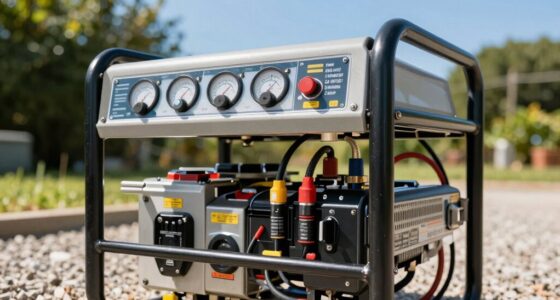
To estimate the total wattage for your devices using a power calculator, start by checking each device’s wattage label or manual. If unavailable, multiply the voltage by the current to find the wattage. Input these values into the calculator to get an accurate total, helping you guarantee your power supply can handle everything safely. Keep in mind, selecting energy-efficient devices can lower your overall needs—more useful tips await if you continue exploring.

Get backup power and energy gear delivered free — and shop member deals
- Fast, free delivery on millions of items
- Access to Prime Big Deal Days deals on October 6–7
- Prime Video, Amazon Music and more included
Key Takeaways
- Gather wattage information from device labels, manuals, or calculate by multiplying voltage and current.
- Input each device’s wattage into the power calculator to determine individual and total power needs.
- Incorporate energy-efficient devices to optimize power estimates and reduce overall wattage.
- Verify that the total wattage aligns with your power supply’s capacity and system requirements.
- Use the calculator’s results to ensure safe, compatible, and cost-effective device and power source pairing.

Ever wondered how to determine the right amount of power needed for your project or device? Using a power calculator can make this process straightforward, helping you estimate the total wattage your setup requires. When you understand the energy efficiency of your devices and ensure device compatibility, you can avoid overloading circuits or purchasing unnecessary power supplies. This not only saves you money but also prolongs the lifespan of your equipment.
A good starting point is to list all the devices you plan to connect. For each one, note their wattage, which is usually indicated on labels or in user manuals. If wattage isn’t directly listed, you can calculate it by multiplying voltage by current (amperes). Once you have these figures, input each device’s wattage into a power calculator. Many online tools are available that allow you to add multiple devices and instantly see the combined power draw. This gives you a clear picture of the total wattage needed, preventing surprises when everything is plugged in.
Energy efficiency plays a pivotal role here. More energy-efficient devices consume less power, which means you can run the same workload with a smaller power supply. Checking the energy ratings, such as ENERGY STAR certifications, can help you choose devices that optimize power use. When you factor in energy efficiency, your total wattage estimate becomes more accurate, and you’ll avoid overestimating your power needs. This is especially important if you’re designing a system that needs to run continuously or during power outages, where efficiency translates into cost savings and sustainability.
Device compatibility is equally important. Not all devices work well with every power source or each other. Some devices require specific voltage or current levels, and mismatched components can lead to poor performance or damage. When using a power calculator, verify that the total wattage you calculate aligns with your power supply’s capacity and that all devices are compatible with your system’s voltage and current specifications. This check ensures safe operation and avoids issues like overheating or electrical failure.
Additionally, understanding the power ratings of your devices can help you select the most energy-efficient options, saving costs over time. In essence, a power calculator not only simplifies estimating your total wattage but also helps you make smarter choices around energy efficiency and device compatibility. By accurately evaluating your power needs, you safeguard your equipment, reduce waste, and optimize your setup for performance and longevity. Whether you’re building a home theater, setting up a computer network, or designing an industrial system, understanding your power requirements is a critical step that a good power calculator can facilitate with ease.
As an affiliate, we earn on qualifying purchases.
Frequently Asked Questions
Can a Power Calculator Determine Surge Wattage Requirements?
Yes, a power calculator can help determine surge wattage requirements by considering your device’s surge capacity. It assesses how much power your equipment needs during startup, ensuring your devices are compatible with your power source. You’ll get an accurate estimate of the surge wattage needed, helping you avoid overloads and ensuring your setup works safely and efficiently. Always double-check device compatibility for peak performance.
How Accurate Are Power Calculators for Multiple Devices?
Power calculators can be quite accurate for multiple devices if you input precise power measurements and guarantee device compatibility. They account for each item’s wattage, helping you estimate total power needs. However, keep in mind that some variations may occur due to fluctuating power consumption or device efficiency. Always double-check individual device ratings and consider a margin of safety to prevent overloads and ensure reliable operation.
Do Calculators Account for Device Startup Power Spikes?
Power calculators often overlook startup spikes, which can be significant. For example, a refrigerator’s compressor requires a surge capacity of up to three times its running wattage during startup. This means your calculator may underestimate the total wattage needed, risking overloads. Always include a margin for startup power spikes to guarantee your system can handle these transient but critical surges safely.
Can a Power Calculator Estimate Energy Costs Over Time?
Yes, a power calculator can estimate energy costs over time by analyzing your devices’ power consumption. You input your device’s wattage and usage hours, and it calculates total energy consumption. This helps you assess energy efficiency and identify high-consuming devices. Keep in mind, more advanced calculators may include factors like efficiency ratings, giving you a clearer power consumption analysis to manage your energy costs effectively.
Are There Online Power Calculators for Specific Appliance Types?
Yes, many online power calculators are designed for specific appliance types, offering better appliance compatibility. These specialized tools help you estimate power consumption more accurately for items like refrigerators, computers, or HVAC systems. However, be aware of calculator limitations; they might not account for all variables or unusual usage patterns. Always double-check results with manufacturer specs or professional advice to guarantee accuracy in your energy planning.
As an affiliate, we earn on qualifying purchases.
Conclusion
By using a power calculator, you can easily estimate the total wattage for all your devices, helping you plan your energy needs and avoid overloads. For example, imagine you’re setting up a home office and find your devices add up to 300 watts. With that info, you can choose the right power strips or backup batteries, ensuring everything runs smoothly without surprises. It’s a simple step to keep your setup safe and efficient.
As an affiliate, we earn on qualifying purchases.
As an affiliate, we earn on qualifying purchases.
Fall Picks
fall essentials
As an affiliate, we earn on qualifying purchases.