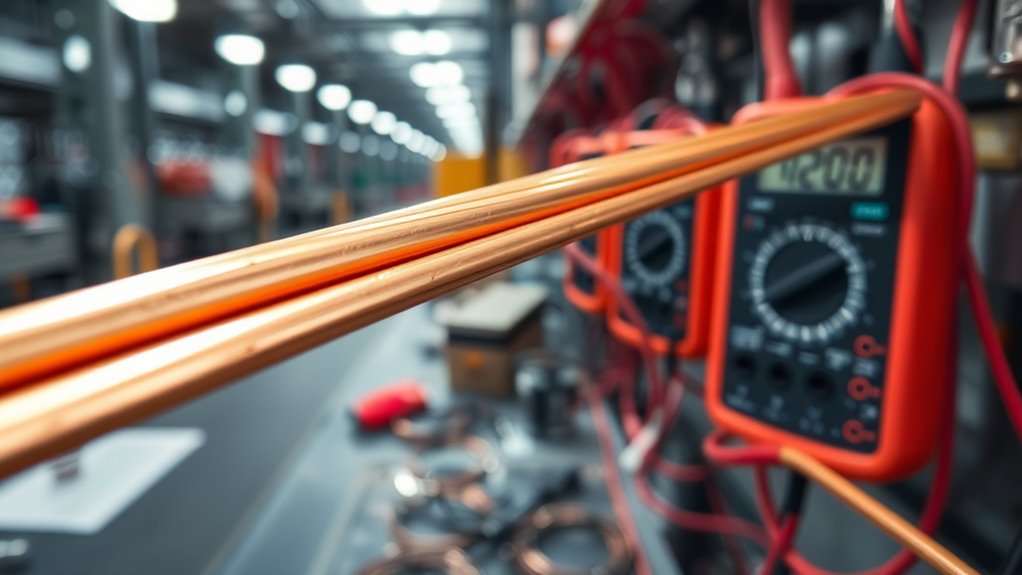

Understanding why distance and wire size matter in voltage drop calculations is vital for safe, efficient electrical systems. Longer wire runs increase resistance, which leads to higher voltage drops and potential appliance issues. Using thicker wires (larger gauges) helps reduce resistance and maintain proper voltage levels. Properly balancing length and wire size prevents overheating and ensures safety. Want to learn more about how to calculate these factors accurately for your projects? Keep exploring for expert tips.

Get backup power and energy gear delivered free — and shop member deals
- Fast, free delivery on millions of items
- Access to Prime Big Deal Days deals on October 6–7
- Prime Video, Amazon Music and more included
Key Takeaways
- Longer wire distances increase resistance, leading to higher voltage drops and potential circuit performance issues.
- Larger wire sizes reduce resistance, minimizing voltage drops over extended runs.
- Accurate voltage drop calculations ensure proper wire sizing for safety and efficiency.
- Excessive voltage drops can cause overheating, device malfunction, and safety hazards.
- Considering both distance and wire size optimizes electrical system reliability and compliance with standards.

Have you ever wondered how voltage drops occur in electrical circuits and why they matter? Understanding this helps you grasp how electrical systems function efficiently and safely. When current flows through wires, some energy gets lost as heat due to the wire’s resistance. This loss results in a voltage drop across the wire, which can affect circuit performance. If the voltage drop becomes too high, your appliances may not operate correctly, and the overall circuit efficiency declines. That’s why calculating voltage drop accurately is essential—so you can guarantee your electrical setup delivers the right voltage to all devices and maintains maximum performance.
Understanding voltage drops ensures your electrical systems run safely and efficiently.
The distance between your power source and the load plays a significant role in voltage drop. The longer the wire run, the greater the resistance it offers to current flow. This increased resistance causes a larger voltage drop, which can lead to insufficient voltage at the point of use. For instance, if you’re installing outdoor lighting or running wiring over a large property, you need to account for this distance. Failing to do so might mean your lights are dimmer than they should be or your equipment doesn’t operate properly. To counteract this, you can choose thicker wires with a larger cross-sectional area, as they offer less resistance. This is where wire size becomes essential; increasing wire gauge reduces resistance and helps maintain voltage levels. Properly selecting wire size based on the length of the run and expected load guarantees your circuit remains efficient and safe.
Safety considerations are paramount when dealing with voltage drops. Excessive voltage drops can lead to overheating of wires, increasing the risk of fire or electrical failure. Over time, this can compromise the safety of your entire electrical system. Additionally, if devices don’t receive the proper voltage, they might malfunction or become damaged, posing safety hazards. Therefore, when planning circuits, it’s critical to keep voltage drops within acceptable limits—generally less than 3% for most applications. This involves calculating the expected voltage drop using formulas that factor in wire length, wire material, current load, and wire size. By doing so, you guarantee that your circuit adheres to safety standards and operates efficiently, avoiding potential hazards caused by undervoltage or overheating. Understanding the importance of proper wire selection can also help mitigate issues caused by resistance and ensure your system’s longevity.
In essence, understanding how voltage drops happen and how to calculate them empowers you to design safer, more efficient electrical systems. Adequately accounting for distance and wire size ensures your circuits perform reliably and safely, preventing issues before they arise. Whether you’re wiring a new home, upgrading an existing system, or setting up a commercial installation, paying attention to voltage drop calculations helps you achieve the best balance between performance and safety. Proper planning and calculation protect your investment and, most importantly, keep you and your property safe from electrical hazards.
electrical wire gauge for long runs
As an affiliate, we earn on qualifying purchases.
As an affiliate, we earn on qualifying purchases.
Frequently Asked Questions
How Does Temperature Affect Voltage Drop Calculations?
Temperature affects voltage drop calculations because higher ambient conditions increase conductor resistance. When temperatures rise, conductor insulation and ambient conditions cause the wire’s resistance to go up, resulting in a greater voltage drop. You need to take this into account because it impacts your wiring’s efficiency. Cooler temperatures lower resistance, but hot environments may require thicker wire or special insulation to maintain proper voltage levels.
Are There Specific Wire Materials Better for Minimizing Voltage Drop?
Think of your wire as a highway for electrical current. Copper conductivity is like a smooth, fast lane, making it ideal for minimizing voltage drop. Aluminum resistance is higher, causing more delay and energy loss. So, you should choose copper wires for better efficiency, especially over long distances. Aluminum can work, but it requires careful consideration of its resistance to keep voltage drop within limits.
What Safety Precautions Should Be Taken During Installation?
During installation, you should prioritize proper grounding techniques to prevent electrical hazards and guarantee safety. Always follow insulation standards to protect against shorts and shocks. Use insulated tools, wear protective gear, and double-check connections. Turn off power before working on circuits, and verify grounding and wiring integrity. Adhering to these safety precautions minimizes risks, enhances system reliability, and helps you comply with electrical codes and best practices.
How Often Should Voltage Drop Be Tested in a System?
You should test voltage drop regularly to guarantee your system’s reliability. Typically, a voltage testing schedule of every six months to a year suffices, but if your system experiences heavy loads or long distances, more frequent checks are wise. Don’t wait for issues—staying proactive with your maintenance schedule helps catch problems early, preventing failures. Remember, consistent testing safeguards your investment and keeps everything running smoothly.
Can Voltage Drop Impact Energy Efficiency Over Time?
Yes, voltage drop can impact your energy efficiency over time. As power loss increases due to voltage drop, your system has to work harder to deliver the same amount of energy. This inefficiency means you’re using more electricity, which raises your bills and strains your equipment. Keeping voltage drop in check helps maintain peak power transfer, minimizing power loss and ensuring your system runs efficiently over the long term.
As an affiliate, we earn on qualifying purchases.
Conclusion
If you ignore the importance of distance and wire size, you’re risking a voltage drop so severe it could cripple your entire electrical system. Don’t think a small difference doesn’t matter—one tiny miscalculation could cause your appliances to malfunction or burn out completely. Pay close attention to voltage drop calculations, because overlooking it could turn a simple project into a catastrophic failure. In electrical work, every inch and wire gauge counts—don’t let negligence be your downfall.
As an affiliate, we earn on qualifying purchases.
As an affiliate, we earn on qualifying purchases.
Fall Picks
fall essentials
As an affiliate, we earn on qualifying purchases.