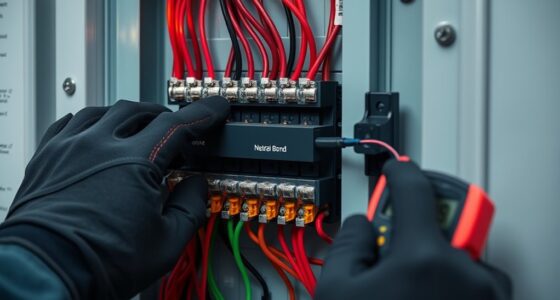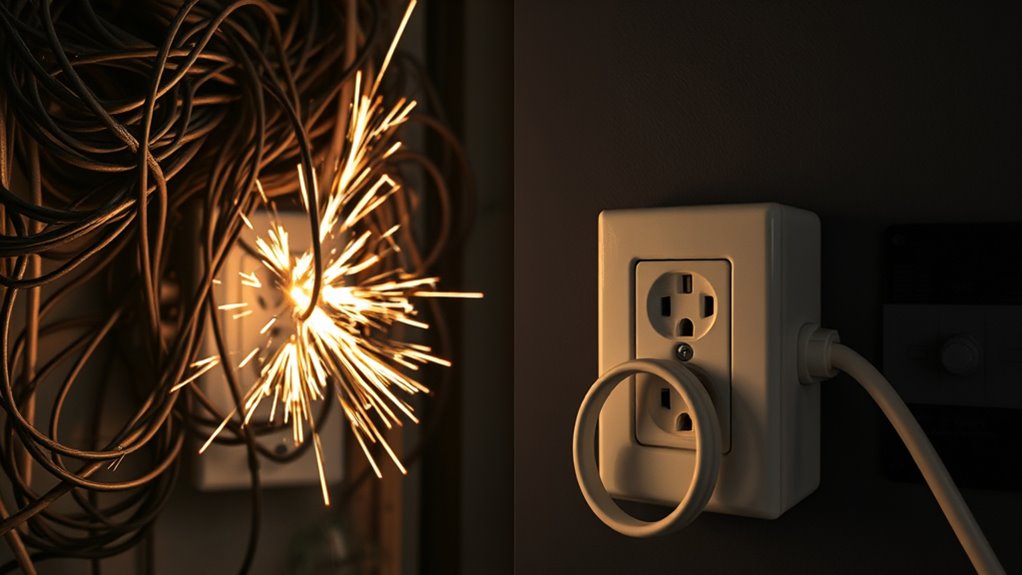
To prevent electrical fires, avoid overloading outlets and circuits by not plugging in too many devices at once. Distribute your appliances across multiple outlets and never daisy-chain extension cords. Regularly check for signs like scorched outlets or flickering lights, and upgrade wiring in older homes. Unplug appliances when not in use and install smoke alarms. Taking these simple steps can greatly reduce fire risk—keep going to discover more safety tips you can implement today.
Key Takeaways
- Distribute electrical load evenly across multiple outlets to prevent overloading circuits.
- Avoid plugging multiple high-power devices into a single outlet or power strip.
- Regularly inspect cords and outlets for signs of damage or overheating and replace as needed.
- Install smoke alarms and keep fire extinguishers accessible in key areas.
- Unplug appliances when not in use, especially heat-generating devices, to reduce fire risk.
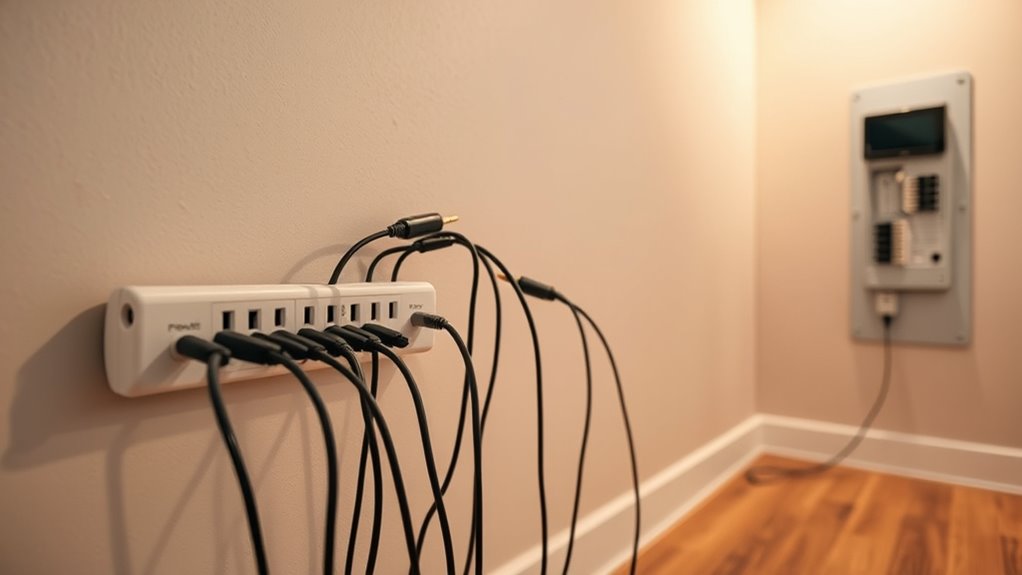
Have you ever considered how simple precautions can prevent devastating fires? Many fires start not from grand accidents but from overlooked safety measures, especially related to electrical safety. Overloading outlets and circuits might seem harmless at first, but it substantially increases the risk of electrical fires. When you plug in too many devices into a single outlet or power strip, you push the electrical system beyond its capacity. This causes overheating, which can ignite nearby materials and lead to a fire. To practice effective fire risk mitigation, always check the wattage ratings of your appliances and avoid daisy-chaining multiple extension cords or power strips. Instead, distribute the load across multiple outlets or have a qualified electrician install additional circuits if needed. These small steps make a big difference in maintaining a safe environment.
Simple precautions like avoiding overloading outlets help prevent devastating electrical fires.
Understanding your electrical system is essential for electrical safety. Keep an eye out for signs of trouble, such as frequent circuit breaker trips, scorched outlets, or flickering lights. These signals indicate that your wiring may be overloaded or deteriorating, and addressing them promptly can prevent a potential fire. Never ignore these warning signs; instead, consult a professional electrician who can assess your wiring and recommend necessary upgrades. Regular inspections are fundamental, especially in older homes where wiring may not meet current safety standards. Taking proactive measures to guarantee your electrical safety reduces the chances of overheating wires, sparks, or short circuits that could ignite a fire. Incorporating essential electrical safety knowledge like understanding circuit capacities can further prevent hazards.
In addition to avoiding overloading, you should also be cautious with your appliances and devices. Always unplug items when not in use, particularly those that generate heat like space heaters or irons. Using appliances correctly and maintaining them according to manufacturer instructions diminishes the risk of electrical failure. Replace frayed cords or damaged plugs immediately—these are common culprits of electrical fires. Installing smoke alarms and fire extinguishers in key areas, such as the kitchen and utility rooms, further enhances your safety. Remember, preventing electrical fires isn’t just about avoiding disaster; it’s about creating a secure environment for you and your loved ones.
Ultimately, practicing good electrical safety is straightforward but essential. It involves understanding your electrical system, avoiding overloading circuits, and staying vigilant about appliance maintenance. These efforts are part of effective fire risk mitigation, reducing the likelihood of a small electrical issue escalating into a devastating fire. By taking these precautions, you actively protect your home and everyone inside it. Small changes—like unplugging unused devices, getting regular inspections, and not overloading outlets—can have a profound impact on fire prevention. Stay aware, stay safe, and remember that many fires can be prevented through simple, mindful electrical safety practices.
Frequently Asked Questions
How Can I Tell if My Electrical System Is Overloaded?
You can tell if your electrical system is overloaded by paying attention to overload symptoms like frequent circuit breaker trips, flickering lights, or burning smells. Check your circuit capacity—if you’re plugging in too many devices or high-wattage appliances on one circuit, it may be overloaded. Reduce the load by spreading out appliances, and if problems persist, consult an electrician to assess your system and prevent potential fire hazards.
What Are the Signs of an Impending Electrical Fire?
Think of your electrical system as a busy highway—warning signs of an impending fire include flickering lights, burning smells, or sparks flying out of outlets. Your fire alarm might go off, alerting you to danger. Regular electrical maintenance helps catch issues early. If you notice these signs, shut off power immediately and call a professional. Staying alert prevents small sparks from igniting a dangerous fire.
Are Surge Protectors Effective Against Electrical Fires?
Surge protectors can help prevent electrical fires, but they have limitations. They’re effective against power surges, yet they don’t eliminate all risks associated with electrical fires. Don’t believe electrical fire myths that surge protectors can prevent all hazards; overloading outlets remains dangerous. Always use surge protectors properly, avoid overloading circuits, and regularly check for signs of wear to keep your home safe from fire risks.
How Often Should I Have My Wiring Inspected?
You should have your wiring inspected every 3 to 5 years, especially if your home is older or shows signs of wear. For example, a family ignored minor flickering lights, leading to a fire caused by faulty wiring. Regular wiring maintenance and adherence to electrical code help prevent hazards. Schedule inspections more frequently if you notice issues like sparks or burning smells, ensuring safety and compliance.
What Safety Devices Can Prevent Electrical Overloads?
You can prevent electrical overloads by using circuit breakers and fuse boxes properly. Circuit breakers automatically shut off power when they detect overloads, protecting your wiring and appliances. Fuse boxes contain fuses that blow when overloaded, stopping excess current. Regularly check these safety devices to guarantee they’re functioning correctly. Upgrading to modern circuit breakers can provide better protection and reduce fire risks caused by overloaded circuits.
Conclusion
To keep your home safe, always avoid overloading outlets and be mindful of electrical loads—think of it like not overburdening a horse before a marathon. Remember, a little caution today prevents a fiery disaster tomorrow. Stay vigilant, unplug unused devices, and don’t forget that even in this digital age, old-school habits like regular checks can save you from a roaring blaze. Protect your castle, and let fire safety be your trusty sword!