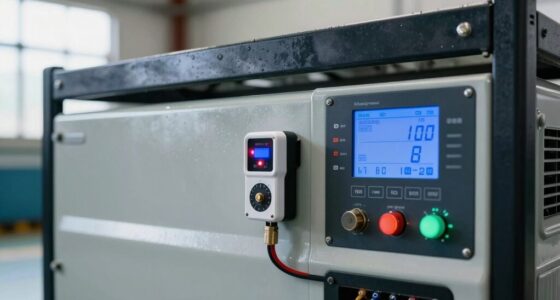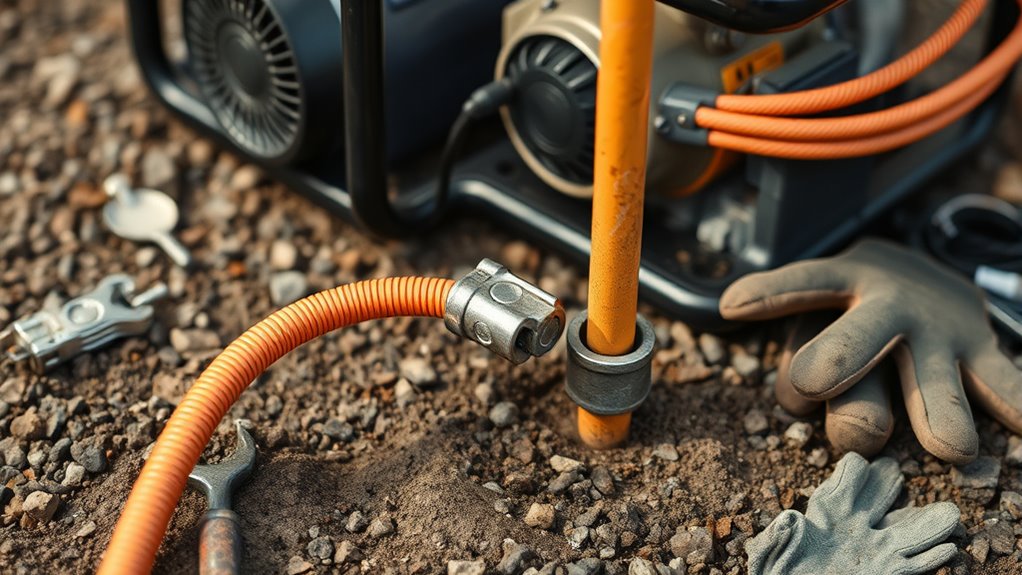

To prevent electrical shocks, guarantee your portable generator is properly grounded by connecting its grounding terminal to a copper grounding rod driven at least 8 feet into moist soil. Use a grounding wire of appropriate gauge and make sure all connections are secure. Always follow the manufacturer’s instructions and local electrical codes. Installing a transfer switch with proper grounding provisions adds extra safety. If you want to learn the detailed steps, keep exploring these essential safety tips.

Get backup power and energy gear delivered free — and shop member deals
- Fast, free delivery on millions of items
- Access to Prime Big Deal Days deals on October 6–7
- Prime Video, Amazon Music and more included
Key Takeaways
- Always connect the generator’s grounding terminal to a properly installed grounding rod driven at least 8 feet into moist soil.
- Use a dedicated grounding wire to securely attach the generator or transfer switch to the grounding rod for a low-resistance earth connection.
- Install a transfer switch correctly to isolate household wiring from utility power and facilitate safe grounding practices.
- Follow manufacturer instructions and local electrical codes to ensure proper grounding procedures and prevent shocks.
- Consult a qualified electrician for installation to guarantee safe, compliant, and effective grounding of your portable generator.
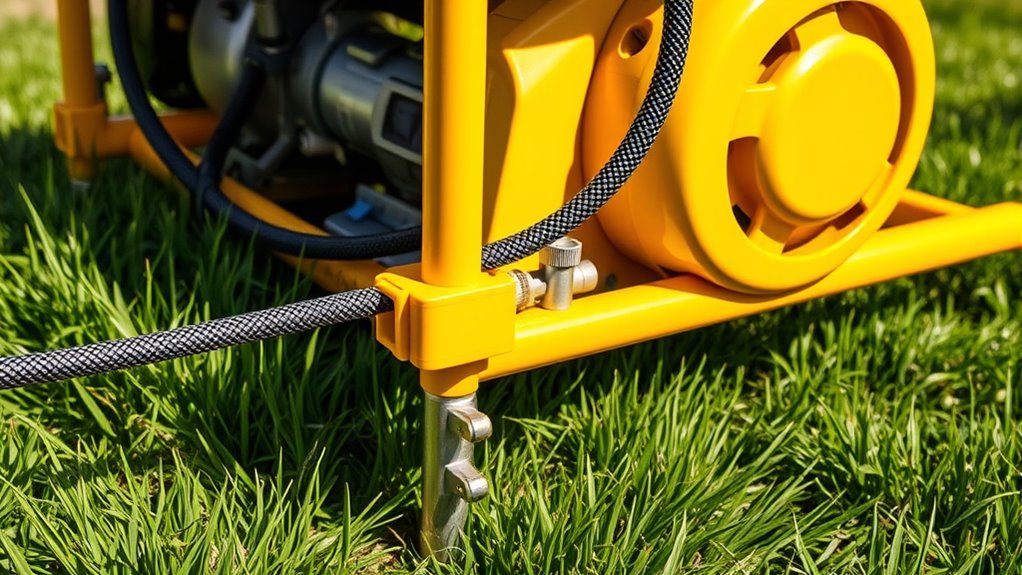
Have you ever wondered why grounding your portable generator is indispensable? Proper grounding helps prevent electrical shocks, protects your equipment, and guarantees safe operation when using your generator. One critical aspect of grounding involves using a transfer switch and grounding rods correctly. A transfer switch is designed to connect your generator to your home’s electrical system safely. When installed properly, it isolates your household wiring from the utility power, reducing the risk of backfeeding and electrical hazards. Grounding the transfer switch is essential because it directs stray electrical currents safely into the earth, minimizing shock risks. Without proper grounding, any fault or electrical surge could energize metal parts or wiring, increasing the danger of shock or fire.
To ground your portable generator effectively, you’ll need grounding rods, which serve as a direct connection to the earth. These rods are typically made of copper or other conductive materials and are driven deep into the ground. When connecting your generator, it’s necessary to attach the grounding wire from the transfer switch or generator to the grounding rod securely. This creates a low-resistance path for electrical faults, allowing excess current to safely dissipate into the earth rather than passing through you or your appliances. Installing grounding rods isn’t complicated, but it requires ensuring the rod is driven at least 8 feet into moist soil for maximum conductivity. Once installed, you should attach a grounding wire from the generator’s grounding terminal or the transfer switch to the grounding rod, tightening the connection firmly.
Additionally, understanding grounding procedures and adhering to local electrical codes is crucial for ensuring safety and compliance. It’s important to follow manufacturer instructions and local electrical codes when grounding your generator. Many portable generators come with a grounding terminal, and it’s necessary to connect this to the grounding system properly. If your setup involves a transfer switch, make sure it’s installed by a qualified electrician who understands grounding requirements. Proper grounding not only reduces shock risks but also helps your generator operate more efficiently and reliably. Remember, never bypass grounding procedures or use makeshift solutions like metal pipes or water pipes unless specifically approved by the manufacturer and local codes. Grounding rods should be used in conjunction with a transfer switch that’s designed to facilitate a safe, grounded connection, ensuring that any electrical faults are safely diverted into the ground.
Frequently Asked Questions
Can I Use My Car’s Ground as a Permanent Grounding Method?
You shouldn’t use your vehicle’s ground as a permanent grounding method for your generator. Vehicle grounding isn’t designed for electrical safety or long-term use, and it can pose risks like electrical shock or fire. Instead, use a proper grounding rod or grounding system specifically rated for your generator. This guarantees safe operation and helps prevent electrical hazards, keeping you and your equipment safe during power outages or other emergencies.
Is It Necessary to Ground a Generator Used Indoors?
Yes, grounding your indoor-used generator is necessary for indoor safety and complying with grounding requirements. Proper grounding diminishes the risk of electrical shock, especially in enclosed spaces. You should follow manufacturer instructions and local electrical codes to ensure safe operation. Use appropriate grounding methods, such as grounding rods or grounding wires, to ensure your generator is safely grounded and minimize potential hazards during use indoors.
How Often Should I Inspect My Grounding Connection?
You should inspect your grounding connection every three to six months, as neglect can be dangerous. Regular inspection intervals keep you safe by catching any loose or corroded connections early. Don’t wait for a problem to surprise you—stay vigilant and check your grounding frequency consistently. This simple step guarantees your generator remains properly grounded, preventing electrical shocks and safeguarding your home and loved ones.
What Grounding Methods Are Unsafe for Portable Generators?
You should avoid unsafe grounding methods like using makeshift grounding rods or connecting to metal plumbing without proper grounding equipment. Many grounding myths suggest these are sufficient, but they’re dangerous and can cause electrical shock. Always use a grounding rod designed for generators and verify a proper, code-compliant connection. Unsafe grounding compromises safety, so don’t rely on shortcuts or unverified methods—proper grounding protects you and your equipment.
Can Improper Grounding Cause Damage to My Appliances?
Yes, improper grounding techniques can cause damage to your appliances. When grounding isn’t correctly done, electrical surges or faults may occur, which can send dangerous voltage spikes through your devices. This compromises electrical safety and risks frying your appliances. Always verify you follow proper grounding methods recommended by the manufacturer or local codes. Proper grounding protects your appliances and keeps you safe during generator use.
Conclusion
Properly grounding your portable generator is essential to prevent electrical shocks and ensure safety. Did you know that according to the National Fire Protection Association, improper grounding causes over 10,000 electrical injuries each year? By taking simple steps to ground your generator correctly, you reduce your risk of injury and protect your equipment. Stay vigilant, follow safety guidelines, and always double-check your grounding connections before use. Your safety is worth the extra effort!
Fall Picks
fall essentials
As an affiliate, we earn on qualifying purchases.