Many fuel storage myths suggest all containers are safe or you can store fuel anywhere, but facts show you need approved containers and proper locations to avoid fire hazards and legal issues. Gasoline is more flammable than diesel, and containers aren’t always fireproof, so use safety-approved options and store fuel away from heat. Mixing fuels can be dangerous, and storage life varies — most fuels don’t last forever without degrading. If you want facts you can trust, stay tuned for more insights.

Get backup power and energy gear delivered free — and shop member deals
- Fast, free delivery on millions of items
- Access to Prime Big Deal Days deals on October 6–7
- Prime Video, Amazon Music and more included
Key Takeaways
- Proper containers, ventilation, and storage locations are essential to prevent fuel leaks, fires, and accidents.
- Fuel storage regulations restrict location and quantity, with exceptions for specific industrial or emergency uses.
- Gasoline is more flammable than diesel, which has a higher flash point; handle both with appropriate safety measures.
- Fireproof containers are not mandatory; safety features like venting and certification ensure safe fuel storage.
- Mixing different fuels or storing large quantities without proper precautions increases fire risks and potential engine damage.
approved fuel storage containers
As an affiliate, we earn on qualifying purchases.
As an affiliate, we earn on qualifying purchases.
Common Fuel Storage Myths Debunked
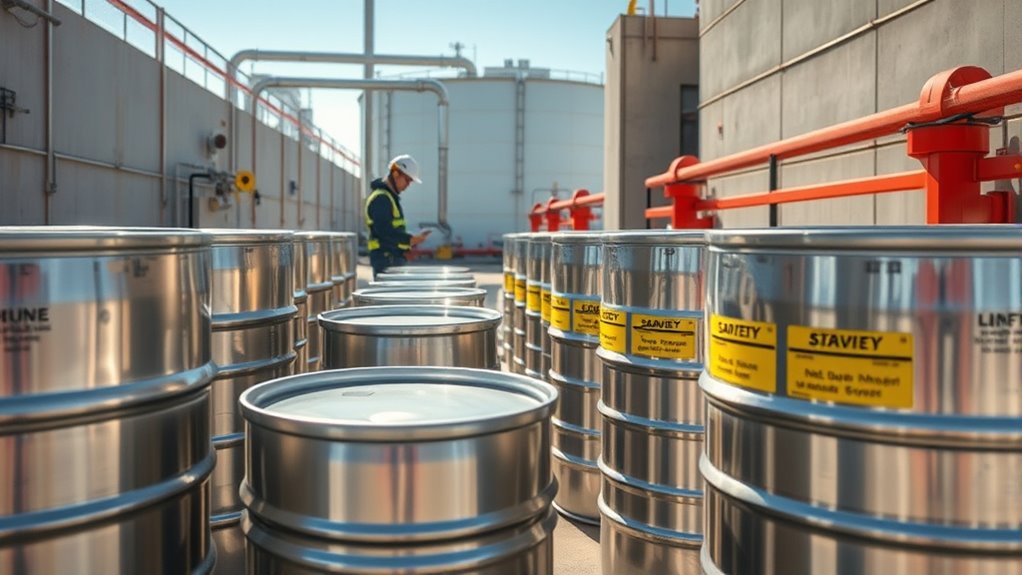
Many people believe that storing fuel in any container is inherently dangerous, but this is a common myth. The truth is, choosing the right fuel container types is vital for safety. Approved containers are designed to withstand pressure, prevent leaks, and resist corrosion. Using improper containers can lead to spills or fires. Additionally, storage location regulations are in place to minimize risks; storing fuel in well-ventilated, secure areas away from heat sources is essential. Many assume all containers are equal, but regulations specify materials and designs suitable for fuel storage. Proper ventilation is crucial to prevent the buildup of flammable vapors and reduce the risk of accidents. By following these guidelines, you reduce hazards and ensure safe storage practices. Remember, safety isn’t about avoiding containers altogether but selecting the right ones and adhering to location rules.
As an affiliate, we earn on qualifying purchases.
Can You Store Fuel Anywhere? Understanding Regulations

You can’t store fuel just anywhere; regulations specify legal storage locations to keep everyone safe. Some areas, like residential properties or public spaces, often have strict restrictions or require permits. However, there are exceptions for certain restricted areas, so it’s important to know the rules before storing fuel.
Legal Storage Locations
Storing fuel isn’t a free-for-all; strict regulations govern where and how you can keep it. To stay compliant with storage regulations, you need to understand the legal storage locations allowed by your local authorities. Typically, fuel must be kept away from residential areas, ignition sources, and water sources to prevent accidents and environmental hazards. Commercial properties and designated fuel storage facilities often have specific permits that guarantee legal compliance. It’s crucial to verify with local codes before setting up your storage tank, as violations can lead to fines or dangerous situations. Always follow the regulations for container types, distances from buildings, and ventilation to ensure your fuel storage is both safe and legal. Proper adherence to these rules keeps you compliant and reduces risk. Additionally, understanding juice detox side effects and safety guidelines can help prevent health issues if you decide to incorporate juice cleansing into your wellness routine.
Restricted Area Exceptions
While general regulations restrict fuel storage to specific locations, there are often limited exceptions for certain circumstances. These exceptions typically involve strict access limitations and additional safety measures to prevent accidents. For example, emergency generators or small quantities stored on-site may be permitted under specific conditions. However, storage restrictions still apply, and you must adhere to local codes. To clarify, consider this table:
| Storage Location | Access Limitations | Allowed Quantity |
|---|---|---|
| Industrial facilities | Only authorized personnel | Up to 500 gallons |
| Residential garages | Restricted to small containers | Limited to 25 gallons |
| Construction sites | Temporary, supervised storage | Varies depending on project size |
| Storage sheds | Limited to non-flammable materials | Usually under 10 gallons |
| Remote outdoor areas | Restricted to emergency use | Varies, with proper safety measures |
Always check local rules before storing fuel outside designated areas. Additionally, understanding fuel storage safety is crucial for preventing accidents and ensuring compliance with regulations.
As an affiliate, we earn on qualifying purchases.
Is Diesel More Flammable Than Gasoline? The Truth About Flammability

Many believe diesel is more flammable than gasoline, but that’s not entirely true. The key differences lie in their flash points and ignition temperatures, which affect how and when they ignite. Understanding these safety precautions can help you store both fuels more safely and prevent accidents. Additionally, energy storage considerations are crucial for ensuring safe handling and minimizing risks associated with fuel flammability.
Flammability Temperatures Compared
Understanding the flammability temperatures of diesel and gasoline is crucial for safe storage and handling. Gasoline has a lower flash point—around -45°F (-43°C)—meaning it can ignite at much cooler temperatures. Diesel’s flash point is higher, typically between 125°F and 180°F (52°C to 82°C), making it less likely to ignite accidentally. This difference impacts fire safety and storage regulations, as gasoline requires more careful separation and ventilation. Knowing these temperatures helps you prevent dangerous situations and comply with safety standards. Properly understanding the flammability thresholds ensures you handle each fuel type correctly, reducing the risk of ignition during storage or transfer. Always adhere to fire safety guidelines to protect your property and lives.
Safety Precautions Differ
Although diesel is often considered less flammable than gasoline due to its higher flash point, safety precautions must be tailored to each fuel’s specific properties. Gasoline’s volatility demands strict measures, while diesel’s lower vapor pressure requires different handling. When storing fuel, consider these critical safety steps: 1. Use appropriate storage containers designed for each fuel type. 2. Ensure proper ventilation requirements to prevent vapor buildup. 3. Keep fuels away from heat sources and direct sunlight. 4. Regularly inspect storage areas for leaks or damage. Proper storage techniques are essential to prevent accidents and ensure safety when handling any fuel type.
As an affiliate, we earn on qualifying purchases.
Do Fuel Containers Need to Be Fireproof? Safety Requirements Explained

While fuel containers aren’t always required to be completely fireproof, safety standards do mandate certain features to reduce fire hazards. Many containers are designed as fireproof containers to contain spills and prevent fires from spreading. However, they don’t need to be entirely fireproof but must meet specific safety requirements. These include proper venting, sturdy construction, and secure lids to prevent leaks. Additionally, the containers should have safety certification from recognized authorities, confirming they meet safety standards. This certification guarantees that the container has been tested for durability and safety under typical storage conditions. It’s also important to note that fire-resistant features can significantly improve safety but should be complemented with proper handling and storage practices to minimize fire risks and ensure safety.
Can You Mix Different Types of Fuel Safely? Separating Fact From Fiction
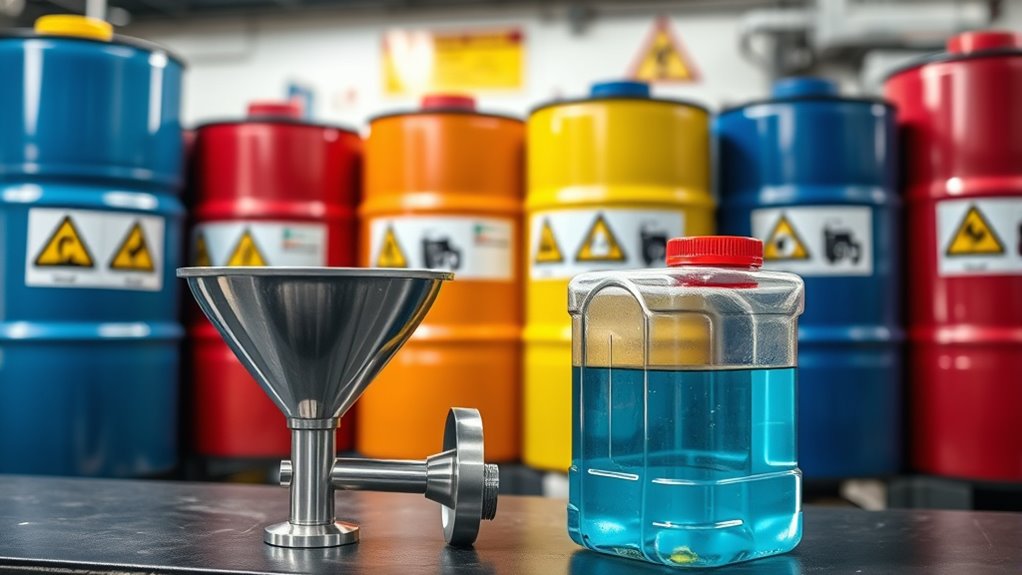
Mixing different types of fuel is generally unsafe and can cause serious problems. Fuel blending without proper knowledge can result in incompatible chemical reactions, risking engine damage or fire. You might think combining fuels saves time or money, but it compromises storage compatibility. Here’s what you should consider:
Mixing fuels can cause engine damage, fire hazards, and storage issues. Stick to one fuel type for safety.
- Engine Damage: Incorrect fuel mixes can clog filters and harm engines.
- Fire Hazards: Unintended chemical reactions can increase flammability.
- Storage Risks: Mixing fuels may lead to leaks or deterioration of containers.
- Legal Issues: Some fuel blends are regulated and mixing them could be illegal.
Always check manufacturer guidelines and stick to one fuel type for safe, reliable storage and use. Fuel blending is complex and best left to professionals.
Is It Safe to Store Large Quantities of Fuel at Home? Risks and Precautions
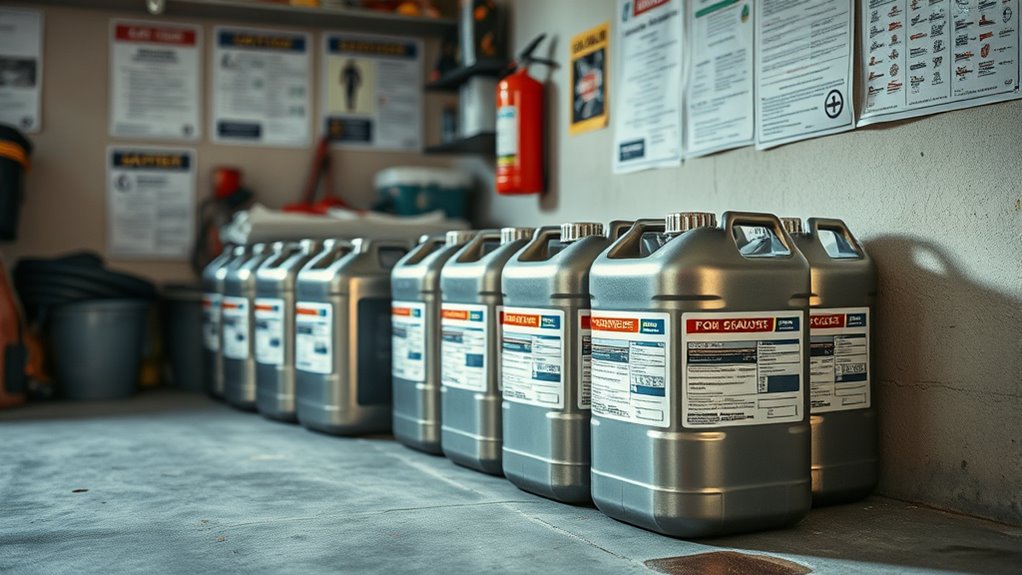
Storing large amounts of fuel at home can pose serious fire risks if not done properly. It’s essential to follow safety measures, like keeping fuel in approved containers and away from heat sources. Taking these precautions helps protect you and your property from potential accidents. Additionally, understanding the data privacy challenges associated with managing fuel inventories can help ensure safety protocols are up-to-date and compliant with regulations.
Fire Hazard Risks
Is it truly safe to store large quantities of fuel at home? The fire hazard risks are serious. Excess fuel increases the chance of dangerous fires that can spread rapidly. Consider these risks:
- Fire ignition from electrical sparks or heat sources nearby.
- Smoke development that can threaten your health and alert others too late.
- Difficulty controlling a blaze without proper fire suppression equipment.
- Explosive potential if fuel vapors accumulate or ignite unexpectedly.
- Improper storage can impair heat transfer mechanisms, increasing the risk of fire and explosion.
Storing fuel improperly can turn a small incident into a full-blown disaster. Fire suppression systems are crucial, but they don’t eliminate the risk entirely. Always be aware of the dangers and take precautions to prevent fires from starting or spreading, keeping yourself and your loved ones safe.
Proper Storage Measures
While storing large quantities of fuel at home can be convenient, it inherently carries significant risks if not done properly. To minimize danger, use appropriate storage containers designed for fuel, such as approved safety cans or drums, and ensure they are tightly sealed. Always store fuel in well-ventilated areas, meeting ventilation requirements to prevent dangerous vapor buildup. Keep containers away from heat sources, flames, and direct sunlight. Regularly inspect containers for leaks, corrosion, or damage. Label each container clearly to avoid confusion. Never store fuel inside living spaces or near combustible materials. Following these proper storage measures reduces the risk of fire, explosion, or health hazards, making your storage practices safer and compliant with safety standards. Additionally, refer to proper storage measures to ensure your practices align with recommended safety standards and avoid common hazards.
Do Fuel Additives Make Storage Safer? What the Experts Say
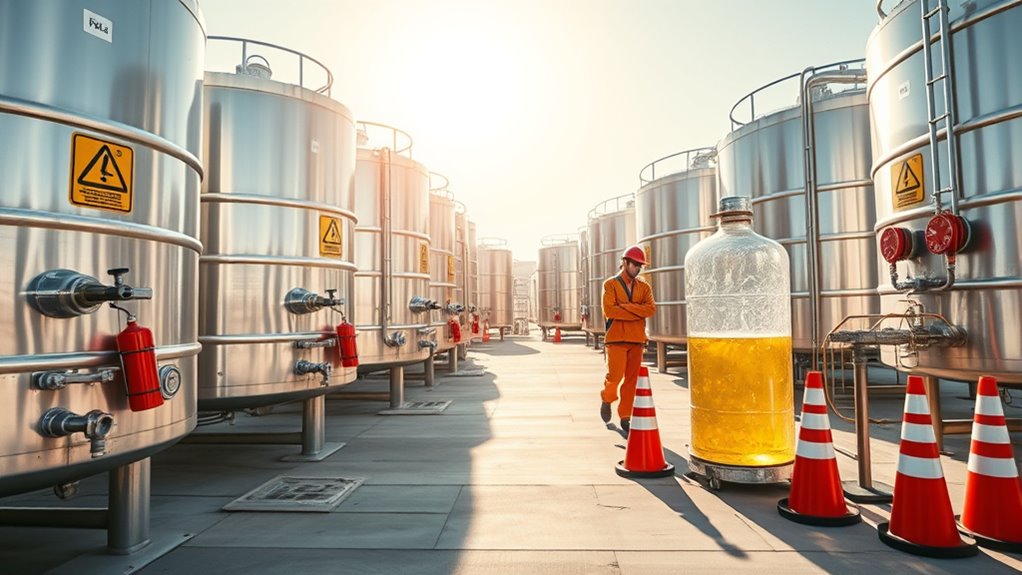
Many experts agree that fuel additives can help improve storage safety by reducing the risk of fuel degradation and phase separation. However, their effectiveness depends on factors like fuel additive efficacy and compatible storage container materials. Here’s what you should consider:
- Using the right additives can protect your fuel against microbial growth and corrosion, giving you peace of mind.
- Not all additives are created equal—some may enhance fuel stability, others may be ineffective or harmful.
- Proper selection depends on your storage conditions; consult experts to match additives with your storage environment.
- Even with additives, choosing the right storage container materials is essential to prevent leaks, corrosion, and contamination.
Informed choices boost safety and preserve your fuel’s quality over time.
Can Fuel Be Stored Indefinitely? Understanding Shelf Life and Degradation

Fuel storage isn’t a set-it-and-forget-it process; even with additives and proper containers, fuel can degrade over time. Shelf degradation occurs due to chemical reactions that reduce fuel’s quality, making it less effective and potentially damaging your equipment. The chemical stability of fuel diminishes as it ages, especially if exposed to moisture, heat, or air. Typically, gasoline lasts about 1 to 3 months, while diesel can be stored for 6 to 12 months with proper precautions. Over time, volatile compounds evaporate, and additives break down, increasing the risk of gum formation and sediment. To ensure safe storage, always use fresh fuel, keep containers sealed tightly, and rotate your fuel supply regularly. Remember, indefinite storage isn’t advisable due to ongoing chemical changes.
Are Plastic Containers Always Safe for Fuel Storage? Material Considerations

Plastic containers are popular for fuel storage because they are lightweight and inexpensive, but their safety depends heavily on the type of plastic used. Not all plastic containers are suitable for storing fuel. Material considerations are vital to prevent leaks, degradation, or dangerous fumes.
Consider these points:
- Some plastics, like HDPE, are designed to resist fuel corrosion and are safer for storage.
- Others, such as PVC, can degrade and release harmful chemicals.
- Low-quality plastics may crack or weaken over time, risking leaks.
- Always check if the container is approved for fuel storage by relevant safety standards.
Your choice of plastic containers impacts safety, so understanding material considerations is fundamental to prevent accidents and ensure safe fuel storage.
How to Properly Store Fuel for Emergencies and Long-Term Use
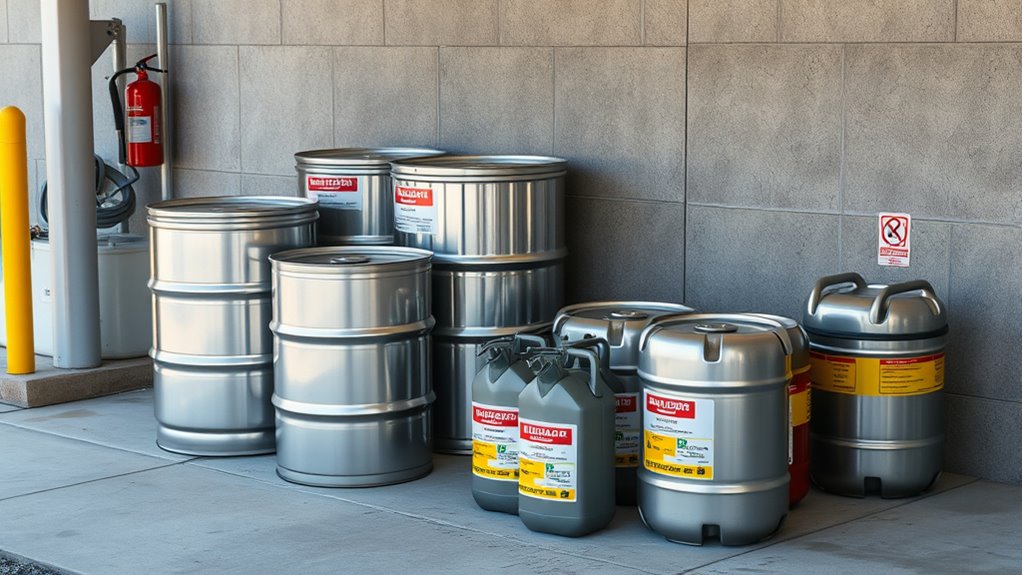
When storing fuel for emergencies or long-term use, proper preparation is vital to guarantee safety and maintain fuel quality. First, always clearly label your fuel containers with fuel type and date using fuel container labels to prevent confusion. Store fuel in approved, tightly sealed containers designed for fuel storage. Keep your containers in a cool, well-ventilated area, ideally between 50-80°F, to prevent degradation caused by excessive heat or cold. Maintain consistent storage temperature and avoid direct sunlight, which can increase pressure and risk leaks. Check your containers regularly for leaks or deterioration. Proper labeling and temperature control help make certain your fuel stays safe and effective until needed, reducing hazards and preserving fuel quality during long-term storage.
Frequently Asked Questions
What Are the Best Practices for Preventing Fuel Theft?
To prevent fuel theft, you should implement strong security measures like fencing, surveillance cameras, and lighting around storage areas. Limit access to authorized personnel only, and keep detailed logs of fuel inventory and transfers. Regularly inspect your storage sites for vulnerabilities, and use tamper-evident seals on tanks and pipes. These theft prevention strategies help deter thieves and protect your fuel assets effectively.
How Should I Dispose of Old or Contaminated Fuel Safely?
You should never pour old or contaminated fuel down drains or onto the ground. Instead, take it to a licensed fuel recycling facility, ensuring proper disposal. Before recycling, decontaminate your containers thoroughly to prevent spills or leaks. Proper disposal minimizes environmental risks and keeps your storage safe. Always follow local regulations for disposal procedures, and never attempt to burn or mix contaminated fuel yourself.
Are There Specific Storage Guidelines for Biodiesel or Ethanol Blends?
Did you know that ethanol-blended fuels can absorb water, increasing corrosion risks? For safe storage, follow specific tank regulations and guarantee your storage tank is compatible with biodiesel or ethanol blends. Use designated materials to prevent degradation or leaks, and keep containers sealed tightly. Regular inspections are essential to avoid contamination. By adhering to these guidelines, you’ll minimize hazards and maintain fuel quality, ensuring safe, compliant storage.
How Can I Detect Fuel Leaks in Storage Containers Early?
You can detect fuel leaks early through regular visual inspections, looking for signs like stains, puddles, or unusual odors around your storage containers. Conduct leak detection by closely monitoring these visual cues and checking for corrosion or damage on the container’s surface. Implement a routine inspection schedule, and act quickly if you notice anything suspicious to prevent potential hazards or environmental contamination. Consistent visual inspection is your best tool for early leak detection.
What Are the Environmental Impacts of Improper Fuel Storage?
Think of improper fuel storage as releasing poison into a delicate garden. You could cause serious environmental contamination that seeps into soil and groundwater, harming plants and animals. This careless act can lead to ecosystem damage, disrupting habitats and threatening wildlife health. By storing fuel correctly, you prevent these risks, protecting the environment and ensuring that nature’s balance remains undisturbed. Proper storage is your first line of defense against ecological harm.
Conclusion
Think of fuel storage as guarding a precious flame within a lantern—you hold the power to keep it safe or let it flicker out. By debunking myths and following safety truths, you become the keeper of that flame, ensuring it lights your path safely through any storm. Remember, proper storage isn’t just about containers; it’s about safeguarding your future, fueling hope, and illuminating your journey ahead.
Fall Picks
fall essentials
As an affiliate, we earn on qualifying purchases.