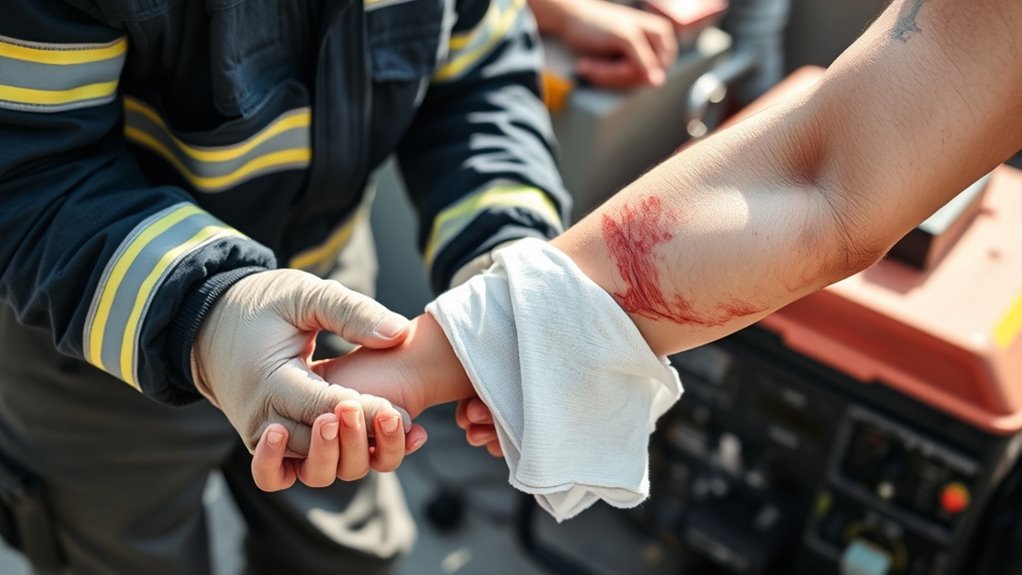

If you encounter a generator accident involving burns or electric shocks, guarantee your safety first by disconnecting power with a non-conductive object and avoiding contact with live wires. Cool burns with running water for at least 10 minutes, cover them with sterile dressings, and keep the person calm and still. Monitor breathing and pulse, and seek emergency help immediately. Staying calm and informed can make all the difference—continue to discover essential safety tips.
Listen free for 30 days with Audible
Thousands of audiobooks and originals — cancel anytime.
As an affiliate, we earn on qualifying purchases.
Key Takeaways
- Ensure scene safety and turn off the generator before approaching the victim.
- For burns, cool the area with running water for at least 10 minutes and cover with sterile dressing.
- If someone is shocked, check responsiveness, call emergency services, and perform CPR if needed.
- Avoid removing clothing stuck to severe burns and do not apply ice or ointments.
- Keep the injured person warm, monitor breathing, and prevent movement to avoid further injury.
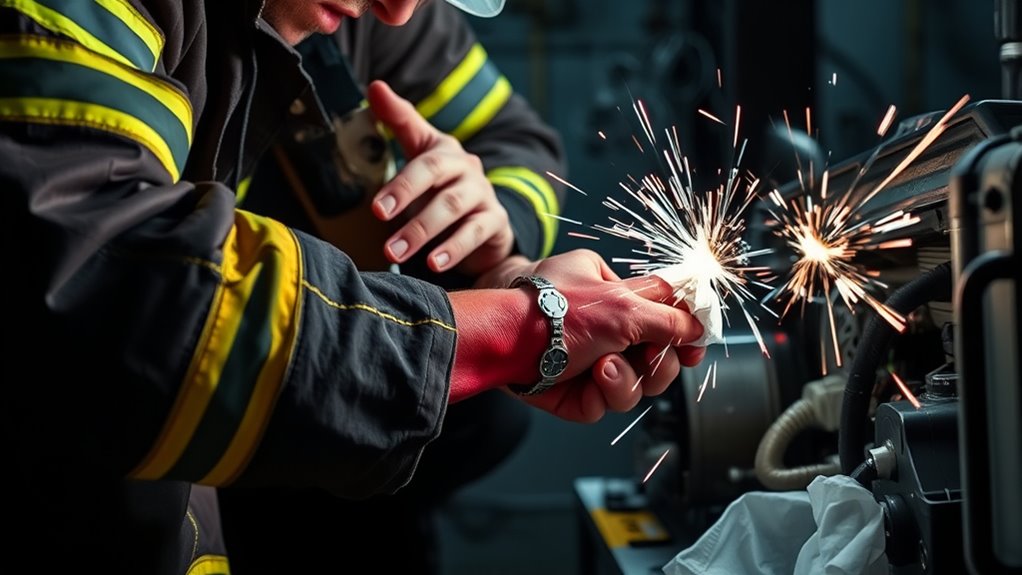
Generator accidents can happen unexpectedly, and knowing how to provide first aid can make a critical difference. When dealing with burns or electric shocks caused by generators, your immediate response can prevent further injury and even save a life. In emergency situations, staying calm and acting swiftly are essential components of effective first aid, especially when considering fire safety and your overall emergency preparedness.
First, assess the scene for safety. If a person has suffered a burn or an electric shock, guarantee the area is safe for you to approach. Turn off the generator if possible, to prevent additional shocks or fire hazards. Remember, never touch someone who is still in contact with live electrical sources. Use a non-conductive object, like a wooden stick or plastic tool, to disconnect the power if needed. Your goal is to isolate the victim from the source of the injury while safeguarding yourself.
Always ensure safety first before approaching a generator accident victim.
For burns, immediately remove any constrictive clothing or jewelry near the affected area, but do not attempt to remove clothing stuck to severe burns. Cool the burn with running cool water for at least 10 minutes to reduce pain and limit tissue damage. Avoid applying ice, creams, or ointments, as they can complicate treatment or cause infection. Cover the burn with a sterile, non-stick dressing or clean cloth to protect it from dirt and bacteria. Do not break blisters, as they provide a natural barrier against infection.
In the case of electric shocks, check the person’s responsiveness and breathing. If they are unresponsive or not breathing, call emergency services immediately and start CPR if trained. If the person is conscious, keep them calm and still, as movement can worsen internal injuries. Do not attempt to move someone severely injured unless they are in immediate danger from fire or other hazards. Keep them warm with a blanket or clothing to prevent shock. It’s essential to monitor their breathing and pulse until professional help arrives.
Throughout this process, fire safety is paramount. Guarantee there are no fire risks from damaged wiring or fuel leaks. Have a fire extinguisher nearby and know how to use it. Your emergency preparedness includes knowing the location of emergency exits, first aid supplies, and how to contact emergency services quickly. Always remember that quick, informed actions can minimize damage, prevent escalation, and keep everyone safe. Being prepared and knowledgeable about these first aid steps helps you respond effectively in generator accidents, turning a potentially dangerous situation into a manageable one.
first aid kit for electrical burns
As an affiliate, we earn on qualifying purchases.
As an affiliate, we earn on qualifying purchases.
Frequently Asked Questions
How Can I Prevent Generator Accidents in the First Place?
To prevent generator accidents, you should prioritize regular generator maintenance and guarantee all safety features are functioning properly. Always follow manufacturer instructions and check for any wear or damage. Additionally, undergo safety training to understand proper operation and hazards. Keep the generator in a dry, well-ventilated area, and never bypass safety mechanisms. These steps help you minimize risks and operate your generator safely.
What Are Signs of Electrical Shock Beyond Burns?
Like a lightning bolt striking unexpectedly, electrical shock symptoms can surprise you with muscle contractions, numbness, or tingling. Shock warning signs also include dizziness, weakness, or confusion, indicating the severity of the shock. If you notice these signs, stop all activity, seek medical help immediately, and avoid further contact with the electrical source. Recognizing these symptoms quickly can prevent serious health consequences.
When Should I Seek Medical Attention After a Generator Injury?
You should seek medical attention immediately if you experience persistent pain, numbness, or if the injury causes significant burns or electric shocks. Even if symptoms seem minor, an emergency response and medical evaluation are vital to rule out internal damage or complications. Don’t wait to see if symptoms worsen; prompt professional care ensures proper treatment and reduces the risk of long-term issues. Always err on the side of caution after a generator injury.
Are There Specific First Aid Supplies Recommended for Generator Accidents?
You should keep a well-stocked first aid kit with essential supplies like sterile dressings, burn ointment, and electric shock treatment. Always wear personal protective equipment, such as gloves and eye protection, to prevent contamination and injury. Incorporate emergency preparedness into your routine by regularly checking and updating your supplies. Being ready guarantees you can respond quickly and effectively to generator accidents, minimizing injury severity until professional help arrives.
How Do I Safely Turn off a Generator After an Accident?
Imagine your hands are on fire or shock is coursing through you like lightning—your first move is to stay calm. To safely turn off a generator after an accident, locate the emergency shutdown switch or circuit breaker immediately. Use insulated gloves if possible, and avoid touching metal parts. Prioritize generator safety by cutting power quickly and safely, preventing further injury or damage, then seek medical help right away.
As an affiliate, we earn on qualifying purchases.
Conclusion
Remember, when dealing with generator accidents, your quick action can mean the difference between a minor mishap and a major disaster. But hey, if you’re too busy admiring that shiny machine or pretending it’s not dangerous, good luck explaining that to the paramedics. So, stay alert, handle burns and shocks with care, and maybe—just maybe—think twice before treating your generator like a pet. Safety’s no joke, unless you’re aiming for an accidental fireworks show.
non-conductive wooden stick for disconnecting generator
As an affiliate, we earn on qualifying purchases.
As an affiliate, we earn on qualifying purchases.
portable fire extinguisher for home
As an affiliate, we earn on qualifying purchases.
As an affiliate, we earn on qualifying purchases.
Flea & tick season Picks
flea and tick prevention
As an affiliate, we earn on qualifying purchases.