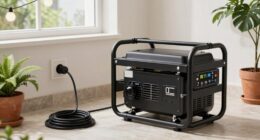
To operate your generator legally, you need to understand your local noise ordinances, which set specific decibel limits based on your zoning and time of day. Ignoring these rules can lead to fines, complaints, or shutdowns. To stay compliant, monitor noise levels with a decibel meter, implement soundproofing measures, and operate only during permitted hours. Continuing will help you learn more about how to meet these legal and community standards effectively.
Key Takeaways
- Local noise ordinances specify maximum decibel levels for generators, varying by zoning district and time of day.
- Operating generators within legal noise limits prevents fines, complaints, and potential shutdowns.
- Use soundproof enclosures and vibration-isolating pads to reduce noise emissions and ensure compliance.
- Regular noise level monitoring with decibel meters helps verify adherence to legal thresholds.
- Consult local authorities to understand specific noise restrictions and ensure lawful generator operation.
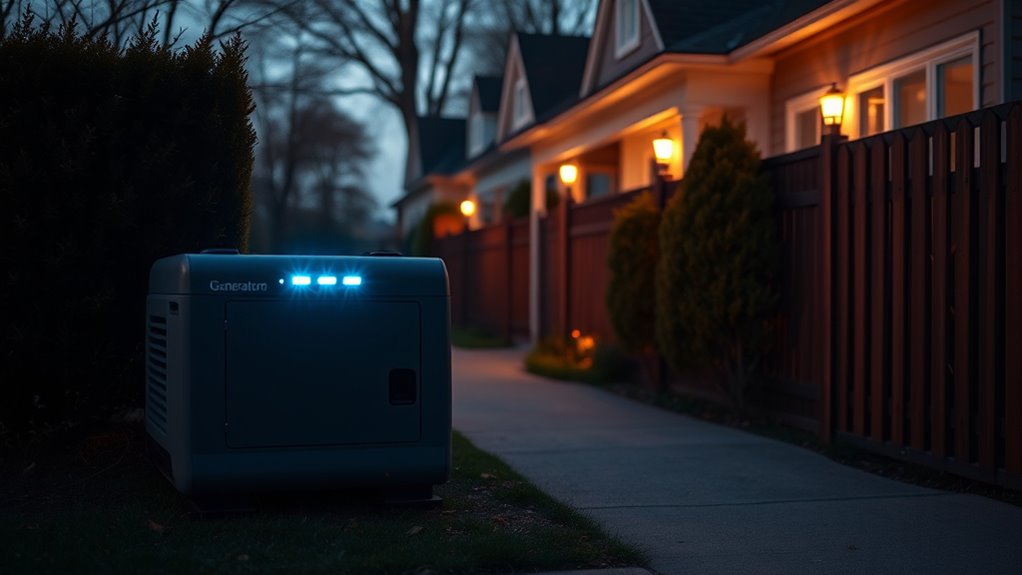
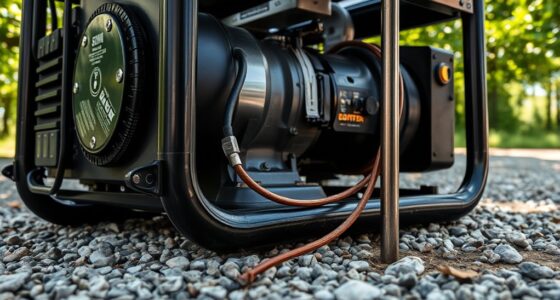
If you rely on a generator for power, understanding noise ordinances is vital to avoid legal trouble. Local regulations often set legal noise limits that specify how loud your generator can be at certain times of day or night. Ignoring these limits can result in fines, complaints, or even forced shutdowns. To stay compliant, you should consider implementing soundproofing measures around your generator. These measures can include installing enclosures, using sound-absorbing materials, or positioning your generator away from neighbors and quiet zones. Soundproofing isn’t just about minimizing noise; it’s about respecting community standards and avoiding legal issues. Additionally, implementing analytics tools to monitor noise levels can help ensure compliance with local ordinances. Knowing the legal noise limits in your area helps you operate your generator responsibly. These limits are typically measured in decibels (dB), and they vary depending on the zoning district, time of day, and local ordinances. For example, residential zones often have stricter limits during nighttime hours to prevent disturbances, while industrial zones might allow higher noise levels during working hours. Check with your city or county regulations to understand the specific thresholds applicable to your property. Operating your generator above these limits can lead to enforcement actions, so it’s important to monitor noise levels regularly. Soundproofing measures are a practical way to guarantee you stay within legal noise limits. You can start by placing your generator inside a soundproof enclosure designed to absorb and block noise. Using materials like acoustic foam, mass-loaded vinyl, or insulated panels can considerably reduce sound transmission. Position the generator on a vibration-isolating pad to minimize noise caused by vibrations. Additionally, situating your generator on the side of your property away from neighboring homes or quiet zones helps decrease the impact of noise pollution. Combining these measures not only helps you stay within legal limits but also promotes good neighborly relations. Beyond soundproofing, it’s wise to operate your generator during permissible hours and monitor noise levels with a decibel meter. Many local ordinances specify allowable noise levels for different times of day, so staying within these bounds is vital. Keep a record of your noise measurements, especially if you receive complaints or face inspections. Regular maintenance of your generator can also keep noise to a minimum, as poorly maintained equipment tends to run louder. By being proactive about soundproofing and adhering to legal noise limits, you help guarantee your generator operation remains compliant and your community remains peaceful.
Top picks for "noise ordinanc legal"
Open Amazon search results for this keyword.
As an affiliate, we earn on qualifying purchases.
Frequently Asked Questions
Can I Operate My Generator During Nighttime Hours Legally?
You can operate your generator during nighttime hours if it complies with local regulations on generator noise. Check your city or county noise ordinances, as many areas have restrictions on noise levels and hours of operation to prevent disturbances. To stay legal, confirm your generator’s noise output stays within permitted limits and consider using noise reduction methods. Always verify with local authorities to avoid fines or legal issues.
Are There Specific Noise Limits for Generators in Residential Areas?
You need to follow noise level regulations and respect residential quiet hours when operating your generator. Typically, local ordinances set specific decibel limits during designated quiet times, often at night or early mornings. To avoid violations, verify your generator’s noise output stays within permitted decibel levels, especially during residential quiet hours. Always check your city or neighborhood rules, and consider using noise-reducing equipment to maintain harmony with your neighbors.
How Do I Obtain Permits for Generator Installation and Operation?
To acquire permits for your generator installation and operation, you should verify your local government’s permit requirements and application procedures. Typically, you’ll need to submit an application form detailing your project, along with plans and specifications. Visit your city or county’s building department website or contact them directly to get specific instructions, forms, and any associated fees. Following their process ensures your generator is compliant and legally permitted.
What Are the Penalties for Violating Noise Ordinances?
Breaking noise rules is like crossing a line in the sand—you’ll face penalty fines and legal consequences that can pile up quickly. Cities take violations seriously, and fines can range from hundreds to thousands of dollars, depending on the severity. Plus, repeated infractions might lead to legal actions, including orders to cease operations. To avoid these penalties, respect noise limits and follow local ordinances carefully.
Are There Exemptions for Emergency Generator Use During Power Outages?
During power outages, emergency generator use often qualifies for exemptions under local noise ordinances. You’re typically allowed to operate your generator without penalty, provided it’s solely for emergency purposes and within specified hours. Make sure to verify your local regulations, as exemptions vary by jurisdiction. Always ensure your generator meets noise standards when in use, and use it responsibly to avoid potential legal issues once the emergency ends.
Conclusion
Managing noise ordinances can feel like walking a tightrope, but understanding local laws helps you keep harmony in your community. By respecting quiet hours and choosing considerate operation times, you avoid unwanted attention and maintain good neighborly relations. Remember, a little mindfulness goes a long way in ensuring your generator’s hum remains a gentle background melody rather than a disruptive overture. When you stay informed and respectful, everyone can enjoy the reliable power you provide without missing a beat.