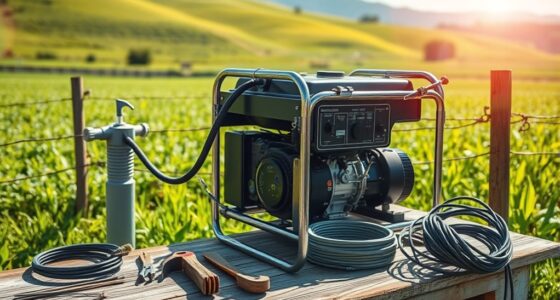
To think about generator use for your tiny home, start by evaluating your energy needs and choosing a compact, efficient model that fits your space. Consider combining a generator with solar backup to reduce reliance on fuel and increase sustainability. Make sure the generator’s capacity matches your demand to prevent overload and waste. Keep safety, regulation compliance, and efficiency in mind. If you want to know more about optimizing your energy setup, keep exploring the options.
Key Takeaways
- Assess your energy needs and choose a generator that matches your tiny home’s power requirements without overloading.
- Consider integrating solar backup systems to reduce generator use and enhance overall energy efficiency.
- Select the appropriate fuel type (gas, propane, hybrid) based on availability, cost, and environmental impact.
- Ensure compliance with local regulations and safety standards when installing and operating your generator.
- Use energy-efficient appliances and lighting to minimize generator runtime and fuel consumption.

Are you wondering if a generator is a practical power solution for your tiny home? It’s a common question, especially as more people look for reliable ways to power their small living spaces. When considering generator use, it’s essential to think about how it fits into your overall energy plan. For example, integrating a solar backup system alongside a generator can boost energy efficiency and reduce reliance on fossil fuels. Solar backup systems store energy from the sun during the day, providing a clean, sustainable power source when you need it most. This setup not only minimizes fuel consumption but also ensures you have a reliable power backup during cloudy days or extended outages. If you’re aiming for a more eco-friendly approach, combining solar with generator use can improve your energy efficiency and lower your carbon footprint.
Understanding the role of a generator in your tiny home starts with evaluating your energy needs. Tiny homes typically have limited space, which means you want a system that’s both compact and efficient. A portable generator can be a good choice for occasional use, such as running appliances during outages or when off-grid camping. However, if you plan to stay in one place for a longer period, investing in a more permanent generator setup might be smarter. It’s also worth considering fuel type—gas, propane, or hybrid systems—since each has its pros and cons for energy efficiency and convenience. Gas generators tend to be powerful but may emit more fumes, while propane options are cleaner but can be more expensive. Properly sizing your generator is also crucial to avoid overloading your system and ensuring consistent power supply. Additionally, understanding generator efficiency can help you choose a model that maximizes performance while minimizing fuel use. Being aware of fuel consumption rates can further assist in selecting the most economical option for your needs.
Choosing between portable and permanent generators depends on your stay duration and fuel preferences.
Another critical factor is how your generator complements your tiny home’s energy efficiency strategies. You want to avoid wasting fuel or overloading your system, which can lead to higher costs and unnecessary wear. Proper planning involves calculating your energy consumption and choosing a generator with enough capacity to meet your needs without excess. Incorporating energy-saving appliances and LED lighting to reduce overall demand can make your generator’s job easier and more efficient. When paired with a solar backup system, your generator can serve as a backup power source, kicking in only when solar energy isn’t enough. Additionally, using whole-home water systems can help optimize your overall energy and resource use, making your entire setup more efficient and sustainable. Being aware of regulatory considerations can also ensure your setup complies with local laws and safety standards, avoiding potential issues down the line. This approach ensures you’re using your energy resources wisely, saving money and reducing environmental impact.
As an affiliate, we earn on qualifying purchases.
Frequently Asked Questions
Can I Run My Entire Tiny Home on a Generator?
Yes, you can run your entire tiny home on a generator, but it’s essential to take into account energy efficiency and fuel consumption. Choose a generator that matches your power needs without overloading, and opt for one with high efficiency to save fuel. Regular maintenance and mindful usage help keep fuel consumption low, ensuring your tiny home stays powered without wasting resources or money. Proper planning makes generator use practical and sustainable.
What Is the Noise Level of Typical Tiny Home Generators?
Typically, tiny home generators have noise levels ranging from 50 to 65 decibels, comparable to a normal conversation or background music. The generator sound can vary depending on the model and size, but many are designed to be quiet to minimize disturbance. When choosing a generator, look for one with low noise levels to keep your tiny home peaceful and comfortable, especially if you’re in a quiet or shared environment.
How Often Should I Perform Maintenance on My Generator?
You should perform maintenance on your generator every 50 to 100 hours of use or at least once a year, whichever comes first. While this might seem frequent, neglecting it can reduce fuel efficiency and cause breakdowns. Regular maintenance guarantees peak performance and longevity, especially in a tiny home where reliability is vital. Stick to a consistent maintenance schedule, check oil levels, and replace filters to keep your generator running smoothly.
Are Solar-Powered Generators a Good Alternative?
Yes, solar-powered generators are a great alternative, especially if you’re aiming for renewable energy. They typically include battery storage, so you can store excess solar power for later use. These generators are quiet, eco-friendly, and cost-effective over time. While initial setup might be pricey, they reduce reliance on fuel and minimize maintenance. Overall, solar-powered generators suit tiny homes well, offering sustainable energy without the noise and emissions of traditional generators.
What Safety Precautions Are Necessary When Using a Generator?
When using a generator, you need to prioritize safety by handling fuel carefully to prevent fires or spills. Always store fuel in approved containers and refuel only when the generator is off and cooled down. Guarantee proper ventilation to avoid dangerous carbon monoxide buildup inside your tiny home. Keep a carbon monoxide detector nearby, and never run the generator indoors or in enclosed spaces. These precautions help keep you safe while enjoying your power source.
solar backup system for tiny homes
As an affiliate, we earn on qualifying purchases.
As an affiliate, we earn on qualifying purchases.
Conclusion
In the end, choosing a generator for your tiny home depends on your power needs and lifestyle. Did you know that portable generators can provide reliable backup power for up to 12 hours? This means you can enjoy off-grid living without sacrificing comfort or safety. By understanding your energy demands and selecting the right generator, you’ll guarantee your tiny home remains a cozy, functional retreat—no matter where your adventures take you.
propane generator for tiny homes
As an affiliate, we earn on qualifying purchases.
As an affiliate, we earn on qualifying purchases.
compact energy-efficient appliances for tiny homes
As an affiliate, we earn on qualifying purchases.
As an affiliate, we earn on qualifying purchases.