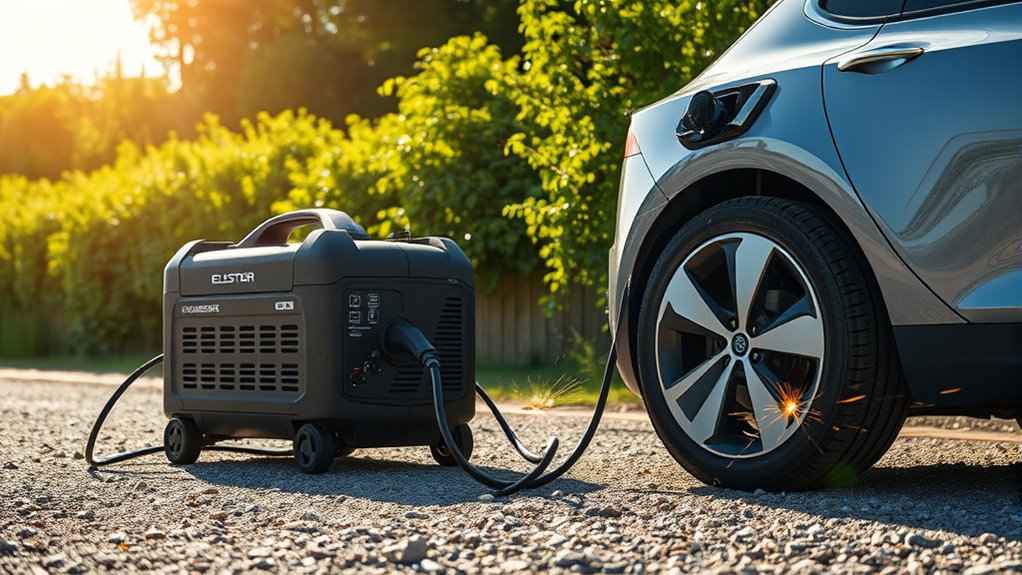

Running an electric car charger with a generator is feasible if you guarantee the generator provides a clean, stable power output that matches the charger’s needs. You’ll need to select a generator with enough capacity to handle the charging rate, avoiding overloads or damage. While generators can be used, combining solar power with grid access often offers a more sustainable and quieter solution. To discover the best setup for your situation, keep exploring the key considerations involved.
Key Takeaways
- Yes, generators can power EV chargers if they provide clean, stable, and sufficient AC output matching the charger’s power needs.
- Ensure the generator’s capacity aligns with the charger’s wattage requirements to prevent overload or damage.
- Combining solar power with a generator offers a renewable, reliable, and flexible charging solution, especially off-grid.
- Generators may produce noise and emissions; proper placement and environmental considerations are essential.
- Using a generator as a backup ensures reliable EV charging during grid outages or in remote locations.
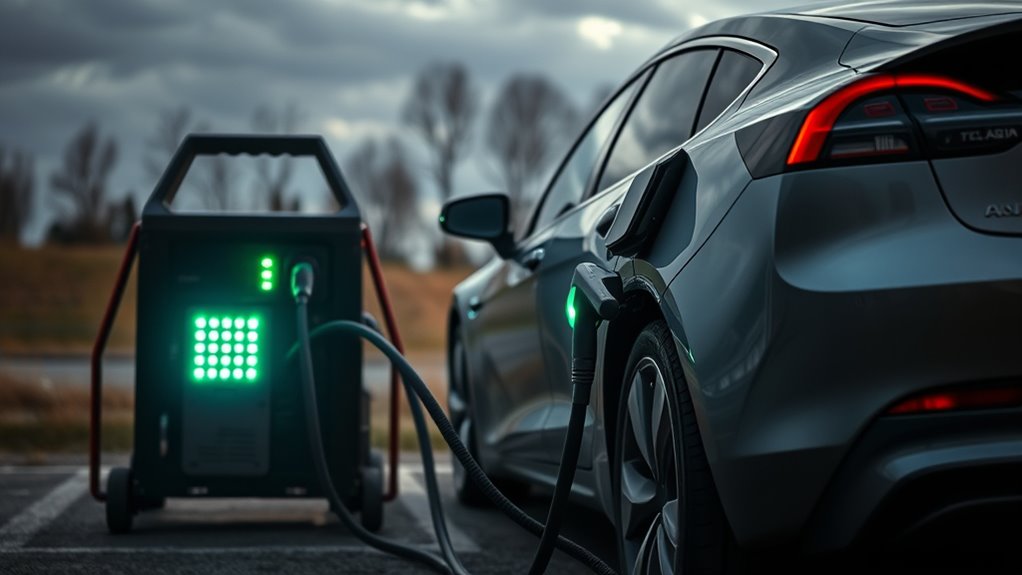
As electric vehicles become increasingly popular, having a reliable charging solution is more important than ever. If you’re considering running your electric car charger with a generator, you might wonder if it’s a practical choice. The feasibility depends on several factors, including your energy source options like solar power and your connection to the grid. Using a generator can offer flexibility, especially in remote areas or during power outages, but it’s essential to understand the limitations and best practices.
First, think about how solar power can complement or even replace generator use. Solar panels can provide a sustainable and cost-effective way to charge your electric vehicle, especially if you have a dedicated system installed. With solar power, you can generate electricity during the day and store excess energy in batteries for nighttime charging. This setup reduces reliance on fuel-powered generators and minimizes environmental impact. However, solar power alone might not always meet your immediate charging needs, especially if sunlight is limited or if you need to charge quickly. In such cases, combining solar with a generator as a backup can ensure you always have a reliable power source.
Next, consider how your electric car charger interacts with the grid connection. When connected to the grid, you have access to a stable and continuous power supply, making charging straightforward and efficient. However, if you’re off-grid or want to reduce dependence on the grid, a generator becomes more relevant. Generators can supply the necessary electricity when solar isn’t enough, but they typically produce AC power that must be properly converted for EV charging. Many modern chargers are compatible with generator power, but you need to guarantee the generator provides a clean, stable output to prevent damage to your vehicle or charger.
Running an electric car charger with a generator also involves understanding power capacity and efficiency. Generators have limited output, so you must match their capacity with your charging needs. Overloading a generator can cause it to shut down or damage your equipment. Additionally, generators produce noise and emissions, which might be concerns depending on your location. If you’re aiming for a more eco-friendly setup, integrating solar power with a grid connection provides a cleaner and more sustainable solution, but a generator can be a valuable backup in less sunny conditions. Moreover, understanding the importance of power quality can help you select the right generator and ensure safe, reliable charging.
Frequently Asked Questions
Can All Electric Car Chargers Be Powered by a Generator?
Not all electric car chargers can be powered by a generator. You need to check the charger’s power requirements and confirm your portable power source or generator is compatible. Some fast chargers demand high wattage, which many generators can’t reliably supply. It’s crucial to verify generator compatibility and make sure it can handle the charger’s power needs, especially for Level 2 chargers that require more energy.
What Are the Safety Measures for Using a Generator With an Electric Car Charger?
Using a generator with an electric car charger is safer when you follow essential precautions. You need to guarantee proper grounding to prevent electric shocks and avoid overload protection to safeguard against power surges that could fry your equipment. Think of grounding as a safety net and overload protection as a shield. Always double-check connections, stay within the generator’s capacity, and follow manufacturer instructions to keep yourself and your vehicle safe from harm.
How Does Generator Size Affect Charging Efficiency?
Your generator capacity directly influences charging speed; a larger capacity allows for higher power output, which means faster charging. If your generator is underpowered, it may struggle to supply enough energy, resulting in slower charging times or even interrupted sessions. To optimize efficiency, choose a generator with sufficient capacity to meet your electric car charger’s power requirements, ensuring smooth, quick charging without risking overload or damage.
Are There Specific Generator Types Recommended for Electric Vehicle Charging?
Think of your generator as a reliable partner that needs the right fit. For EV charging, you should choose a generator with high power output requirements and compatible with your charger’s needs. Look for inverter generators, as they provide clean, stable power suitable for sensitive electronics. Ensuring generator compatibility means selecting one that can handle your charger’s wattage demands, so your EV charges smoothly without interruptions or damage.
What Are the Long-Term Costs of Using a Generator for Charging?
Using a generator for charging your electric car involves ongoing costs like fuel, maintenance, and potential repairs, which can add up over time. A thorough cost analysis reveals it might be more expensive than grid power, especially with frequent use. Additionally, consider the environmental impact, as generators emit pollutants and greenhouse gases, making them less eco-friendly compared to renewable energy sources.
Conclusion
Think of running an electric car charger with a generator like tending a campfire in the wild. When you supply the right amount of fuel and care, the flames stay steady, powering your journey ahead. But neglect the basics, and the fire flickers out. While it’s possible to keep your EV charged this way, it’s like walking a tightrope—balance is key. With careful planning, you’ll keep your energy flowing smoothly, no matter where your adventure takes you.