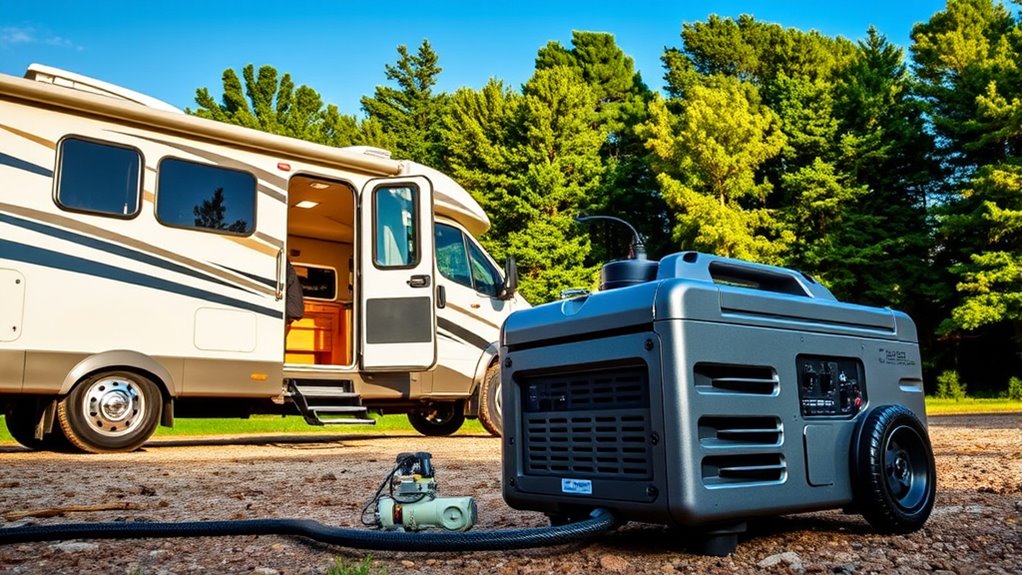

To choose the right generator for your motorhome, you need to determine your total power needs by adding up the wattage of all appliances and devices you’ll use simultaneously, including startup surges. Consider how solar panels and inverters can reduce your dependence on the generator, but remember that high-demand appliances still need reliable backup power. Balancing capacity, efficiency, and future upgrades ensures smooth operation—continue exploring to get detailed strategies for selecting the best generator for your setup.
Key Takeaways
- Calculate total wattage of all appliances and devices, including surge wattage, to determine generator size.
- Consider solar panel contribution to reduce generator reliance, but ensure generator capacity handles peak loads.
- Select a generator rated slightly above your maximum combined wattage for reliable operation and future upgrades.
- Proper inverter sizing is essential to handle peak power demands and efficiently convert solar or battery energy.
- Balance generator size, portability, and fuel efficiency to meet current needs and accommodate potential power system expansions.
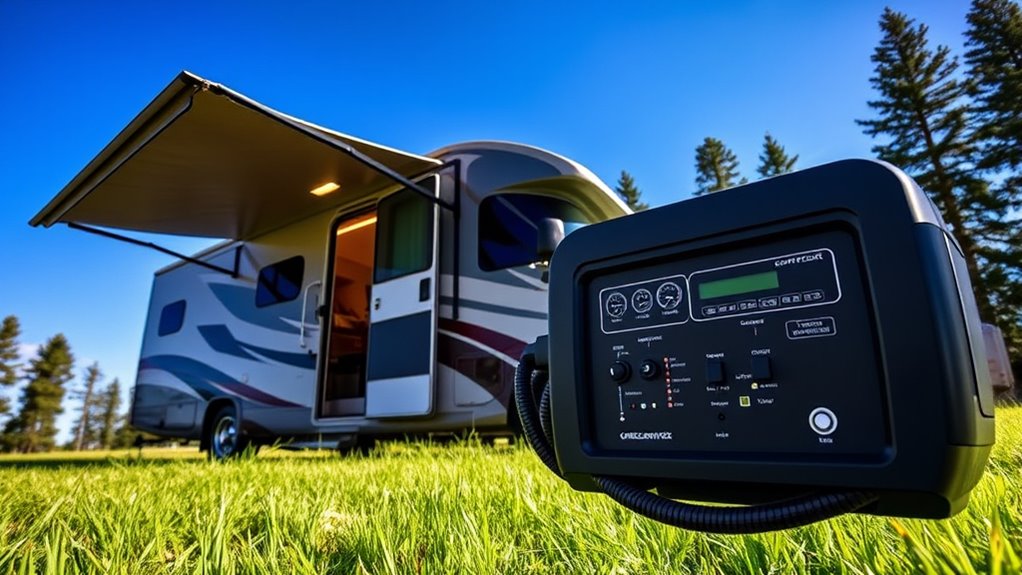
Ever wondered how much power your RV truly needs to keep everything running smoothly? Understanding your power requirements is the first step in choosing the right generator. It’s not just about the size of the generator but also about how you plan to supplement your power sources. For instance, solar panels are a popular addition for RV owners seeking sustainable energy. When considering solar panels, you need to think about how much energy they can generate and how that impacts your overall power needs. Solar panels reduce reliance on generators, but they don’t eliminate the need for one, especially if you want to run high-demand appliances or multiple devices simultaneously. To make the most of solar power, you’ll want to carefully consider inverter sizing. The inverter converts DC power from your solar panels or batteries into AC power used by your appliances. If your inverter isn’t properly sized, it might not handle your peak power demands, leading to system inefficiencies or even damage. A larger inverter can handle higher loads, but it also consumes more power when idle, so balance is key. To figure out the right inverter size, list out all the appliances and devices you plan to use at the same time, then add up their wattage. This total gives you a baseline for your inverter capacity. Keep in mind, surge wattage— the temporary spike when appliances start up—is also important and should be factored in. Once you know your inverter size, you can determine your overall power needs, which influences the generator size you’ll need. A generator must be capable of handling your maximum load comfortably, with some extra capacity for startup surges. If your appliances draw a combined 3,000 watts, aim for a generator rated slightly above that, say 3,500 to 4,000 watts, to ensure reliable operation. Don’t forget to factor in future upgrades or additional devices. While smaller generators are cheaper and more portable, they might not provide enough power for your entire setup, leading to inconvenience or reliance on extension cords and other makeshift solutions. Larger generators offer more flexibility but are heavier, louder, and more expensive. Striking a balance between size, power, and portability is essential. Ultimately, understanding your power needs—including your solar panel output and inverter sizing—helps you select a generator that offers reliable, efficient performance without excess fuel consumption or noise. Additionally, home energy management can help optimize your power usage, making your RV setup even more efficient and stress-free for your adventures.

Champion Power Equipment 4000-Watt RV Ready Portable Inverter Generator with Quiet Technology and CO Shield
At less than 49 pounds, this inverter is one of the lightest 4000-watt inverters in the industry
As an affiliate, we earn on qualifying purchases.
As an affiliate, we earn on qualifying purchases.
Frequently Asked Questions
How Often Should I Service My RV Generator?
You should service your RV generator every 150 to 200 hours of use or at least once a year, whichever comes first. Follow the maintenance schedules in your owner’s manual to keep it running efficiently. Regular maintenance helps improve fuel efficiency and extends the life of your generator. Don’t forget to check oil levels, filters, and spark plugs during each service to guarantee peak performance on your adventures.
Can I Run My Generator While Driving?
Think of your generator as a trusted co-pilot—you can run it while driving, but only if your RV’s manufacturer approves. Doing so means you need to prioritize generator maintenance and monitor fuel efficiency, ensuring it runs smoothly without overtaxing your system. Always check your owner’s manual, as not all generators are designed for continuous operation during travel. Proper care keeps your journey safe and hassle-free.
What Is the Noise Level of Different Generators?
Generator noise varies depending on the model, but most fall between 50 to 70 decibel levels. Quiet generators produce around 50-60 decibels, comparable to a normal conversation, making them ideal for peaceful camping. louder models, exceeding 70 decibels, can be quite noticeable and disruptive. When choosing a generator, consider the decibel levels and your tolerance for noise so you can enjoy your trip without unnecessary disturbances.
How Do I Prevent Carbon Monoxide Poisoning?
Preventing carbon monoxide poisoning is essential, like guarding a treasure chest. Always run your generator outdoors, away from windows and vents, to avoid carbon monoxide dangers. Use a carbon monoxide detector inside your RV, and test it regularly. Follow generator safety tips, such as turning off the generator before sleeping and never operating it in enclosed spaces. These precautions keep you safe from silent, deadly carbon monoxide fumes.
Is a Portable or Built-In Generator Better for My RV?
A built-in generator is often better because it offers ideal generator placement, reducing noise and improving safety, while also being more fuel-efficient since it’s designed to work seamlessly with your RV’s systems. Portable generators are convenient for quick use and easy storage, but they may not be as fuel-efficient or safe in terms of placement. Choose based on how often and where you’ll use it, prioritizing safety and efficiency.

ECO-WORTHY 200 Watts 12 Volt/24 Volt Solar Panel Kit with High Efficiency Monocrystalline Solar Panel and 30A PWM Charge Controller for RV, Camper, Vehicle, Caravan and Other Off Grid Applications
[Wide Application]: Daily Output 800wh/day under 4 hours full sunshine condition. Perfect for RV, Caravan, Marine, Camper, Electric…
As an affiliate, we earn on qualifying purchases.
As an affiliate, we earn on qualifying purchases.
Conclusion
Choosing the right generator guarantees you stay powered up wherever your adventures take you. Did you know that over 60% of RV owners experience power outages at some point on their trips? By selecting a generator that meets your needs, you avoid unexpected disruptions and enjoy a smoother journey. Remember, investing in the proper power source keeps your RV comfortable, safe, and ready for any adventure ahead. Power smart, and camp confidently!

LANDERPOW 3000 Watt Pure Sine Wave Inverter 12V DC to 120V AC for RV, Truck, Solar, Home, Off-Grid, Power Inverter with 3 AC Outlet, 30W USB-C, 5V 3.1A USB, Hardwire Port, Remote Control, Surge 6000W
【𝟑𝟎𝟎𝟎 𝐖𝐚𝐭𝐭 𝐈𝐧𝐯𝐞𝐫𝐭𝐞𝐫】— This pure sine wave inverter can provide 3000W continuous clean DC to AC power (6000W…
As an affiliate, we earn on qualifying purchases.
As an affiliate, we earn on qualifying purchases.

WEN Quiet and Lightweight 4800-Watt RV-Ready Portable Inverter Generator with Fuel Shut Off (56477i)
224cc engine generates up to 4800 surge watts and 4000 rated watts
As an affiliate, we earn on qualifying purchases.
As an affiliate, we earn on qualifying purchases.