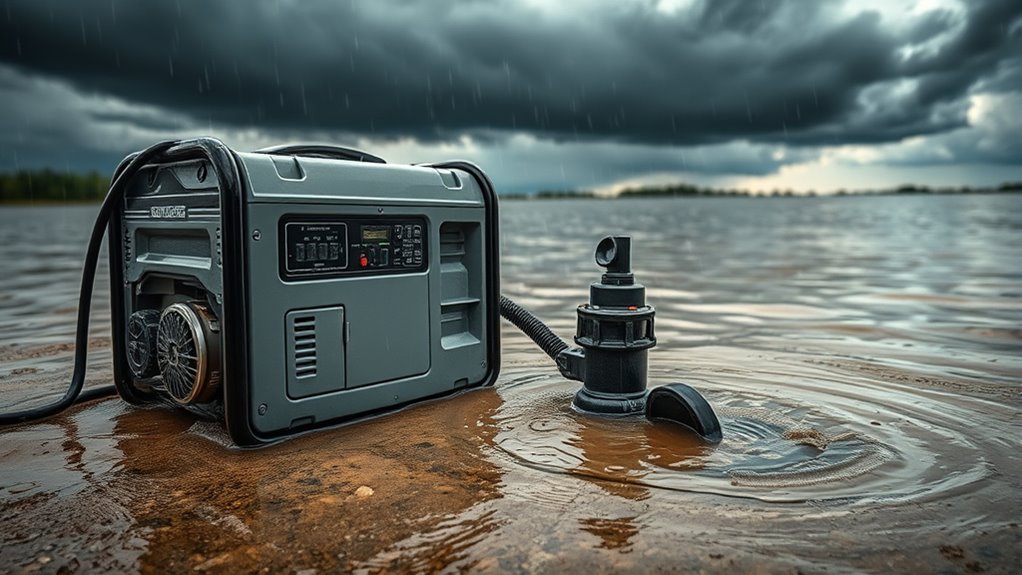
To use a generator for your sump pump during a flood, make sure it’s placed outdoors in a well-ventilated area away from windows and vents. Test your generator beforehand and use outdoor-rated extension cords to connect your sump pump safely. Always follow manufacturer instructions, turn off and disconnect the generator before maintenance, and never run it indoors. Ensuring proper setup and safety precautions can protect your home—if you continue, you’ll discover essential tips to do it right.

Get backup power and energy gear delivered free — and shop member deals
- Fast, free delivery on millions of items
- Access to Prime Big Deal Days deals on October 6–7
- Prime Video, Amazon Music and more included
Key Takeaways
- Test your generator beforehand to ensure reliable power for your sump pump during floods.
- Position the generator outdoors, away from windows and vents, to avoid harmful fumes entering your home.
- Use a transfer switch or heavy-duty outdoor extension cords to connect the generator safely to your sump pump.
- Turn off and disconnect the generator before performing maintenance or refueling to prevent accidents.
- Regularly maintain and store extra fuel and supplies to ensure the generator operates effectively during floods.
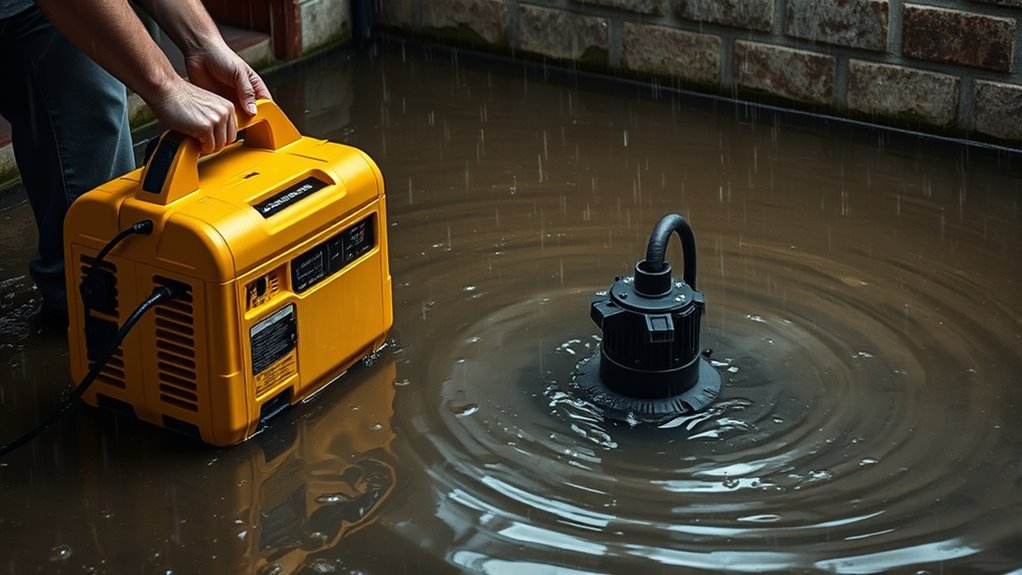
During a flood, your sump pump is vital for preventing water damage, but it needs a reliable power source to keep working when the power goes out. Using a generator for your sump pump is a smart solution, but it’s essential to prioritize generator safety and guarantee your emergency preparedness plans are in place. Before you even experience a flood, take the time to understand how to operate your generator properly and safely. This means reading the manufacturer’s instructions carefully and making sure your generator is maintained regularly. A well-maintained generator reduces the risk of malfunctions that could lead to dangerous situations, such as carbon monoxide poisoning or electrical fires.
Preparing your generator properly and safely is essential for flood protection and emergency readiness
When it comes to emergency preparedness, you should always have your generator ready and tested before a storm hits. Keep it in a well-ventilated outdoor area, away from windows, vents, or any openings that could allow toxic fumes to enter your home. Never run a generator indoors or in a garage, even with the door open—carbon monoxide can build up quickly and pose serious health risks. Position your generator on a flat, stable surface to prevent tipping, and connect it to your sump pump using heavy-duty extension cords rated for outdoor use. Make sure these cords are in good condition, free of cuts or frays, to avoid electrical hazards.
It’s wise to have a transfer switch installed by a qualified electrician, which allows you to safely connect your generator directly to your home’s electrical system. This setup minimizes the risk of backfeeding, which could endanger utility workers or damage your equipment. Always turn off your generator and disconnect it before performing any maintenance or refueling. Use fresh fuel and keep it stored in approved containers, and never operate the generator while refueling—wait until it cools down.
Being prepared also means having a plan for what to do if your generator fails or runs out of fuel. Keep extra supplies, like extension cords, fuel, and maintenance tools, on hand. Practice starting your generator regularly so you’re confident in your ability to get it running when flooding occurs. Remember, a generator is a valuable tool for protecting your home, but only when used safely and correctly. Prioritize generator safety and emergency preparedness to ensure your sump pump can operate effectively during a flood, giving you peace of mind when you need it most. Additionally, understanding the importance of proper sizing and placement of your generator can enhance its effectiveness and safety during power outages.
As an affiliate, we earn on qualifying purchases.
Frequently Asked Questions
How Long Can a Generator Run Continuously During a Flood?
You can typically run your generator continuously for 8 to 12 hours, depending on its power capacity and fuel consumption. Keep in mind that larger capacity models consume more fuel but can run longer. To guarantee safety and avoid overheating, monitor your generator regularly and refuel as needed. Always follow the manufacturer’s guidelines for continuous operation, and consider using a fuel stabilizer to extend runtime during prolonged floods.
What Safety Precautions Are Essential When Operating a Generator Outdoors?
Think of generator safety as your shield in a storm. When operating outdoors, always keep your generator on a dry, flat surface away from water, and never use it indoors or in enclosed spaces. Use grounded outlets, connect only necessary appliances, and wear protective gear. Regularly inspect cords and connections to prevent sparks. By following these outdoor operation safety tips, you keep yourself safe while powering through the flood.
Can a Portable Generator Power Multiple Sump Pumps Simultaneously?
Yes, a portable generator can power multiple sump pumps simultaneously if it has enough capacity. You’ll need to contemplate power management carefully, ensuring the generator’s wattage can handle the combined load. Use heavy-duty extension cords and avoid overloading the generator. Always check your generator’s specifications, and consider running pumps one at a time if power limits are tight, to prevent tripping breakers or damaging equipment.
How Do I Ensure My Generator Is Properly Grounded?
Think of your generator as a mighty tree needing strong roots. To guarantee proper grounding, you follow grounding techniques like connecting the generator’s grounding wire to a grounding rod or a grounded electrical system. This keeps electrical safety in check, preventing shocks or fires. Always check your generator’s instructions and use a grounding rod if needed. Proper grounding is essential for safety during power outages and flood emergencies.
What Maintenance Is Required for a Generator Used During Floods?
You should regularly check your generator’s oil, filters, and spark plugs to keep it running efficiently during floods. Keep it clean and dry to prevent rust and damage. Test run the generator periodically to monitor noise levels and fuel efficiency, ensuring it’s ready when needed. Also, store extra fuel safely and follow manufacturer maintenance schedules to extend the generator’s lifespan and reliability in emergencies.
heavy-duty outdoor extension cords
As an affiliate, we earn on qualifying purchases.
As an affiliate, we earn on qualifying purchases.
Conclusion
Using a generator for your sump pump during a flood is like having a reliable lifeline in stormy waters. It keeps your basement dry and prevents costly water damage, giving you peace of mind when you need it most. Make sure your generator is ready to go before a flood hits, so you’re not caught off guard. With a little preparation, you can face the floodwaters confidently, knowing your home is protected like a fortress.
As an affiliate, we earn on qualifying purchases.
portable generator for flood backup
As an affiliate, we earn on qualifying purchases.
As an affiliate, we earn on qualifying purchases.
Fall Picks
fall essentials
As an affiliate, we earn on qualifying purchases.