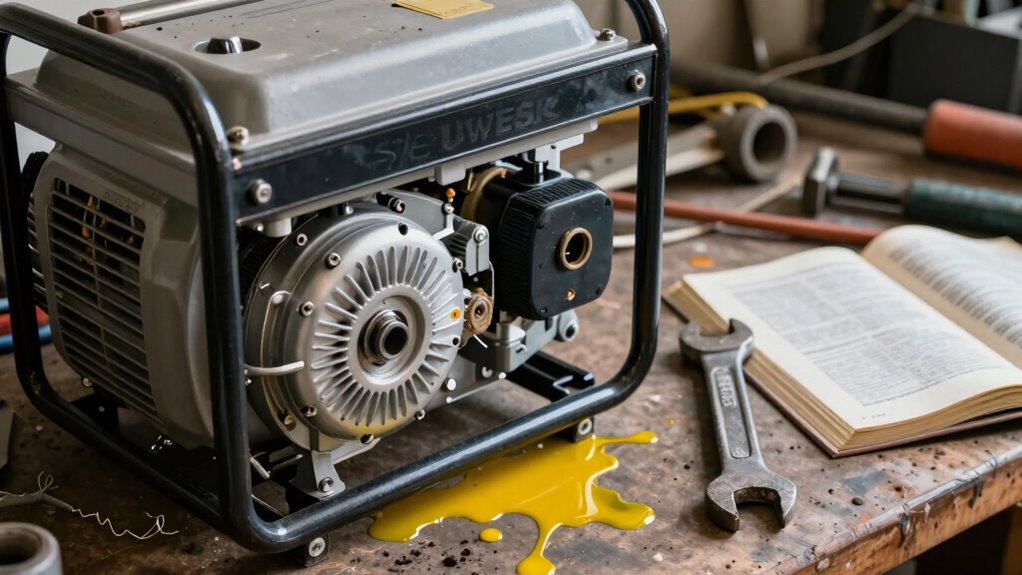

Many new generator owners miss essential tasks like checking and changing the oil, inspecting and cleaning the air filter, and ensuring the spark plug is properly gapped and clean. They also often overlook stabilizing fuel for storage and routinely exercising the generator to detect issues early. Proper placement in a ventilated, sound-absorbing area is vital too. Staying on top of these basics can prevent breakdowns and keep your generator running smoothly. Keep going to learn more tips.

Get backup power and energy gear delivered free — and shop member deals
- Fast, free delivery on millions of items
- Access to Prime Big Deal Days deals on October 6–7
- Prime Video, Amazon Music and more included
Key Takeaways
- Forgetting to check and change the oil for optimal engine performance and longevity.
- Overlooking the air filter, leading to reduced fuel efficiency and increased noise.
- Not inspecting or replacing the spark plug, risking misfires and engine damage.
- Failing to clean or inspect the exhaust system, causing buildup and noise issues.
- Neglecting proper placement and routine exercise to prevent debris clogging and early wear.
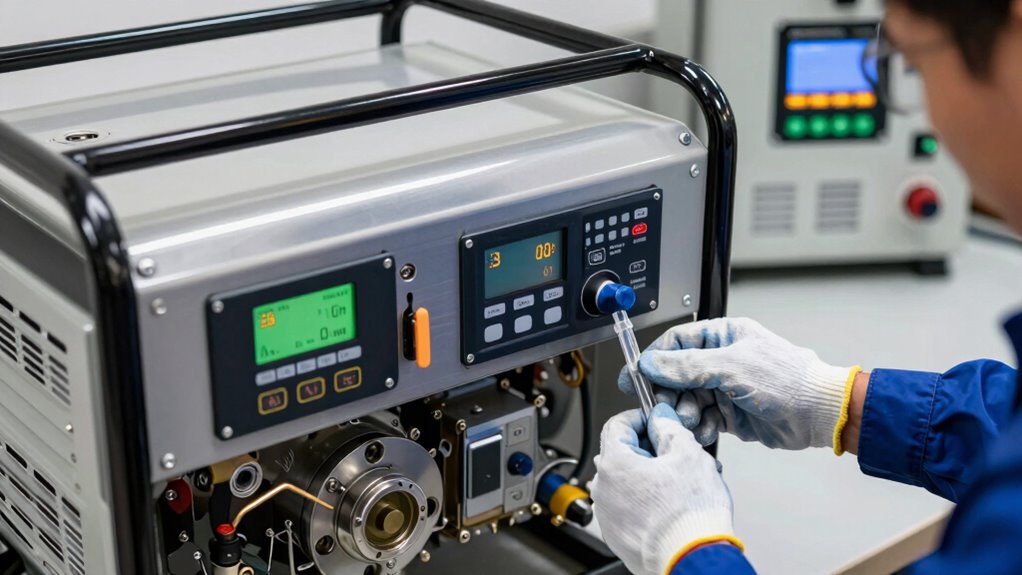
Getting your new generator ready for use involves more than just plugging it in. You need to take some initial steps to guarantee it runs smoothly and efficiently. One of the first things many overlook is checking the oil level and changing it if necessary. Fresh oil is essential for maximum fuel efficiency, helping your generator run more smoothly and conserving fuel over time. When you neglect this, you risk premature engine wear, which can lead to costly repairs down the line. Once you’ve confirmed the oil is at the proper level, take a moment to inspect the air filter. A clean air filter improves fuel efficiency by allowing the engine to breathe properly, reducing unnecessary fuel consumption. A clogged filter can cause your generator to work harder, waste fuel, and generate more noise than necessary.
Check and change the oil, then inspect the air filter for optimal generator performance and efficiency.
Another common mistake is ignoring the significance of proper fuel storage. New owners often assume that fuel remains good indefinitely, but stale fuel can cause starting issues and inefficient operation. Make sure you use fresh fuel and consider adding a fuel stabilizer if you plan to store it for a while. This simple step helps maintain fuel quality, which in turn keeps your generator running at peak fuel efficiency. Additionally, don’t forget to check the spark plug for signs of wear or carbon buildup. A clean, properly gapped spark plug ensures smooth ignition, which improves overall operation, reduces fuel consumption, and minimizes noise during startup and running. Proper spark plug maintenance can also prevent misfires that might otherwise damage the engine over time.
Many new owners also miss the importance of proper exhaust maintenance. A clogged or dirty exhaust system can lead to increased noise levels and reduced efficiency. Regularly inspecting and cleaning the exhaust to prevent buildup that could cause the engine to work harder is crucial, as it also helps maintain optimal exhaust system performance. It is also beneficial to run the generator periodically, even if you don’t need it, to keep all parts lubricated and in good working order. This routine exercise helps identify potential issues early, saving you time and money later. Additionally, understanding generator maintenance and adhering to it can significantly extend the lifespan of your equipment. Proper maintenance routines also help prevent unexpected breakdowns that can be costly and inconvenient.
Furthermore, paying attention to the manufacturer’s guidelines for your specific model ensures you follow the recommended maintenance intervals and procedures. Remember, a well-maintained generator not only runs more efficiently but also lasts longer, making it a valuable investment. Finally, don’t overlook the importance of securing the generator in a proper location. A well-ventilated, sound-absorbing area helps with noise reduction, making operation more tolerable for you and your neighbors. Proper placement also prevents debris or dirt from clogging crucial components, ensuring your generator remains efficient and quiet. By paying attention to these often-missed first maintenance tasks—checking oil, filters, spark plugs, fuel, and proper placement—you set your generator up for reliable, efficient, and quieter operation for years to come.
As an affiliate, we earn on qualifying purchases.
Frequently Asked Questions
How Often Should I Replace the Generator’s Oil After Initial Setup?
You should replace the generator’s oil and filter roughly every 50 to 60 hours of operation or at least once a year, whichever comes first. Regular oil changes help keep your generator running smoothly and prevent engine damage. Be sure to check the oil level frequently and replace the oil filter during each oil change to guarantee clean oil circulation. Proper maintenance keeps your generator reliable when you need it most.
What Are Signs My Generator Needs Immediate Maintenance?
If your generator stalls unexpectedly, makes strange noises, or produces unusual vibrations, it’s time for immediate maintenance. Check fuel stability—if fuel appears stale or contaminated, replace it. Also, verify storage precautions are followed: keep the unit in a dry, well-ventilated space, and inspect for corrosion or leaks. These signs indicate your generator needs quick attention to keep it running smoothly and reliably.
Is It Necessary to Run the Generator Regularly to Keep It Functional?
Yes, you need to run your generator regularly to keep it functional. Regular runs help prevent fuel from stagnating and clogging the system, especially if you store fuel for long periods. It also keeps the battery charged and in good condition, avoiding costly replacements. By routinely starting the generator, you guarantee all components stay lubricated and ready to perform when you really need it.
How Do I Check the Fuel Quality Before First Use?
To check the fuel quality before first use, start with a fuel testing kit to assess for contamination or water. Perform a quality inspection by examining the fuel’s appearance; it should be clear and free of sediments. Smell the fuel for any sour or strange odors, which indicate degradation. If in doubt, consider replacing old or questionable fuel with fresh, high-quality fuel to guarantee the best generator performance and prevent potential issues.
Are There Specific Environmental Conditions That Affect Initial Maintenance?
Environmental factors and storage conditions directly impact your generator’s initial maintenance. You should check for moisture, dust, and extreme temperatures, as these can cause corrosion or degrade parts. Store your generator in a dry, covered area with good ventilation, and avoid exposure to weather elements. Regularly inspect the environment and storage conditions before starting, ensuring your generator remains in ideal condition for reliable operation when needed.
air filter for portable generator
As an affiliate, we earn on qualifying purchases.
As an affiliate, we earn on qualifying purchases.
Conclusion
Don’t overlook these initial maintenance tasks; skipping them can lead to costly breakdowns later. It’s understandable to feel overwhelmed at first, but taking the time to perform basic checks guarantees your generator stays reliable when you need it most. Regular maintenance isn’t just a chore—it’s an investment in its longevity and performance. So, stay proactive, follow the recommended steps, and rest easy knowing your generator is ready to serve you whenever power outages strike.
As an affiliate, we earn on qualifying purchases.
As an affiliate, we earn on qualifying purchases.
Fall Picks
fall essentials
As an affiliate, we earn on qualifying purchases.