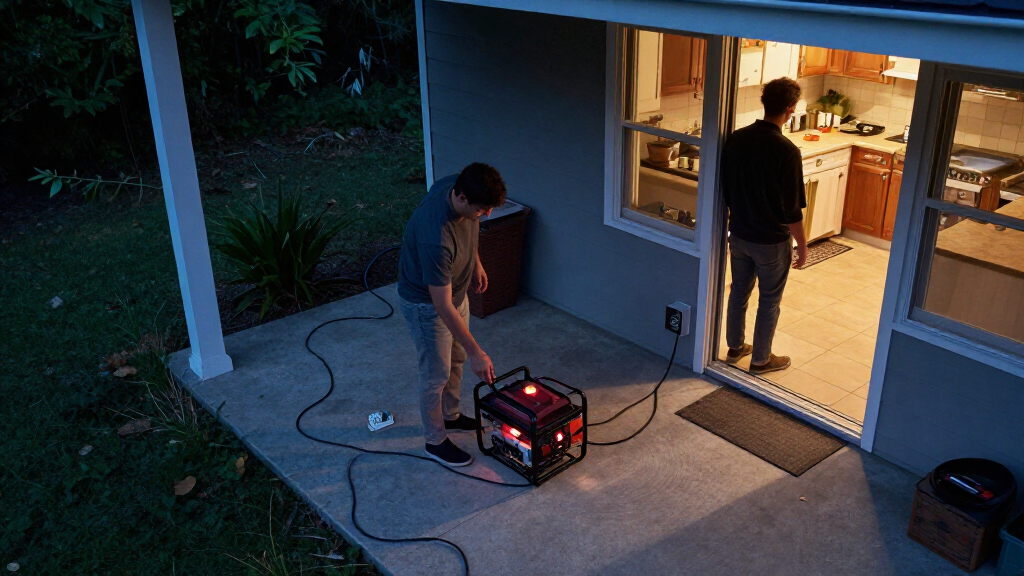
For home backup, I’d start with the GENMAX GM10500XiT as the best overall fit for households that need substantial output and tri-fuel flexibility. The Westinghouse iGen8200TFc offers a more manageable middle ground, while the SIOKIUU 2500W suits lighter essentials and smaller backup loads. The main tradeoffs are how much power you need at once, whether you want to switch among fuel types, and how much size and weight you can handle. Smaller generators are easier to store but cannot run as many demanding appliances; larger models can cover more circuits but take more planning to move and operate. Read on for the full breakdown and a guide to matching generator capacity to your home.

Get backup power and energy gear delivered free — and shop member deals
- Fast, free delivery on millions of items
- Access to Prime Big Deal Days deals on October 6–7
- Prime Video, Amazon Music and more included
Complete the kit


Key Takeaways
- The GENMAX GM10500XiT leads for larger backup loads because its 10,500-watt rating and tri-fuel design prioritize capacity and fuel choice over compact storage.
- The Westinghouse iGen8200TFc is the middle-ground pick for buyers who want tri-fuel flexibility without stepping up to the 12,000-watt Westinghouse models.
- The two Westinghouse iGen12000 options are not interchangeable: the iGen12000TFc adds tri-fuel flexibility, while the iGen12000DFc uses dual fuel.
- The Oxseryn 4400W and 5000W models target moderate loads; check the exact model specifications before choosing because similarly named listings can differ.
- Compact and lower-output choices serve a different backup plan: the SIOKIUU 2500W and PowerSmart 3800-Watt fit selective essentials better than whole-home expectations.
| SIOKIUU 2500W Portable Inverter Generator with CO Sensor |  | Best Compact Pick | Peak output: 2,500 watts | Running output: 1,900 watts | Fuel: Gasoline | VIEW LATEST PRICE | See Our Full Breakdown |
| GENMAX GM10500XiT 10,500W Tri-Fuel Open-Frame Inverter Generator |  | Best for Flexible Fuel Backup | Model: GM10500XiT | Peak power: 10,500 watts | Fuel types: Gasoline, LPG, natural gas | VIEW LATEST PRICE | See Our Full Breakdown |
| Oxseryn 5000W Gas-Powered Inverter Generator |  | Best Mid-Range Capacity | Peak output: 5,000 watts | Running output: 4,000 watts | Engine: 223cc 4-stroke OHV | VIEW LATEST PRICE | See Our Full Breakdown |
| Oxseryn 5000-Watt Portable Inverter Generator |  | Best for 30A RV Connection | Fuel: Gasoline | Peak power: 5,000 watts | Fuel tank: 2 gallons | VIEW LATEST PRICE | See Our Full Breakdown |
| Oxseryn 4400W Gas-Powered Inverter Generator |  | Best Value for Light Backup | Peak output: 4,400 watts | Running output: 3,400 watts | Fuel: Gasoline | VIEW LATEST PRICE | See Our Full Breakdown |
| Westinghouse iGen12000TFc Tri-Fuel Portable Inverter Generator |  | Best for Fuel Flexibility | Fuel types: Gasoline, propane, natural gas | Gasoline output: 9,000W running / 12,000W peak | Propane output: 8,100W running / 11,000W peak | VIEW LATEST PRICE | See Our Full Breakdown |
| PowerSmart 3800-Watt Dual-Fuel Inverter Generator |  | Best for Essential-Circuit Backup | Fuel types: Gasoline and propane | Gasoline output: 3,300W running / 3,800W starting | Propane output: 3,100W running / 3,500W starting | VIEW LATEST PRICE | See Our Full Breakdown |
| Westinghouse iGen8200TFc Tri-Fuel Portable Inverter Generator |  | Best Mid-Range Tri-Fuel Pick | Fuel types: Gasoline, propane, natural gas | Gasoline output: 6,600W running / 8,200W peak | Propane output: 5,940W running / 7,380W peak | VIEW LATEST PRICE | See Our Full Breakdown |
| Westinghouse iGen12000DFc Dual Fuel Portable Inverter Generator |  | Best High-Output Dual-Fuel Pick | Fuel types: Gasoline and propane | Gasoline output: 9,000W running / 12,000W peak | Propane output: 8,100W running / 11,000W peak | VIEW LATEST PRICE | See Our Full Breakdown |
| Oxseryn 4400-Watt Gas-Powered Inverter Generator |  | Best Portable Backup Pick | Fuel type: Gasoline | Peak output: 4,400 watts | Running output: 3,400 watts | VIEW LATEST PRICE | See Our Full Breakdown |
| WEN DF680iX 6800-Watt Dual-Fuel Portable Inverter Generator |  | Best for Flexible Home Backup | Engine: 224cc dual-fuel | Gasoline output: 6,800 surge watts; 5,100 rated watts | Propane output: 6,000 surge watts; 4,500 rated watts | VIEW LATEST PRICE | See Our Full Breakdown |
| inverter generators for home backup | Runtime | Fuel tank | Total harmonic distortion | Outlets |
|---|---|---|---|---|
| SIOKIUU 2500W Portable Inverte | Up to 17 hours at 25% load; 8.6 hours at 50% load | 1.06 gallons | Less than 3% | — |
| GENMAX GM10500XiT 10,500W Tri- | Up to 13.5 hours at 25% load | — | 3% or less | — |
| Oxseryn 5000W Gas-Powered Inve | Up to 10 hours at 25% load | 2 gallons | — | 1 × 12V DC, 2 × 120V AC, 1 × 30A RV |
| Oxseryn 5000-Watt Portable Inv | Up to 6 hours at 50% load | 2 gallons | Less than 5% | — |
| Oxseryn 4400W Gas-Powered Inve | Up to 14 hours at 25% load | 2 gallons | — | 2 × 120V AC, 1 × 30A RV, 1 × 12V DC |
| Westinghouse iGen12000TFc Tri- | Up to 19 hours at 25% load | 7.9 gallons | ≤3% | — |
| PowerSmart 3800-Watt Dual-Fuel | — | — | — | 120V 30A L5-30R, 120V 20A duplex, 12V 8A DC, dual 5V USB |
| Westinghouse iGen8200TFc Tri-F | Up to 17 hours at 25% load | — | Less than 3% | 120/240V 14-50R 50A, 120V TT-30R 30A, 120V 5-20R GFCI duplex |
| Westinghouse iGen12000DFc Dual | Up to 19 hours at 25% load | 7.9 gallons | Less than 3% | 14-50R 50A, L14-30R 30A, GFCI 5-20R duplex |
| Oxseryn 4400-Watt Gas-Powered | Up to 14 hours at 25% load in ECO mode | 2 gallons | — | 2 x 120V AC, 1 x 12V DC, 1 RV outlet |
| WEN DF680iX 6800-Watt Dual-Fue | Up to 6.1 hours on gasoline or 9 hours on propane at half load | — | Under 0.3% at no load; under 1.2% at full load | One L14-30R 120V/240V, two 120V three-prong, one TT-30R RV, one 12V DC, and two 5V USB |
More Details on Our Top Picks
SIOKIUU 2500W Portable Inverter Generator with CO Sensor
For backup focused on a refrigerator, router, lights, and device charging, the SIOKIUU 2500W is the easiest option here to move and store: it weighs 39.46 pounds and runs under 59 dBA at 23 feet. Its 1,900 running watts place a firm limit on what can operate at once, though, so it is a poor match for larger loads or whole-home backup. Compared with the Oxseryn 4400W Gas-Powered Inverter Generator, it gives up substantial capacity but offers a quieter, lighter package and a longer stated runtime at 25% load. The CO sensor with automatic shutdown adds a useful safety feature, but it does not remove the need to operate a generator outdoors and away from openings. Gasoline storage and refueling remain part of ownership.
Pros:- Light 39.46-pound design is easier to move and store than the larger generators in this group.
- Runs up to 17 hours at 25% load, reducing refills for light backup needs.
- Less than 3% THD is suitable for sensitive electronics.
- CO sensor provides automatic shutdown protection.
Cons:- 1,900 running watts restrict how many appliances can operate together.
- Gasoline requires safe storage and refilling.
- Its low-load runtime does not indicate how long it will run heavier backup loads.
Best for: Apartment or small-home residents who need portable backup for a few essential appliances and electronics.
Not ideal for: Households that need to run several high-draw appliances at once or want a generator for broad home backup.
- Peak output:2,500 watts
- Running output:1,900 watts
- Fuel:Gasoline
- Fuel tank:1.06 gallons
- Runtime:Up to 17 hours at 25% load; 8.6 hours at 50% load
- Noise:Under 59 dBA at 23 feet
- Weight:39.46 pounds
- Total harmonic distortion:Less than 3%
- Safety:CO sensor with automatic shutdown
Our verdict“Choose the SIOKIUU for quiet, portable support of a few essentials, but choose a higher-output model if your outage plan includes multiple major appliances.”
GENMAX GM10500XiT 10,500W Tri-Fuel Open-Frame Inverter Generator
The GENMAX GM10500XiT is the strongest fit here for households that want substantial backup output and more than one way to fuel it. Its 7,800W rated output and gasoline, LPG, and natural gas compatibility can make outage planning more flexible than with the gasoline-only Oxseryn 5000W Gas-Powered Inverter Generator. Remote, one-button, and recoil starting also give buyers options when access or battery condition is a concern, while the 50A connection and ATS feature suit a more involved backup setup. The tradeoff is scale: the product data does not give its weight or dimensions, so storage and placement are harder to plan. Its 13.5-hour runtime is stated only at 25% load, and actual endurance will vary with demand and fuel type.
Pros:- Rated 7,800W output provides far more capacity than the portable 4,000W-class options here.
- Three fuel choices can give households more ways to plan for fuel availability.
- Remote, one-button, and recoil starting offer flexibility during an outage.
- ATS functionality, a 50A connection, and THD of 3% or less support a more capable backup setup.
Cons:- Weight and dimensions are not provided, making storage and placement difficult to assess.
- The runtime claim is specified only at 25% load.
- Its high output and open-frame design may be more generator than buyers with only a few essential loads need.
Best for: Homeowners with a suitable 50A backup setup who want high output and the option to use gasoline, LPG, or natural gas.
Not ideal for: Buyers with limited storage space or those who need confirmed dimensions and weight before choosing where the generator will sit.
- Model:GM10500XiT
- Peak power:10,500 watts
- Fuel types:Gasoline, LPG, natural gas
- Runtime:Up to 13.5 hours at 25% load
- Starting methods:One-button, remote, recoil
- Total harmonic distortion:3% or less
- Connection:50A
- Warranty:3 years
Our verdict“Pick the GENMAX if fuel flexibility and high backup output matter most and you can accommodate a large open-frame generator.”
Oxseryn 5000W Gas-Powered Inverter Generator
With 4,000 running watts, this Oxseryn sits between compact backup and the high-capacity GENMAX: it can support a broader set of essentials without moving into the latter’s tri-fuel, 7,800W-rated class. The 223cc engine, inverter output, and 30A RV outlet suit buyers who may also want to power an RV, while the 59-pound frame remains more manageable than an open-frame generator with much greater output. Its stated 10-hour runtime applies at only 25% load, so heavier home use will mean more frequent refueling. At 70 dBA from 23 feet, it is also noticeably less quiet on paper than the SIOKIUU. Buyers above 4,000 feet should account for a separately sold high-altitude kit; that extra requirement makes this less straightforward for mountain-area backup.
Pros:- 4,000 running watts provide a useful step up from the SIOKIUU’s 1,900 watts.
- Inverter technology supplies stable power for sensitive electronics.
- 30A RV outlet adds flexibility for RV use or compatible backup connections.
- At 59 pounds, it is lighter than many higher-output open-frame choices.
Cons:- 70 dBA at 23 feet is louder than the SIOKIUU’s stated noise level.
- The high-altitude kit is recommended above 4,000 feet and is not included.
- The 10-hour runtime figure is measured at 25% load, so heavier use will reduce endurance.
Best for: Households needing several essential circuits or an RV outlet from a gasoline inverter generator that remains portable.
Not ideal for: Buyers in high-altitude locations who want a ready-to-run setup, or anyone seeking quiet operation or multi-fuel flexibility.
- Peak output:5,000 watts
- Running output:4,000 watts
- Engine:223cc 4-stroke OHV
- Fuel tank:2 gallons
- Runtime:Up to 10 hours at 25% load
- Noise:70 dBA at 23 feet
- Weight:59 pounds
- Outlets:1 × 12V DC, 2 × 120V AC, 1 × 30A RV
- High-altitude use:Kit recommended above 4,000 feet; kit not included
Our verdict“Choose this Oxseryn for a portable 4,000W-class gasoline inverter, provided its noise and altitude-kit requirements suit your location.”
Oxseryn 5000-Watt Portable Inverter Generator
This 5,000W Oxseryn makes the most sense for buyers who want 4,000 rated watts and a 30A outlet in an open-frame package, including households with a compatible backup connection or RV in the mix. Its output class matches the other Oxseryn 5000W Gas-Powered Inverter Generator, but the data here emphasizes a 50% load runtime of six hours, giving a more concrete planning point for moderate demand than a low-load-only figure. That still means regular refueling during an extended outage. At 60 pounds, it is close in weight to its sibling and far heavier than the SIOKIUU; its 70 dB noise rating also favors outdoor use away from living spaces. ECO mode can adjust engine speed to demand, but this remains a gasoline-only generator.
Pros:- 4,000 rated watts and 5,000 peak watts offer capacity for a useful set of essential loads.
- 30A outlet serves compatible RV equipment and backup connections.
- ECO mode adjusts engine speed based on power demand.
- Specified six-hour runtime at 50% load helps set expectations for moderate use.
Cons:- Six hours at 50% load means refueling during extended or heavier outages.
- 70 dB at 23 feet can be disruptive near occupied areas.
- At 60 pounds, it is substantially less portable than the SIOKIUU.
Best for: RV owners and homeowners with a compatible 30A connection who want around 4,000 rated watts for essential loads.
Not ideal for: Buyers prioritizing quiet operation, long runs at moderate loads, or a compact generator for frequent lifting.
- Fuel:Gasoline
- Peak power:5,000 watts
- Fuel tank:2 gallons
- Runtime:Up to 6 hours at 50% load
- Noise:70 dB at 23 feet
- Total harmonic distortion:Less than 5%
- Weight:60 pounds
- Dimensions:19 × 15 × 18 inches
Our verdict“Choose this model when a 30A outlet and 4,000 rated watts matter more than quiet operation or fewer fuel stops.”
Oxseryn 4400W Gas-Powered Inverter Generator
The Oxseryn 4400W is a practical middle choice for buyers who need more than the SIOKIUU’s 1,900 running watts but do not need the 4,000W rated output of either 5,000W Oxseryn. Its 3,400 running watts and 30A RV outlet can cover a modest essential-load plan, while ECO mode and a stated 14-hour runtime at 25% load suit lighter, intermittent use. That runtime should not be read as an outage-long figure under heavy demand: the two-gallon tank may require frequent refills when loads rise. At 56 pounds it is easier to move than the 60-pound 5,000W sibling, though neither is as light as the SIOKIUU. Cold-start technology, overload protection, and low-oil shutdown round out the controls, but gasoline remains the only listed fuel.
Pros:- 3,400 running watts bridge the gap between compact and 4,000W-class models.
- 30A RV outlet plus AC and 12V DC outlets accommodates varied equipment.
- Up to 14 hours at 25% load supports long stretches of light use.
- Low-oil shutdown, overload protection, and cold-start technology add useful operating features.
Cons:- Two-gallon tank may require frequent refueling under heavier backup loads.
- At 56 pounds, it is not as easy to carry as the SIOKIUU.
- Gasoline-only fueling offers less flexibility than the GENMAX tri-fuel model.
Best for: Homeowners who want a portable gasoline inverter for a modest set of essential loads, with a 30A outlet for RV use.
Not ideal for: Households expecting to power many demanding appliances together or seeking multi-fuel operation for fuel flexibility.
- Peak output:4,400 watts
- Running output:3,400 watts
- Fuel:Gasoline
- Fuel tank:2 gallons
- Runtime:Up to 14 hours at 25% load
- Outlets:2 × 120V AC, 1 × 30A RV, 1 × 12V DC
- Weight:56 pounds
- Engine:4-stroke
- Additional features:ECO mode, overload protection, low-oil shutdown, cold-start technology
Our verdict“Pick the Oxseryn 4400W for a portable middle-ground backup setup with RV capability, as long as your expected loads stay moderate.”
Westinghouse iGen12000TFc Tri-Fuel Portable Inverter Generator
The iGen12000TFc pairs high output with the broadest fuel choice in this group: gasoline, propane, or natural gas. Its 9,000 running watts on gasoline and 50A outlet can support a larger home backup setup than the smaller iGen8200TFc, while natural-gas compatibility can help households with a suitable supply avoid storing gasoline. The display tracks fuel, output, and estimated runtime, and remote start adds convenience when the unit is positioned outdoors.
The tradeoff is its substantial 457cc engine and 7.9-gallon tank, which make it a less practical pick to move or store than the PowerSmart 3800-Watt. Output also falls to 7,200 running watts on natural gas, and the up-to-19-hour figure applies at only 25% load. I’d choose it for adaptable whole-home backup, provided portability is secondary.
Pros:- Runs on gasoline, propane, or natural gas
- Provides up to 9,000 running watts on gasoline
- 50A outlet and transfer-switch-ready design support home backup connections
- Display shows fuel level, power output, and remaining runtime
Cons:- Large 457cc engine makes frequent repositioning difficult
- Running output varies by fuel, dropping to 7,200 watts on natural gas
- 19-hour runtime is specified at 25% load
Best for: Homeowners who want high-capacity backup and have access to gasoline, propane, or natural gas
Not ideal for: People who need a generator they can lift or move frequently, or who want a compact option for a few essential devices
- Fuel types:Gasoline, propane, natural gas
- Gasoline output:9,000W running / 12,000W peak
- Propane output:8,100W running / 11,000W peak
- Natural gas output:7,200W running / 9,800W peak
- Engine:457cc 4-stroke OHV
- Runtime:Up to 19 hours at 25% load
- Fuel tank:7.9 gallons
- Total harmonic distortion:≤3%
- Noise level:As low as 64 dBA
Our verdict“Choose the iGen12000TFc if fuel-source flexibility and substantial backup output matter more than easy handling.”
PowerSmart 3800-Watt Dual-Fuel Inverter Generator
The PowerSmart 3800-Watt makes more sense for a limited backup plan than for powering a whole home. Its 3,300 running watts on gasoline can cover selected essentials, while propane offers an alternative fuel source and a stated runtime of up to 24 hours with a standard 20-pound tank. At 59 dBA at 25% load in Eco Mode, it is also quieter by its stated rating than the larger Westinghouse iGen12000DFc, which is rated as low as 64 dBA.
Capacity is the key compromise: unlike that Westinghouse, the PowerSmart lacks the listed 50A outlet and has far less running output, so buyers should plan around a few circuits or appliances. Its 1.3-gallon gas tank means more frequent refueling than the iGen12000DFc’s 7.9-gallon tank. I’d pick it for modest, targeted backup where quieter operation and propane flexibility matter more than broad coverage.
Pros:- Runs on gasoline or propane
- Rated at 59 dBA at 25% load in Eco Mode
- Includes AC, DC, and USB outlets
- Has carbon monoxide sensing, overload protection, and low-oil shutdown
Cons:- 3,300 gasoline running watts limit the number of appliances it can support
- Small 1.3-gallon gas tank means up to 8 hours at 25% load per stated runtime
- Propane runtime depends on having a separate 20-pound tank
Best for: Households planning to run a few essential appliances or devices during an outage, with the option to use propane
Not ideal for: Homeowners seeking high-output backup for multiple large appliances or a 50A home connection
- Fuel types:Gasoline and propane
- Gasoline output:3,300W running / 3,800W starting
- Propane output:3,100W running / 3,500W starting
- Noise level:59 dBA at 25% load in Eco Mode
- Gas tank:1.3 gallons
- Gasoline runtime:Up to 8 hours at 25% load
- Propane runtime:Up to 24 hours with a standard 20 lb tank
- Outlets:120V 30A L5-30R, 120V 20A duplex, 12V 8A DC, dual 5V USB
Our verdict“Choose the PowerSmart for quieter, limited-load backup when you value dual-fuel operation over high household capacity.”
Westinghouse iGen8200TFc Tri-Fuel Portable Inverter Generator
The iGen8200TFc brings three-fuel flexibility to a more moderate output tier than the iGen12000TFc. Its 6,600 gasoline running watts and 50A outlet make it a plausible fit for selected home circuits, while propane and natural-gas options give owners alternatives when gasoline is inconvenient. At up to 17 hours at 25% load, it also has a longer stated runtime than the PowerSmart 3800-Watt’s gasoline rating, though the two figures use different operating setups.
This model gives up the iGen12000TFc’s higher capacity, but its 298cc engine and 3.9-gallon tank indicate a less heavy-duty setup. The 50A outlet is useful for a compatible home connection, but a transfer switch or interlock kit is still required. I’d shortlist it for buyers who want tri-fuel capability and substantial, but not maximum, backup power.
Pros:- Runs on gasoline, propane, or natural gas
- Offers a 50A outlet alongside RV-ready and standard outlets
- Less than 3% THD is suited to sensitive electronics
- Rated for up to 17 hours at 25% load
Cons:- Running output varies from 6,600 watts on gasoline to 5,280 watts on natural gas
- Home connection requires a separate transfer switch or interlock kit
- 17-hour runtime is specified at 25% load
Best for: Homeowners who want gasoline, propane, and natural-gas options with a 50A connection and mid-range output
Not ideal for: Households that need the iGen12000TFc’s higher running capacity or buyers unwilling to arrange a transfer switch or interlock
- Fuel types:Gasoline, propane, natural gas
- Gasoline output:6,600W running / 8,200W peak
- Propane output:5,940W running / 7,380W peak
- Natural gas output:5,280W running / 6,560W peak
- Engine:298cc 4-stroke OHV with cast iron sleeve
- Runtime:Up to 17 hours at 25% load
- Noise level:Around 60 dBA at 25% load
- Total harmonic distortion:Less than 3%
- Outlets:120/240V 14-50R 50A, 120V TT-30R 30A, 120V 5-20R GFCI duplex
Our verdict“Choose the iGen8200TFc if you want tri-fuel flexibility and a 50A outlet without stepping up to the iGen12000TFc’s output tier.”
Westinghouse iGen12000DFc Dual Fuel Portable Inverter Generator
The iGen12000DFc matches the tri-fuel iGen12000TFc on stated gasoline output, with 9,000 running watts, a 50A outlet, and less than 3% THD for sensitive electronics. Its simpler fuel setup supports gasoline and propane, so it suits households that want a high-output backup generator without needing natural-gas compatibility. Remote electric start and transfer-switch-ready outlets also make it easier to integrate into a planned home backup setup.
Compared with the iGen12000TFc, the central limitation is fuel choice: there is no natural-gas option. That may matter during a long outage if gasoline and propane supplies are constrained. Its 457cc engine and 7.9-gallon tank also make this a large unit, while the 19-hour figure applies at 25% load. I’d favor it over the smaller iGen8200TFc when higher output takes priority and two fuels are enough.
Pros:- Provides up to 9,000 running watts on gasoline
- Runs on gasoline or propane
- Less than 3% THD is suited to sensitive electronics
- Includes remote start and transfer-switch-ready outlets
Cons:- Does not offer the natural-gas option available on the iGen12000TFc
- Large 457cc engine and 7.9-gallon tank make it cumbersome to handle
- Runtime and noise vary with load and operating conditions
Best for: Homeowners who need high-output backup, use gasoline or propane, and want a 50A outlet for a compatible setup
Not ideal for: Buyers who want natural-gas operation or need a generator that is easy to move and store
- Fuel types:Gasoline and propane
- Gasoline output:9,000W running / 12,000W peak
- Propane output:8,100W running / 11,000W peak
- Engine:457cc 4-stroke OHV
- Runtime:Up to 19 hours at 25% load
- Fuel tank:7.9 gallons
- Noise level:As low as 64 dBA
- Total harmonic distortion:Less than 3%
- Outlets:14-50R 50A, L14-30R 30A, GFCI 5-20R duplex
Our verdict“Choose the iGen12000DFc for substantial home backup on gasoline or propane when natural-gas operation is not needed.”
Oxseryn 4400-Watt Gas-Powered Inverter Generator
The Oxseryn 4400-Watt is the portability-minded choice here: its 56-pound weight is easier to manage than the large Westinghouse iGen12000DFc, and 3,400 running watts can cover a modest set of home essentials when loads are planned. The stated up-to-14-hour runtime at 25% load in ECO mode gives it a useful low-load operating window, and the RV outlet adds flexibility for recreational use.
That convenience comes with clear limits for home backup. It runs on gasoline only, has an open-frame design, and is rated under 72 dBA at 23 feet, so it is less suited to quiet operation near living spaces than the PowerSmart 3800-Watt’s 59 dBA rating in Eco Mode. Its two AC outlets and 3,400 running watts also call for selective use rather than broad household coverage. I’d consider it for essential loads where portability matters most.
Pros:- 56-pound weight is easier to manage than the high-output Westinghouse models
- Provides 3,400 running watts
- Rated for up to 14 hours at 25% load in ECO mode
- Includes AC, DC, and RV outlets
Cons:- Gasoline-only operation offers no propane or natural-gas alternative
- Open-frame design is rated under 72 dBA at 23 feet
- Two AC outlets and 3,400 running watts limit household coverage
Best for: People who need a relatively portable generator for a few essential home loads and occasional RV use
Not ideal for: Households seeking quiet, multi-fuel operation or enough output and outlets for broad home backup
- Fuel type:Gasoline
- Peak output:4,400 watts
- Running output:3,400 watts
- Fuel tank:2 gallons
- Runtime:Up to 14 hours at 25% load in ECO mode
- Noise level:Under 72 dBA at 23 feet
- Weight:56 lbs
- Outlets:2 x 120V AC, 1 x 12V DC, 1 RV outlet
Our verdict“Choose the Oxseryn 4400-Watt if portability for selective backup matters more than quiet operation or multi-fuel flexibility.”
WEN DF680iX 6800-Watt Dual-Fuel Portable Inverter Generator
For a home that needs a portable source of 120V and 240V power, the WEN DF680iX pairs useful output with a choice of gasoline or propane. Gasoline supplies 5,100 rated watts; propane supplies 4,500, so buyers can weigh higher output against fuel availability. Its L14-30R 120V/240V outlet supports compatible home backup connections, while the bonded-neutral configuration also allows low-power Level 2 EV charging. Compared with the much larger Westinghouse iGen12000TFc, this WEN offers less capacity but a more manageable wheeled format; it is a better fit for targeted backup than running many large household loads at once. Propane can run up to nine hours at half load with a 20-pound tank, though the 2.9-gallon gasoline tank limits gasoline runtime to 6.1 hours at half load. CO shutdown, electric start, and low harmonic distortion add practical protection and convenience, but parallel hardware costs extra and EV charging is limited to low power.
Pros:- Dual-fuel operation offers flexibility when gasoline or propane supply changes.
- L14-30R 120V/240V outlet supports compatible home backup connections.
- Low total harmonic distortion is suited to sensitive electronics.
- Wheels and a telescoping handle make the unit easier to move.
Cons:- Rated output drops from 5,100 watts on gasoline to 4,500 watts on propane.
- Gasoline runtime is up to 6.1 hours at half load, requiring refueling during longer outages.
- Parallel connection kit is sold separately, and EV charging is limited to low-power Level 2.
Best for: Homeowners seeking portable backup for selected essential circuits, with the option to use propane when gasoline is scarce.
Not ideal for: Households expecting one generator to carry many high-demand appliances at once, or EV owners who need faster Level 2 charging.
- Engine:224cc dual-fuel
- Gasoline output:6,800 surge watts; 5,100 rated watts
- Propane output:6,000 surge watts; 4,500 rated watts
- Noise level:64 dB at quarter load
- Gasoline tank capacity:2.9 gallons
- Runtime:Up to 6.1 hours on gasoline or 9 hours on propane at half load
- Outlets:One L14-30R 120V/240V, two 120V three-prong, one TT-30R RV, one 12V DC, and two 5V USB
- Total harmonic distortion:Under 0.3% at no load; under 1.2% at full load
- Warranty:3 years
Our verdict“Choose the WEN DF680iX for portable, dual-fuel backup of selected home loads; choose a higher-output model such as the Westinghouse iGen12000TFc if you need more capacity.”

How We Picked
I ranked these generators for home backup use, weighing rated output, fuel flexibility, and how practical each size is for storing and deploying at home. Models with higher output can support more simultaneous loads, but I did not treat wattage alone as a measure of fit: buyers also need to account for startup surges and the circuits they plan to power.
Tri-fuel capability earns credit when fuel choice is useful during longer outages, while dual-fuel models can still suit buyers who want a simpler set of options. I also considered the tradeoff between capacity and portability, plus features such as a CO sensor where listed. The ranking favors generators that offer a useful balance for their intended household; smaller models rank as focused essentials options, and the largest models suit buyers prepared for their size, connection needs, and higher output.
Factors to Consider When Choosing Inverter Generators For Home Backup
I’d plan the backup job before comparing wattage labels. The right generator depends on which appliances matter during an outage, how you will connect them, and what fuel you can store or obtain.
Choose Circuits Before Choosing Wattage
List the appliances you want to run together, such as a refrigerator, lighting, internet equipment, or a sump pump. Add their running watts, then account for the brief startup surge from motors and compressors. A generator that covers a total on paper can still trip when several loads start at once. Decide whether you want to power a few essentials or support several larger household circuits. This step can prevent paying for capacity your backup plan will not use. Confirm the generator’s rated output and surge output in its manual or official specifications.
Treat Fuel Flexibility as an Outage Plan
Dual-fuel and tri-fuel models give you more choices, but each fuel type has different storage and connection requirements. Consider what is already available at your home and how you will replenish it during a prolonged outage. Stored gasoline needs careful handling and periodic replacement, while propane requires compatible cylinders or a suitable supply connection. Natural gas can be convenient where a safe, approved connection is available, but it may not be available in every outage. A common mistake is selecting a fuel-capable model without checking the required hoses, regulators, or installation arrangements. Match the fuel options to a realistic plan you can maintain.
Plan the Electrical Connection in Advance
Extension cords can serve a limited set of appliances, while a transfer switch or approved interlock can connect selected home circuits. These approaches have different costs, installation needs, and limits, so decide how you will use the generator before buying. Never connect a portable generator to a home circuit through a wall outlet; that can create dangerous backfeed. Ask a qualified electrician about an approved setup and the generator’s compatible output. Confirm voltage, receptacle types, and circuit needs against the appliances you intend to support. A high-output generator cannot power more of the house safely unless the connection method supports that plan.
Make Noise, Placement, and Storage Part of the Fit
Inverter design can provide cleaner power and adjust engine speed as demand changes, but it does not make a generator silent. Check the sound rating and the conditions used to measure it, then think about where the unit can operate outdoors without sending exhaust toward the home or neighboring windows. CO sensors can add a safety measure, but they do not replace safe outdoor placement. Larger open-frame models may be harder to store and move than compact units, especially when you need to position one during bad weather. Measure the storage space and consider who will handle setup. A generator that is difficult to deploy may not serve your backup plan well.
Compare Rated Output, Not Just the Headline Number
Generator names and listings may emphasize peak watts, while the rated output describes what the unit can supply continuously under specified conditions. Use rated watts when matching a generator to ongoing household loads, and use surge watts to check brief startup demands. Similar model names can refer to different fuel systems, outputs, or configurations, so verify the exact model number. Also compare the number and type of outlets with your planned connection setup. A higher peak figure does not automatically mean more useful capacity for an outage. Keep the official manual and specification sheet as the final reference.
Account for Maintenance and Long Outages
A generator needs regular care even when it spends most of its time in storage. Follow the manufacturer’s schedule for oil, air filters, fuel handling, and exercise runs, and keep basic supplies available before a storm threatens. Think through runtime at the loads you expect; advertised runtime figures depend on fuel type and operating demand. Running fewer appliances can stretch fuel and reduce noise. Buyers sometimes focus on initial capacity and overlook the burden of storing enough fuel safely. The best fit is a unit whose upkeep and fuel plan you can sustain through the outage conditions you expect.
Frequently Asked Questions
Can a portable inverter generator run my whole house?
That depends on the generator’s rated output, your household’s peak demand, and the circuits you connect. The larger models in this roundup are better positioned for multiple substantial loads than the 2500W SIOKIUU, but a headline wattage does not mean every appliance can run at once. Heating and cooling equipment can draw high starting power. Make a load list and have an electrician check whether your intended transfer setup and generator output support it. Many households get a more practical result by selecting essential circuits.
Is a tri-fuel generator worth choosing over a dual-fuel model?
Tri-fuel is useful when having gasoline, propane, and natural gas available fits your outage plan. In this lineup, the GENMAX GM10500XiT and Westinghouse iGen12000TFc and iGen8200TFc offer that added choice, while the iGen12000DFc and WEN DF680iX are dual-fuel options. An extra fuel type adds flexibility, but it can also mean more connection details to understand and maintain. If you expect to use only gasoline and propane, a dual-fuel model may cover your needs with fewer options to manage. Check official specifications for the exact fuels and required accessories.
How much generator capacity do I need for a refrigerator and basic essentials?
Start by checking the running and startup wattage for the refrigerator and every other appliance you expect to run at the same time. Lights and internet equipment typically add less demand than pumps, compressors, or portable heaters, but the exact figures vary by device. The SIOKIUU 2500W and PowerSmart 3800-Watt are aimed at lighter loads than the 4400W and 5000W options in this roundup. Leave room for startup surges rather than sizing exactly to the sum of running watts. Verify the generator’s rated output before deciding.
Can I connect one of these generators directly to a home outlet?
No. Plugging a generator into a household wall outlet can send power back through wiring and create a serious hazard for utility workers and occupants. Use extension cords rated for the load to supply individual appliances, or ask a qualified electrician about a transfer switch or approved interlock for home circuits. The correct setup depends on your electrical panel and the generator’s outlets. Plan this connection before an outage, rather than trying to improvise during one. Follow the generator manual and local electrical requirements.
Which type is a better fit if I need to move the generator by myself?
Smaller, lower-output options such as the SIOKIUU 2500W or PowerSmart 3800-Watt are generally a more practical starting point for buyers prioritizing manageable size, though you should check each unit’s weight and handles. The larger 8200W to 12,000W class offers more capacity but can be harder to position and store. Wheel kits or a second person may be needed, depending on the model and the path to your operating location. Measure storage and access points before buying. Also keep in mind that any portable generator must operate outdoors in a safe location.
Conclusion
For a broad home backup plan with substantial output and three fuel choices, I’d choose the GENMAX GM10500XiT as my best overall pick. The Westinghouse iGen8200TFc is the better value in capacity and flexibility for households that do not need a 12,000-watt-class unit. Buyers prioritizing maximum output and fuel choice should compare the Westinghouse iGen12000TFc with the iGen12000DFc, while the GENMAX is another strong premium-capacity option. For beginners focused on a short list of essential appliances, the SIOKIUU 2500W is the simplest scale of backup to plan around, provided its output meets the load list. Choose the PowerSmart 3800-Watt or an Oxseryn 4400W or 5000W model when your needs sit between compact essentials and high-capacity household support; verify the exact model specs before purchase.
Fall Picks
fall essentials
As an affiliate, we earn on qualifying purchases.